
The country’s largest flume tank has opened in Nelson where it will be used to test prototypes in a bid to help the sector adapt to changing ocean conditions.
Plant & Food Research funded the $1.9 million tank, which is located at its research centre in Port Nelson.
It’s 16 metres long and holds 190,000 litres of water that can be moved at horizontal speeds of up to 1.5 metres per second.
Scientists say it will enable the fishing, aquaculture and marine engineering industries to test how new innovations will cope in New Zealand’s ocean conditions.
The tank aims to bridge the gap between computer modelling and real-life ocean trials.
“There’s a really big gap between those two things,” Plant & Food Research general manager science - seafood technologies, Helen Palmer, says. “Working in the ocean is difficult and expensive. The flume tank is about enabling us to test and refine lots of times until we’re confident.”
She says the flume tank has two main uses – the design of aquaculture systems and fishing technology.
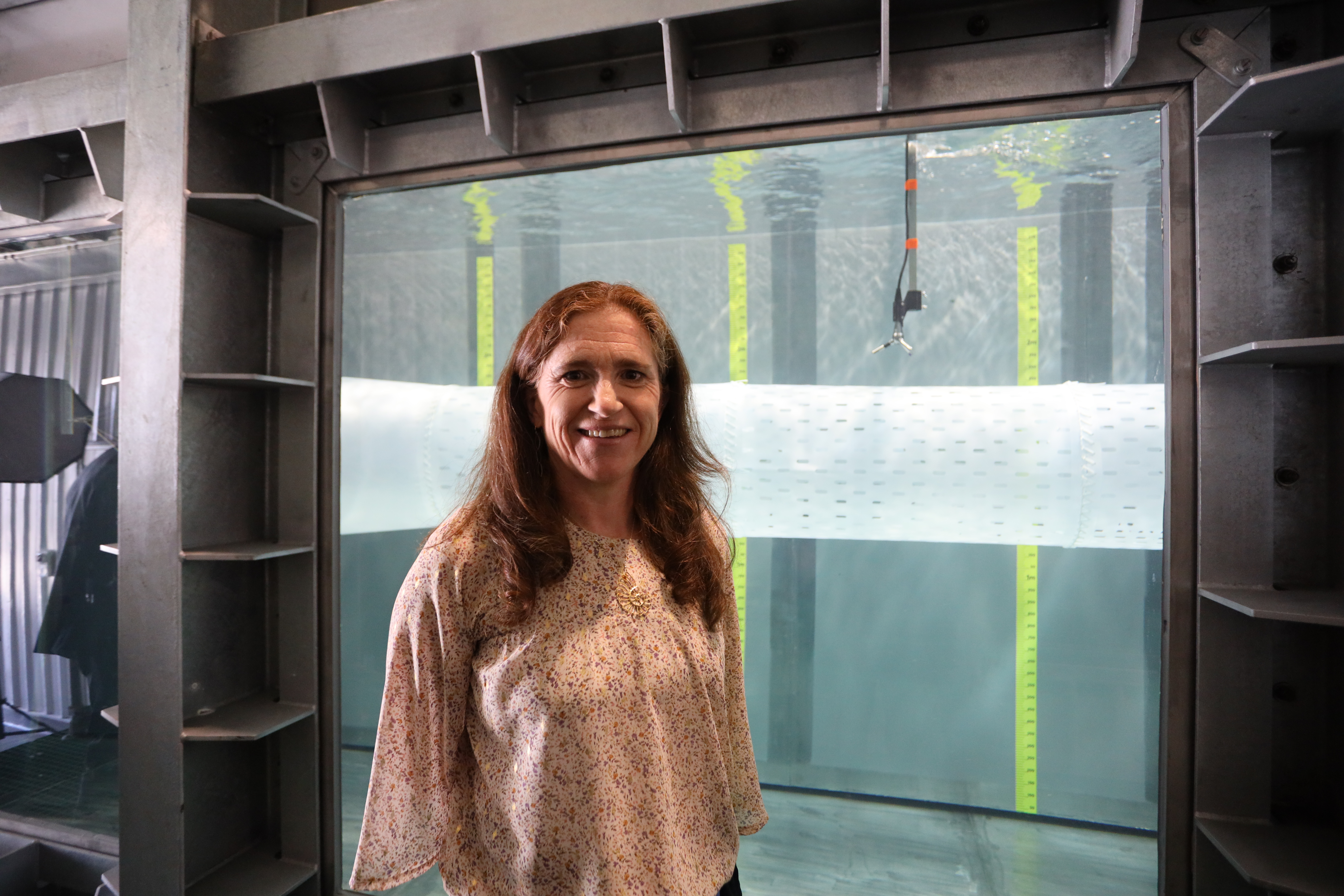
The prototype that was on display at the official opening of the tank in May is a patented design for the end part of a trawl system,.
It aims to control the conditions for the fish that have already been caught in the net, so they are able to keep swimming comfortably and don’t run out of energy.
Helen hopes the tank will be used by scientists, researchers, engineers and entrepreneurs from a range of organisations and businesses, to grow the marine and seafood sector.
“It’s really for anything where someone wants to get an early indication of how something that is going to be out in the ocean is going to perform in different flows or currents. That could be robotics, remote sensing technology, drones, or the renewable energy sector.”
She says, since the tank officially opened some have already been in touch with ideas they hadn’t yet thought of, such as freshwater applications in rivers.
“It is a big investment; NZ is a small place where we can share facilities and where we can make the best of an investment that’s been made.”
She says the concept, design and build of the tank was a “long process”.
“It’s not the kind of design and build where you can ring a provider and say ‘we’ll take one of those’.”
Helen says, while there has been a lot of focus on the tank, for Plant and Food it’s part of a bigger puzzle.
“This is one piece of this faciltiy, we’ve got the finfish facility, and the labs, so its really complementing everything.
“I’m really positive about Nelson’s role in developing our role in the marine industry.
“Nelson has always punched well above its weight when it comes to science and research. I think we are establishing ourselves as a great little city for that work.”
