
BY ROBYN PARKES
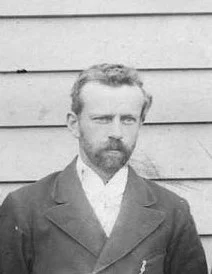
Frederick William Thorp, son of settler Charles Thorp and one time Mayor of Motueka, designed and established the Burton Butter Factory in Motueka in 1891, which was then leased by Rankin and Sons Ltd.
It was built of wood, covered an area of 40ft by 40ft with 16ft studs and walls six inches thick and lined with sawdust.
As to its operations – air shafts passed from the factory rooms to ventilators in the roof, allowing the factory to be kept cool in warm weather and to be able to maintain an even temperature.
The factory consisted of three main areas with the principal one being the milk room where the new milk was received into a large tin-lined tank, holding about 150 gallons. In the tank was a coil of piping through which hot or cold water could be run to either heat or cool the milk.
Once the milk was at the proper temperature it passed into the separator, driven by a steam engine.
From the separator the skimmed milk flowed through one aperture into a funnel, and then into a pipe driven by means of a force pump and flowed out to the piggeries some 200 yards away. The cream passed into a reservoir, and to the cream tank, capable of holding 130 gallons, also fitted with a coil similar to that in the milk tank. The cream progressed to a churn which was made to revolve rapidly on its axle by steam for up to 20 minutes.
After the butter milk was run off through a patent tap, the butter itself was washed and passed through two large rollers, allowing for all butter milk remaining to be pressed out and salt to be pressed in. 300lbs of butter could be achieved in 45 minutes after which it passed into the packing room where it was either placed in tubs or in rimu boxes.
For the local market the butter was simply passed over the pounding machine, which turned out the right weight and stamped the name of the factory into the butter before finally being wrapped in grease and air-proof paper.
A third room was the tinning room where there was a Danish tinning plant.
This machinery made tins in sizes varying from those capable of holding 28lb down to half pound tins which were made airtight through a system of overlapping edges, using pressure, ensuring an air-tight join. Each tin passed through eight machines by the time it was ready for packing.
With the milk from each cow being separately tested it was thought almost impossible for any impurities to get in.
The separator, churn, and other machines at the factory were driven by a three-horsepower engine, and the engine was kept going by a six-horsepower boiler.
The factory successfully operated for 14 years before being destroyed by fire on 5 January 1905.
With a strong breeze blowing, the fire spread rapidly with no time to even attempt to save the building or its contents. It was not the only loss for Rankin and Son’s as six months later another of their stores was destroyed by fire.
