
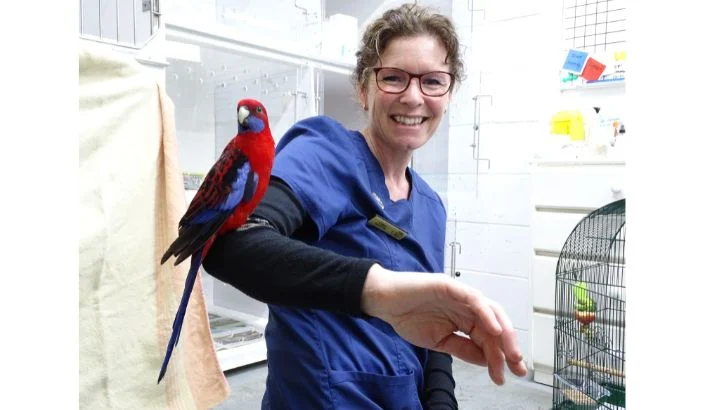
Spring is just around the corner; birds are already displaying their courtship moves and it won’t be long before the vet clinics have an influx of baby birds.
Head nurse at Town and Country Vet in Richmond, Clare Broderick, says the team gets a range of birds brought into the clinic, from chicks to injured adults, that are assessed and rehabilitated if possible.
When it comes to most baby birds and fledglings, her advice is to leave them alone.
“Coming up to spring, it’s best to leave birds alone because juveniles on the ground will be fed by their parents. So don’t pick them up, or if you have to, put them on a branch but don’t move them away from the area.
“We get a lot of these and sometimes we tell people to take them straight back to where they found them. Don’t interfere unless they have an injury.”
All vet clinics and the SPCA are drop-off points for injured birds and Clare says after an assessment and treatment, if needed, they are sent to appropriate places to rehabilitate, which might be with a staff member or in the case of native birds, to native rehabilitation centres.
“Native birds can’t be kept as pets as it’s illegal without a licence. But they can come to a vet clinic first for an assessment to see what their outcome will be.”
Clare says that if an adult bird can be caught, then there’s definitely something wrong with it, but some species can still do damage. When it’s a hawk – and the clinic had one brought in recently – it’s not so much the beak to watch out for, but the talons.
“If they grip you, it will be a long time before they let go. With sea birds, you have to watch out for your eyes.
“Some birds, like hawks, are a little bit more specialised because they’re a predator and there’s a place in Blenheim that takes them for rehabilitation.”
Homing pigeons brought to the clinic have become pets for staff who have taken them home for rehabilitation and they’ve never left. Clare had one named Feathers that was at her home for a while recuperating and then she tried to release it at the site it was found.
“We took him to the showgrounds to release him because that was where he’d been found. We cried all the way home, but when we got there, he’d beaten us back!”
Her advice for anyone finding an injured bird is to handle it as little as possible and drop it off at a clinic as soon as you can. If it’s night and can’t be dropped off at a vet clinic or SPCA, the bird should be kept warm and put in a dark place, like a hot water cupboard, and dropped off in the morning.
“A lot don’t make it,” she warns. “They’ve very fragile and stress alone can kill a bird.”
The bodies of those that do not survive or need to be euthanised, are sent to Blenheim for cremation and the ashes spread in the attached garden.
Vet clinics fund the care of wildlife, including vet checks, food, medication and x-rays. Clare says donations are also welcome to help cover costs.
