
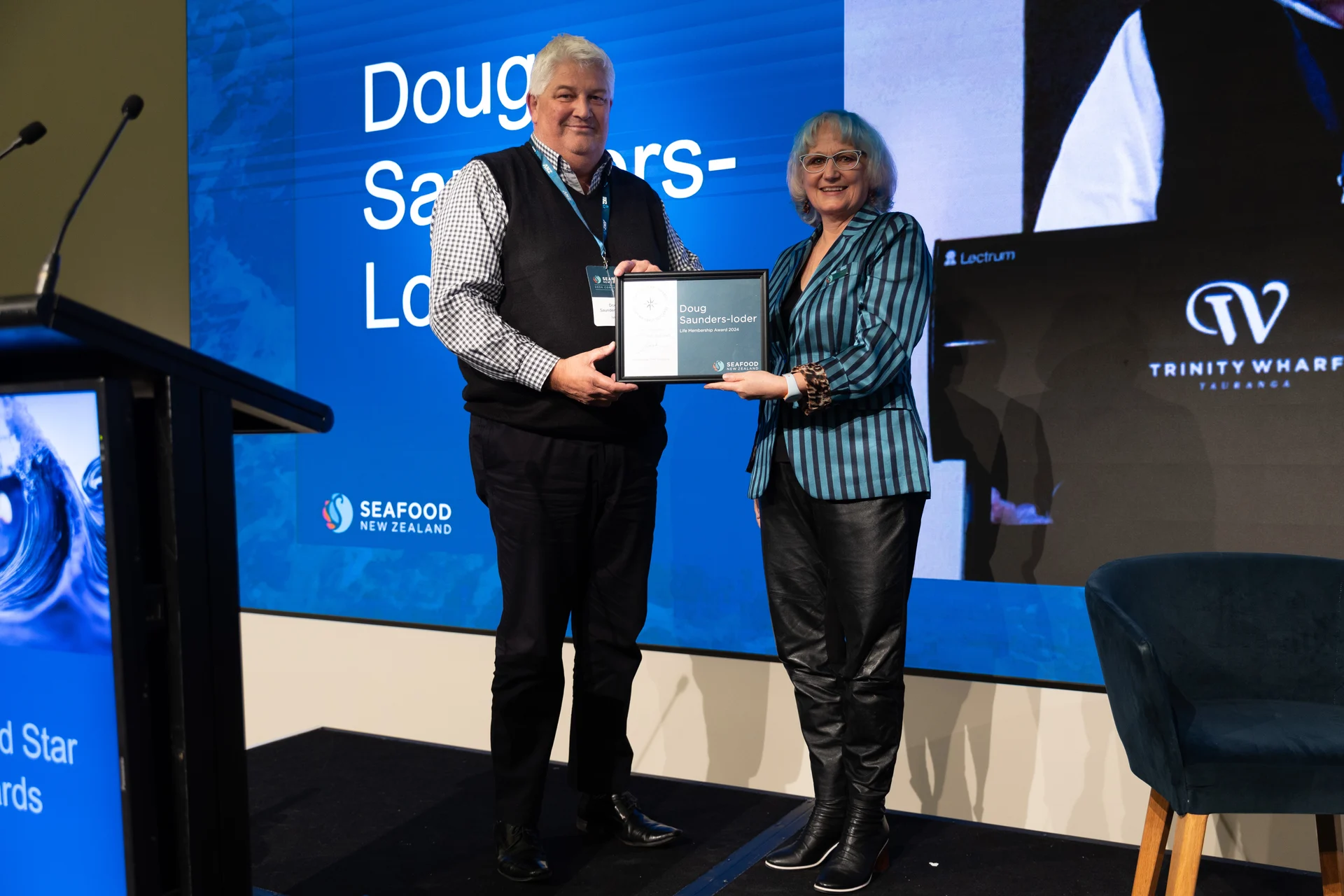
Something of a big fish with a shoal of seafood industry experience has reeled in a Life Membership Award at the sector’s recent annual conference.
Motueka’s Doug Saunders-Loder was humbled by the honour for his four decades in the sector, lauded for his contributions and directorship on numerous industry boards, which are a testament to his “tireless efforts” and “unwavering dedication”.
“His exceptional rapport with stakeholders, including fishermen, media and industry peers, has cemented his reputation as a respected advocate and go-to expert,” the judges said.
Doug first cast himself into the industry as a cray fisher off the Wairarapa Coast fresh from school, before anchoring at Talley’s in around 1985, and has remained at the company since.
He’s also been the New Zealand Federation of Commercial Fishermen's president for 21 years and chairs the Challenger Scallop Enhancement Company, which is working to revive the local scallop industry, and the South Island-based quote holding company, Challenger FinFish Management, which was recently amalgamated with Seafood New Zealand.
“I think the quota management system has to be embraced, it’s sadly misunderstood at times, we don’t do a good job of educating the public about that, it’s not perfect, but in the context of managing New Zealand’s fisheries it really is an outstanding system,” he says.
“Look at the snapper fishery in Tasman and Golden Bay at the moment, currently looking from a scientific perspective it’s better than it was in the 70s when the commercial sector arguably destroyed it.
“It’s not just about the levels of quota, it’s also how you manage it and that’s about data management and investment in science, so I think if I was proud of anything, I think it’s being part of the quota management system.”
While Doug appreciates “when you get your life membership that means you’re coming to the end of [your service],” he’ll continue fishing for industry solutions.
“The New Zealand fishing industry is in pretty good heart, but we do ourselves a disservice because we don’t educate the public more on what we do… there’s a lot of rhetoric about bottom trawling and things of that nature which is simply untrue,” he says.
“The people we speak to about things fishing are actually really enthusiastic at what we’ve got to say, so we need to do more of that.”
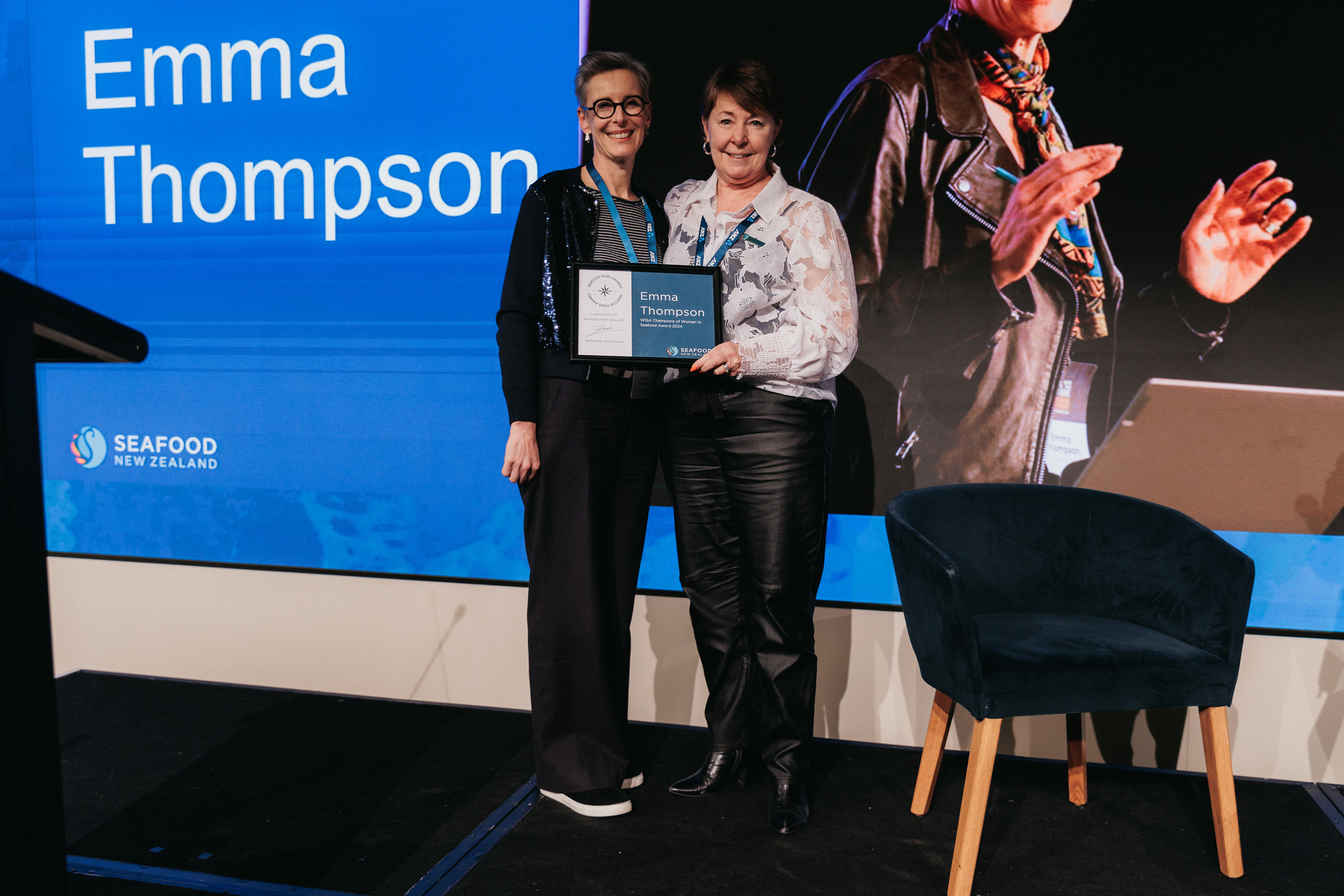
Also at the awards, Publik Agency managing director Emma Thompson landed the Champions of Women in Seafood Award for her contributions to essential strategic planning and branding for a school of seafood entities.
The gong also recognised her work with Sealord, Talley’s, New Zealand King Salmon, Marine AI, Seafood New Zealand and the Federation of Commercial Fishers to anchor positive media coverage to improve social license, and being a rudder for Nelson’s Seafood Saturday events in the past two years.
“Being awarded this Seafood Star award was a big surprise, but more than a win for me. I see it as a great win for the profession of PR and communications,” she says.
“The establishment of the Seafood Saturday event is a winner – especially in a sector full of women champions who do the hard mahi on the sea and in various guises on the land.
“Nelsonians should be very proud of the seafood sector that we have here, and the number of awards we won this year is testament to the fact we are the New Zealand capital of the blue economy.”
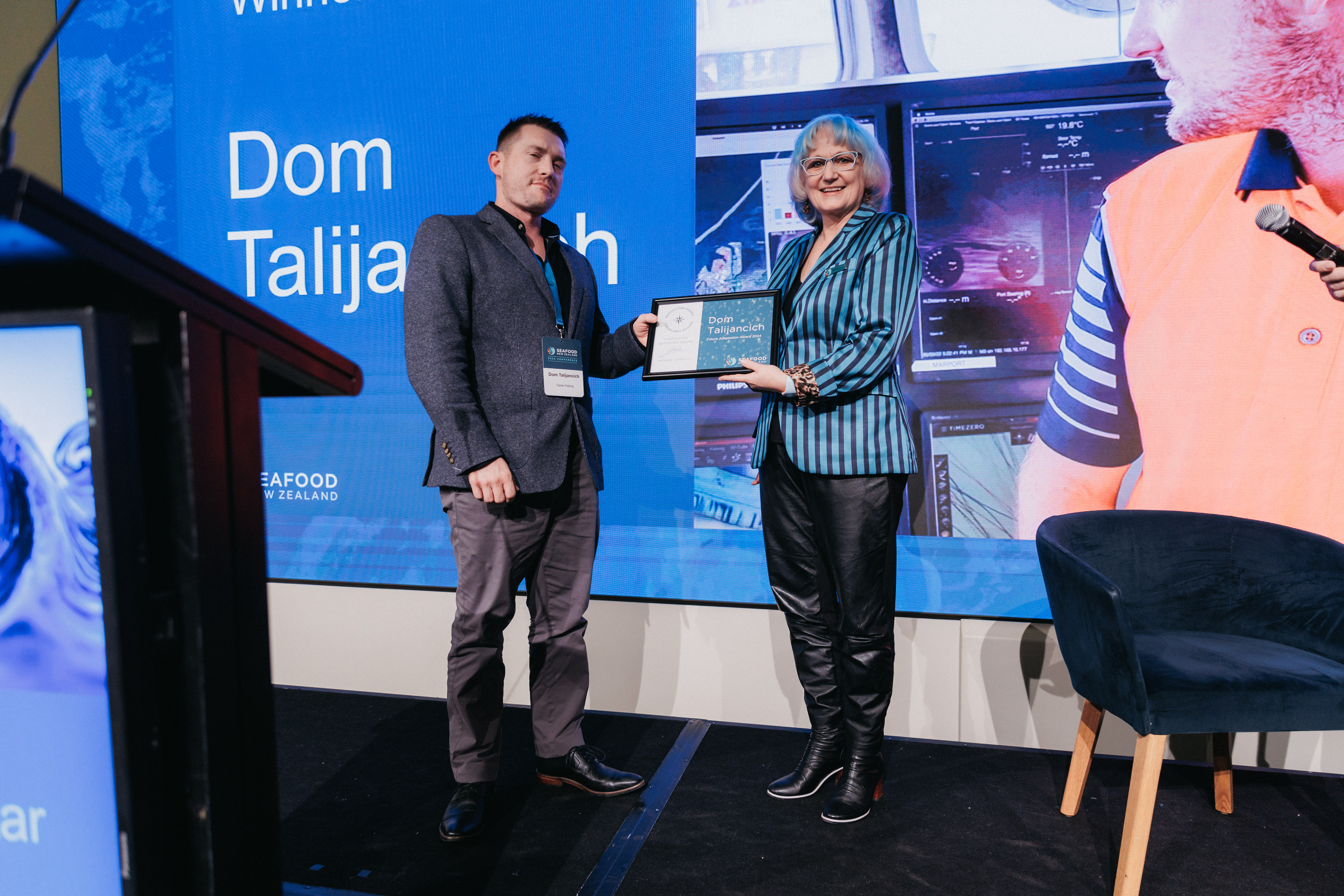
Nelson-based FV Mako skipper and founder of tech company Advanced Conservation Solutions, Dom Talijancich, reeled in the hotly-contested Future Adaptation Award for his company’s development of a tool to take sustainable fishing practices “to the next level”.
The “DeepSet” system combines an underwater camera, advanced species recognition software, and real-time data transmission to enable more selective and responsible fishing methods, allowing commercial fishers to make informed decisions and reduce bycatch. The system also steers the course for shorter tows, meaning less contact with the seabed.
Dom says one unit has been trialled on multiple Nelson and Motueka-based vessels for over two years, and the company was hunting for funds to distribute multiple units and have a more widespread trial campaign.
“With the increasing regulatory pressures on the industry… we need better tools to mitigate unlimited bycatch from our nets.”
“It’s nice to get the recognition, I want to keep growing my company, keep running boats and catch as much fish as possible with as little environmental disturbance as possible.”
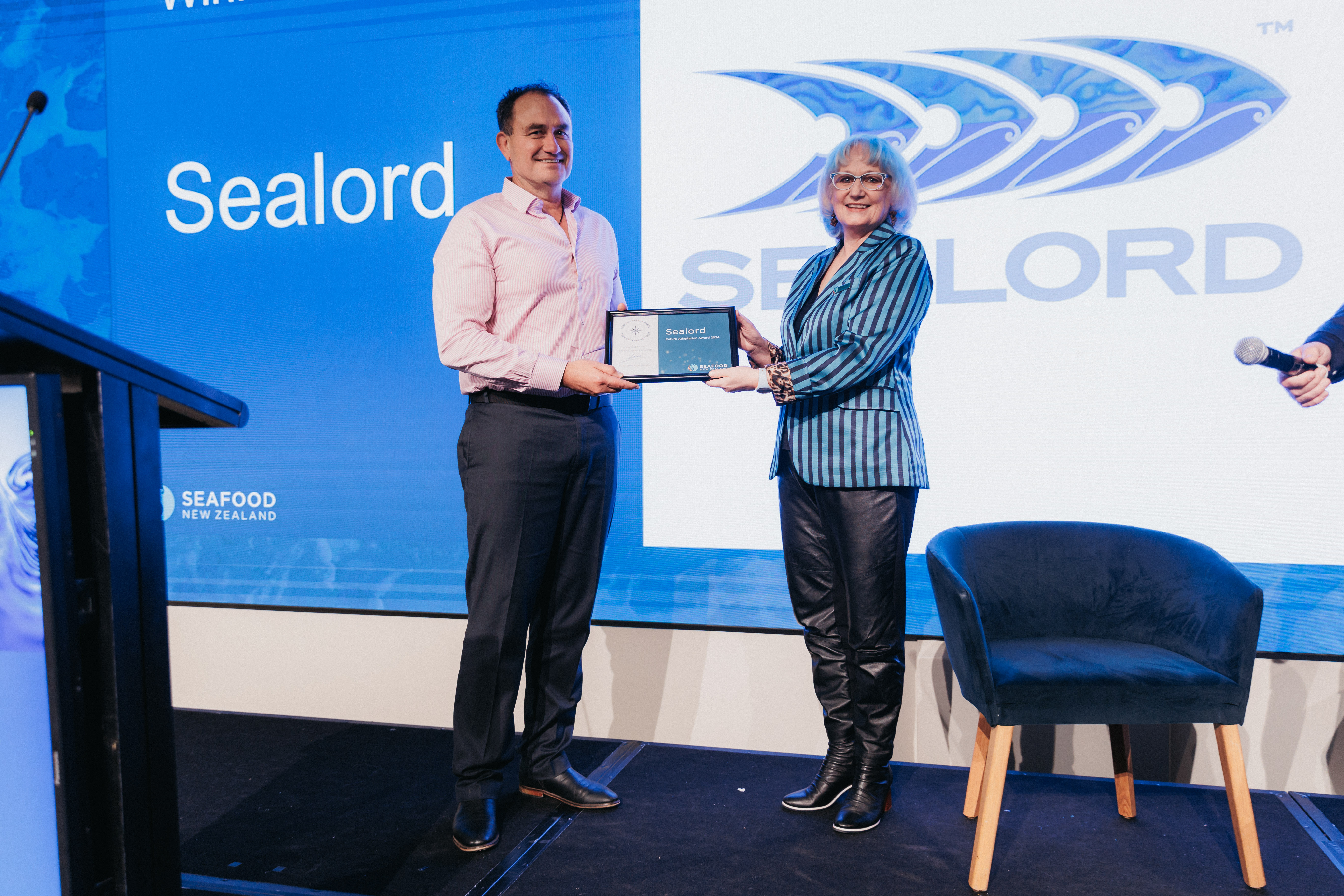
Seafood behemoth Sealord won the Future Adaptation Award for its carbon, plastic and water use reduction. Its chief executive, Doug Paulin, says the company had reduced its carbon footprint by 24 per cent, with 27,000 tonnes of carbon diminished.
“When we say that sustainability is important to us, we really mean it. We have three to five-year targets that apply to the whole business, to reduce carbon emissions, minimise water usage, reduce landfill and maximise recycling,” he says.
“It’s not always easy to change things, to reduce adverse impacts on the environment, but Sealord chooses to invest in sustainability – at sea, on land and in our offices.”
Sealord’s carbon footprint reduction was largely achieved through its reduced fuel consumption across its deepwater fishing vessel fleet, frequent and robust vessel maintenance, more efficient fuel usage generally and the retirement of Sealord’s chartered vessel The Professor.
The company has also reduced plastic use and its Nelson site’s newly-installed water-efficient shower heads will reduce freshwater use by 56 per cent.
National charity, FirstMate, which supports fishers’ and their families’ health and wellbeing and is largely championed by Nelson’s Darren Guard also won the ACC Workplace Safety and Wellbeing Award.
