
BY ROBYN PARKES
In the quiet early hours of morning on the 22 April 1882, Mr Jones, saddler of Brightwater, noticed a dense volume of smoke rising into the air.
On closer examination it was discovered that the upper storey of John Rutherford’s flour and flax mill was on fire. The alarm was at once given and neighbours flocked to assist but found there was little they could do as the flames were too fierce and the building was already engulfed in flames.
The news quickly spread to Richmond and the Fire Brigade hurried to the site, and although they were able to save some wheat, albeit damaged, the building was already completely destroyed. Rutherford, who was out of the district making arrangements for a supply of grain for the winter, was told of his losses. However, he was not to be the only loser as many of the farmers in the neighbourhood had stored wheat in the mill either for sale or grinding. One resident had, just the previous day, taken twenty bags of wheat to be stored.
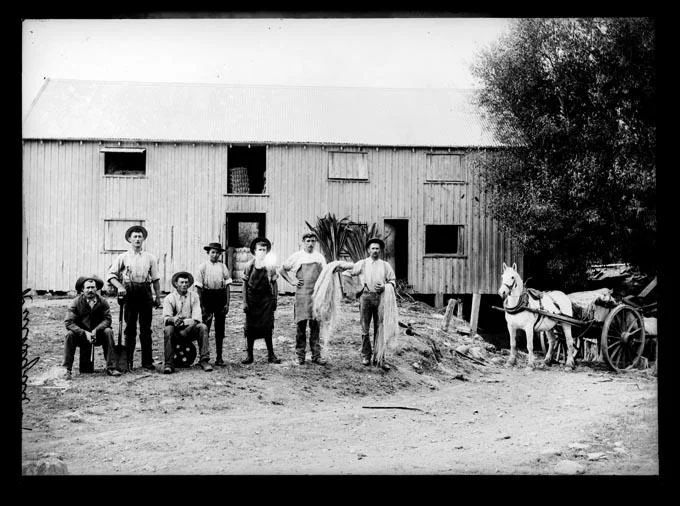
Rutherford had only recently made some major improvements in the flax mills, of which there were two constantly at work with the raw material being supplied by the settlers in the district, some as far away as Motueka. With all the machinery both for grinding and flax dressing destroyed, the employment of the thirteen men who worked at the mill was in jeopardy.
At the time, with the loss of the wheat, the buildings and the machinery, it was predicted that the total loss could be as much as £2000 in excess of the insurance
An early investigation found that the fire was thought to have started in a large shed which was only one year old and had been purpose-built for flax dressing.
On further investigation over the following two days it was confirmed that between 500 and 600 tags of wheat were burnt, but the total loss for others was not as much as first thought with only 33 bags being in the mill at the time. In addition to the grain, Rutherford lost between four and five tons of flax, one half of which was ready for the market, the remainder being in a less, advanced stages of preparation.
Two tons of green flax, eight of oaten sheaves, one of bran, and one of flour were also destroyed. The only part of the mill mechanisms was the water wheel, probably saved by being wet. Rutherford set about rebuilding the mill and within two months after the fire he advertised for tenders for the erection of a new flax mill.
Once rebuilt it continued to serve the district for many years, but in 1904 Rutherford retired, on- selling the mill.
His employees presented him with a marble clock, wishing him long life, health, happiness and a well-earned rest.
