
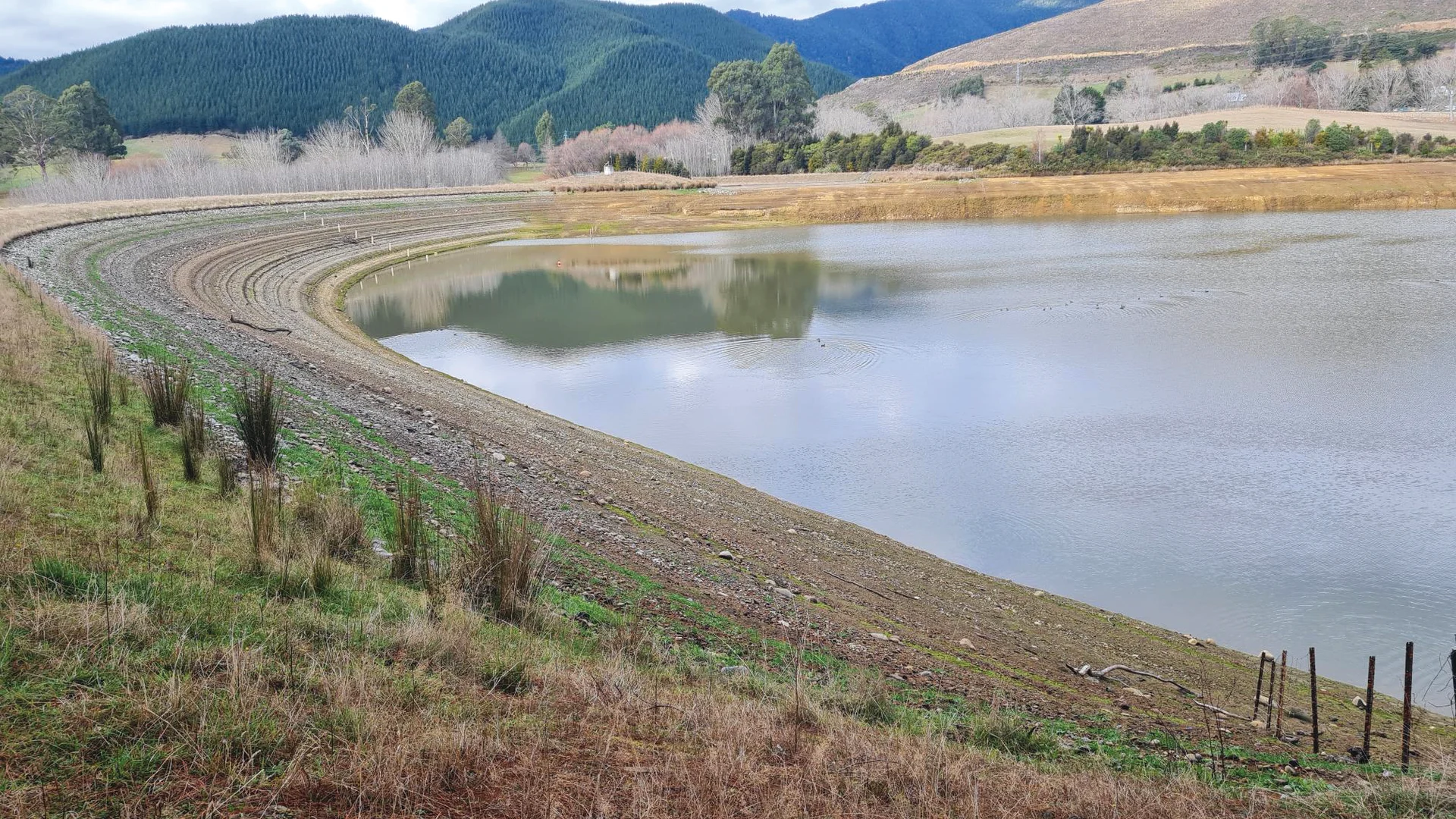
The Kainui Dam needs nearly a metre of rainfall to fill it by November, but with the typical optimism of a grower, the dam’s chairman and hop grower Peter Lines says it is still possible.
At the end of June, the dam’s water level had just risen above 15 per cent and until this past weekend it was still only pushing 30 per cent which leaves little time for it to fill for summer. The dam on the Kainui Stream at the top of 88 Valley releases water into the Wai-iti River and those who have bought shares can take water for irrigation. It also assists Wakefield’s town water supply which is taken from a shallow well and infiltration gallery close to the Wai-iti River.
Tasman District Council’s measurements show the dam requires between 800 and 900ml to be 100 per cent full by November and with average rainfall between now and then, the dam level will still only be 50 per cent full.
However, Peter has been farming for 50 years and grows hops at Wai-iti and he says he wouldn’t still be farming if he wasn’t optimistic. Hence, he says there is a chance the dam could still fill, or the region may escape a dry summer.
“One big rain event can put a lot of water in that dam and I’ve seen some very wet Septembers,” he says.
“As a hop grower, the market isn’t very good for the next two to three years, so we’ll only be growing two-thirds of our garden. So that will cut down irrigation demand.”
He says dry soils through winter soaked up rains so that little went into the dam, but now that the soils are replenished, future rains will benefit the dam more.
In the nearly 20 years since the dam was built, he says there has been a couple of years where it struggled, including last year’s long dry period. One option for the future is to pipe water into the dam from another source.
“We’re contemplating, if it can be financed, to pipe excess from Quail River at the headwaters, about one-and-a-half kilometres to the dam. We would need to do the consent process and we’ve done some rough pricing.”
Peter says the Waimea Community Dam will hopefully take some of the pressure off the Kainui Dam through future dry spells as well.
The Kainui Dam has enabled expansion in horticulture downstream by feeding water into the Wai-iti River and reducing water rationing.
“The main thing with the dam is to avoid rationing, so we dump water into the river and begin rationing when the dam is halfway down.”
