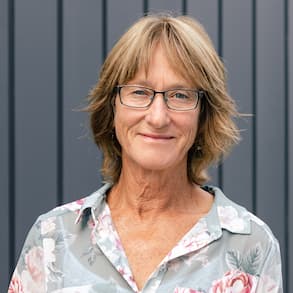

It takes a brave girl to stand up in front of hundreds of students at assembly and talk about period poverty, but Amelia Clark is not easily daunted when it comes to a good cause.
When the Year 13 student at Waimea College heard about many girls in third world countries who could not attend school or live their lives while they were menstruating, she decided she wanted to help and raise awareness.
It led to a bake day at school and addressing both senior and junior assemblies to give fellow students an insight to the challenges those girls face.
Her interest was piqued by a chance meeting with the Richmond Rotary group that makes kits of washable cotton pads for the Days for Girls initiative. The kits are delivered to girls in countries where they often don’t have anything.
Days for Girls was created after its founder discovered girls in an orphanage in Kenya were sitting in a shed for several days of the month and that prompted her to form a charity to supply kits and introduce health and education programmes.
To Amelia, it was an eye opener that girls around the world were ostracized from their community when they were menstruating because they did not have the basics that Kiwis take for granted.
“I thought, wow – I could do something to help.
“So, I decided to set up a bake sale to raise money for it and also raise awareness of a really important issue. And bake sales work really well at school!”
She baked 16 different items herself and with the help of other students’ baking, raised $420 for the Richmond Rotary group sewing the kits.
When it came to talking to the assemblies, she knew she had to go into it with confidence.
“Because if I am embarrassed about periods, it wouldn’t come across the way I wanted to. This has such a significant negative effect on girls overseas in third-world countries,” Amelia says.
The fact she can talk to a school assembly on the subject is in start contrast to many of the countries now receiving period kits where the subject is quite often taboo, she says.
“They’ve often been taught to be ashamed of their periods and this (kits) is empowering them. It’s educating the guys as well and changing that perception of periods for both females and males.”
Team leader for the Richmond Rotary group, Debra Gibbs, says a team of volunteers meet twice a week in the former Richmond Information Centre and sew cotton pads that become part of a kit that is sent overseas.
In New Zealand, she says, the government funds free period products, but the kits are available for those experiencing period poverty and wanting an environmentally-friendly, reusable product.
Many of the locally-made kits head to the Pacific Islands.
