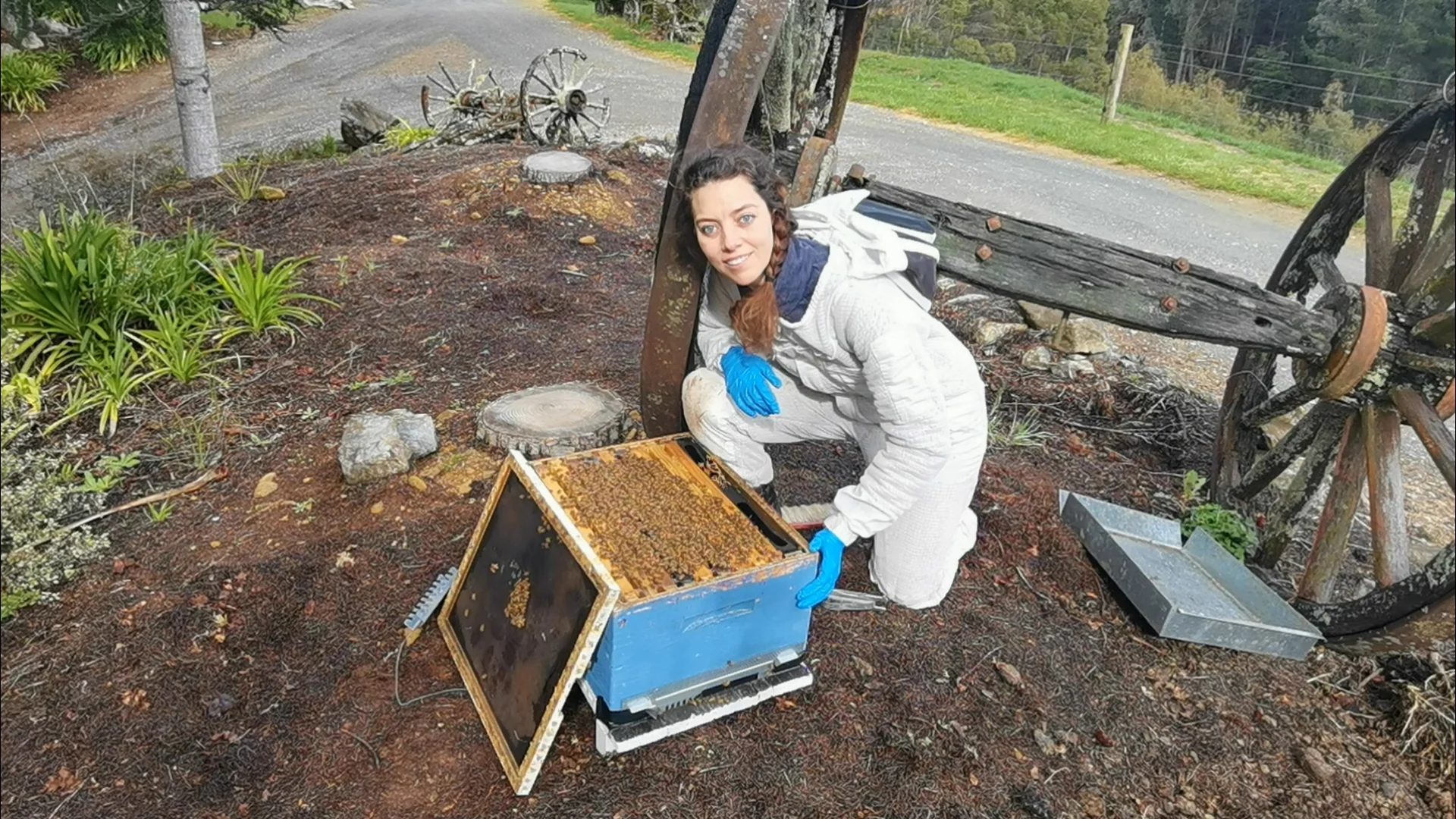
As the weather warms and the nectar flow starts, bees naturally swarm as part of their reproduction process.
It’s crucial to seek help quickly when this happens, both for the bees’ well-being and for human safety.
“Bees scouting for their new home stay in flight until sunset, and some swarm catchers may arrive midday, take only part of the swarm, and leave,” says Odette Petrzold, a seasoned swarm catcher and DECA (Disease Elimination Conformity Agreement) registered hobby beekeeper.
“The straggler bees that return are confused and will cluster where the swarm was last located and will likely die there from the cold and exposure over the next couple of days.”
She emphasises the importance of using a responsible, registered beekeeper to handle swarms.
Odette cautions against seeking help on platforms like community Facebook groups, where unregistered beekeepers may offer assistance. Instead, she recommends posting directly on the Nelson Beekeepers Club page.
Her interest in beekeeping sparked during lockdown, leading her to complete apiculture courses under the Fees-Free scheme which is still available through NMIT and Land Based Training. Now, four years later, she is a registered beekeeper certified to perform hive inspections for diseases through DECA.
“It’s essential to ensure swarming bees are disease-free. If issues arise, affected bees should be moved to a remote location for treatment to protect local beekeepers and orchardists.”
Unregistered beekeepers may not have this knowledge, which increases the risk of disease spread, Odette explains.
“The recent case of a North Canterbury farmer who had to burn 10,000 hives and lost millions serves as a stark warning for our region.”
If you have a bee swarm, please get in touch with Odette at 0223608323, Ian Sutherland at 02102303478, or post directly on the Nelson Beekeepers Club Facebook page.
For information on the fees-free apiculture courses please contact Scott Williamson from the Nelson Beekeepers Club.
