
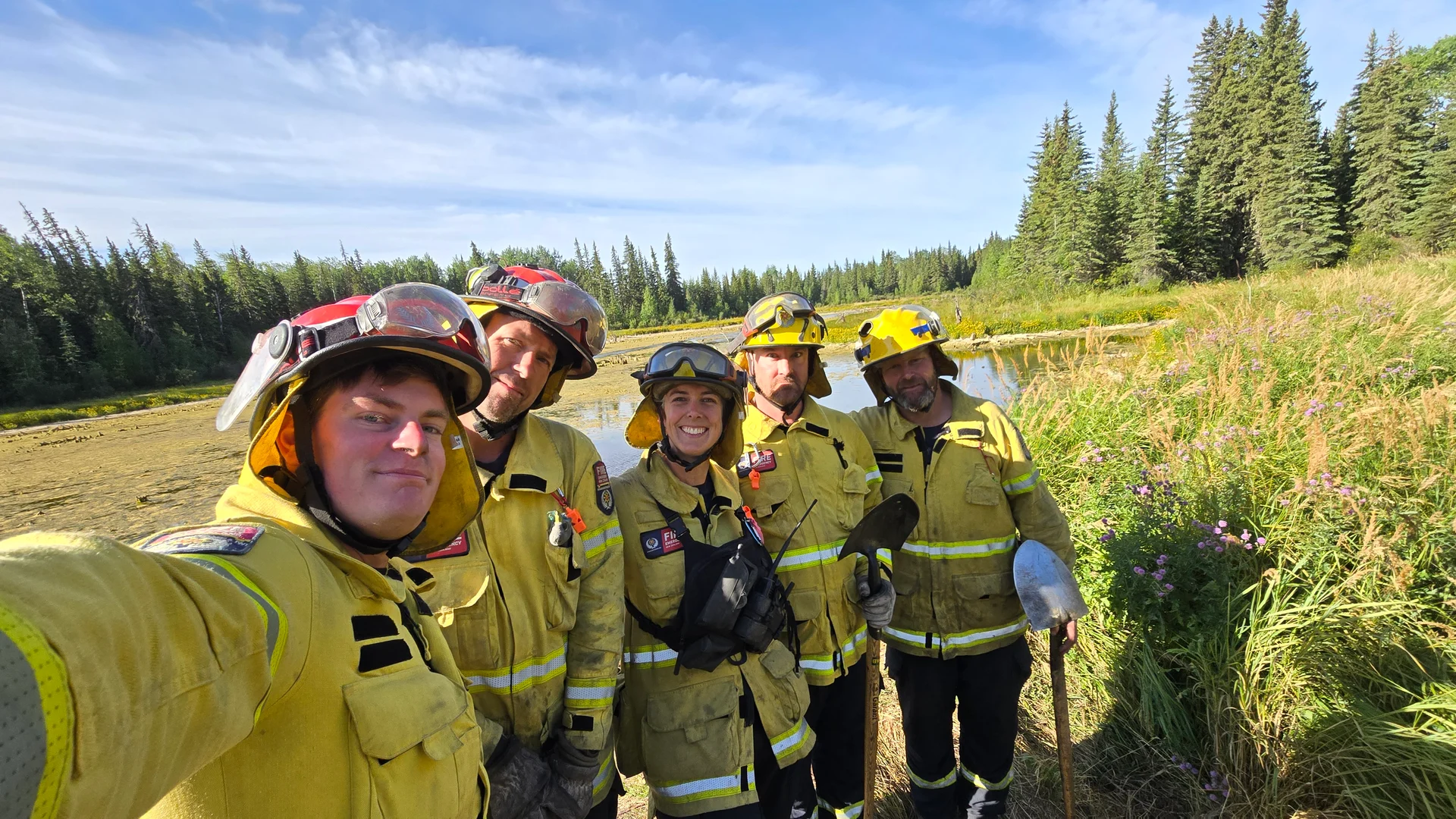
Taking on the enormous wildfires in Canada was the experience of a lifetime for two firefighters from the Tasman fire brigade.
Father-and-son fire fighters, Mark and Kyle Wilson, have been back about a month after their epic 36 days in Alberta. They were part of the international relief effort that battled fires more than four times the size of this area’s catastrophic 2019 Pigeon Valley blaze.
Kyle and Mark were two of 20 New Zealanders who travelled together to Vancouver, before moving on to Peace River and later Grand Prairie.
Each day, the firefighters were helicoptered in their crews of five to a site near the fire, where they walked around the perimeter, using hand tools to dig out hotspots and ensure that the fires were contained. The call as to whether the fires were extinguished or left to burn themselves out was often made by the Canadian First Nation crews.
Mark and Kyle say it was exhausting and relentless work – they walked up to 20km each day, with 20kg on their backs.
“It was just repeat, repeat, repeat, every single day. We had no time to think what we were doing, no time to relax,” Mark says. The pair is not complaining though – it is an adventure that they cherish, and as they talk about their experience, the stories and details spill out of them.
Kyle says the New Zealand contingent made a conscious decision to treat every day like day one, fighting against fatigue and keeping their enthusiasm and energy fresh.
One of the biggest threats as fire fighters in Canada was also one of the biggest learnings to bring back to their New Zealand force: dangerous trees.
Canada’s spruces, poplar and aspen were prone to burning from the inside out, leaving a towering brittle column of hollow wood. A breath of wind could cause them to suddenly collapse.
“When they do come down, they come down silently,” says Kyle. A member of the Alberta crew was recently killed by this phenomenon, and while it is not as commonplace in New Zealand, Mark and Kyle say it is hugely valuable to have had first-hand experience of this threat.
Canada’s landscape also took some getting used to.
“I just couldn’t get over how flat it was,” Mark says. “As far as we looked, it was just wheat fields or native bush.”
They also encountered some of the local wildlife, including white tail deer, caribou, squirrels and beavers, as well as moose, which Mark describes as “a Clydesdale on steroids.”
It was a relief to return to New Zealand and their own beds, and Kyle reckons that on the first night back, he slept for 14 hours straight.
Their experience is still vivid, however, and they have found that they approach their Motueka fire fighter training with a new vigour.
After all, after jumping out of a Canadian helicopter into waist-deep swamp water, they have found that getting their feet a bit wet in the Motueka River is a perfectly manageable challenge by comparison.
