
BY JOANNA SANTA BARBARA
There are some brilliantly frugal households in the Nelson Tasman region. Not a gram of edible food escapes to the garbage.
Leftovers become part of the next meal, and the ends of the loaf of bread are turned into croutons or breadcrumbs. Nothing goes bad at the back of the fridge or in the fruit bowl. And the unavoidable food waste - the apple cores and coffee grounds - go to the compost pile or the neighbours’ chooks.
And then there are the rest of us... A recent survey carried out by Rabobank and Kiwi Harvest showed that 100,000 tonnes of potentially edible food in Aotearoa is wasted every year.
This represents roughly $1510 of food per household. It would look like three big supermarket trolleys of food per person.
Food is wasted at several points of production. In households, it’s wasted because we cook too much and throw out the leftovers, and we leave food in the fridge or freezer until it goes off.
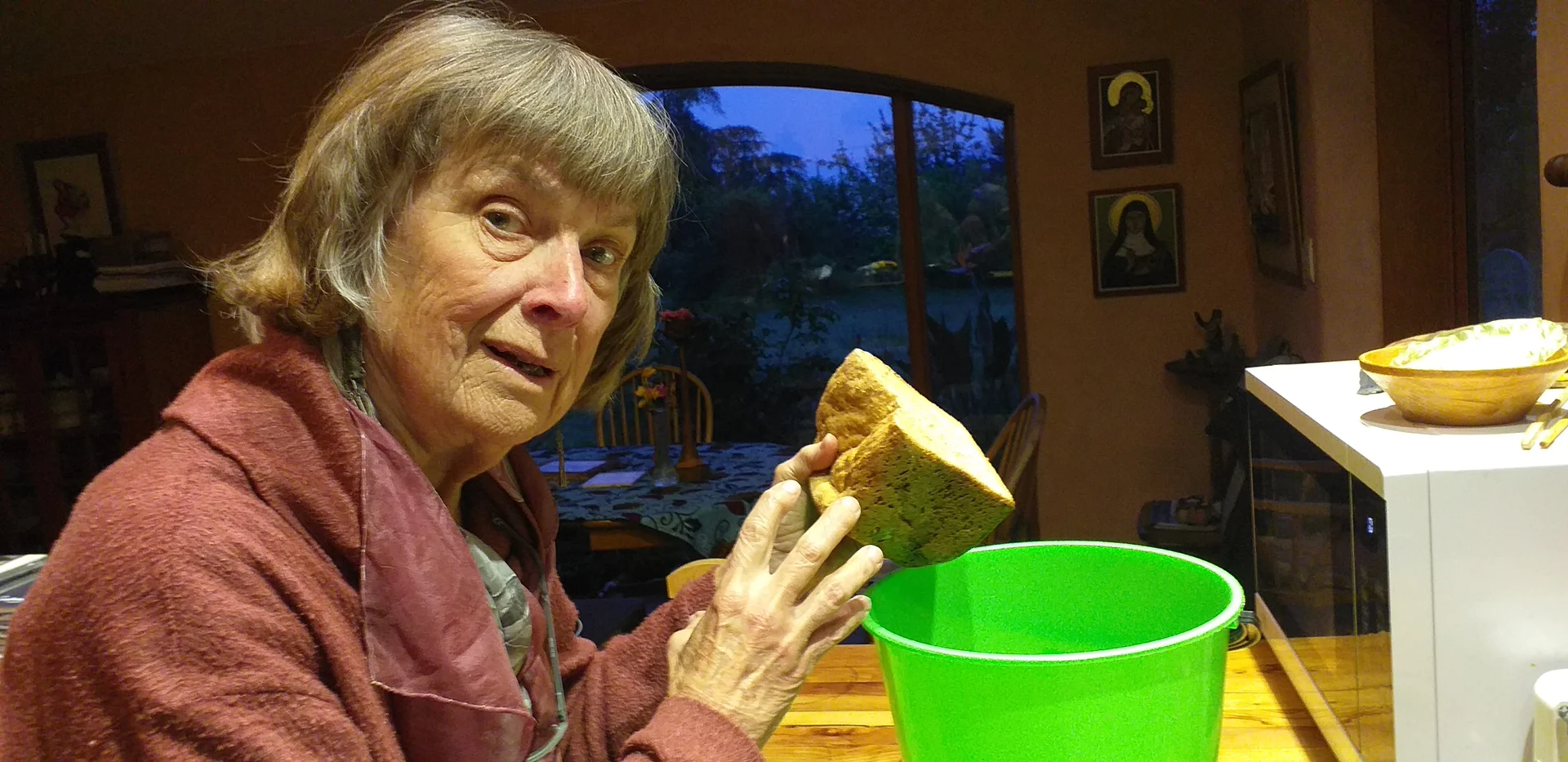
We throw out tonnes of bread, leftovers, fruit and veges. We also throw out chips, as most servings exceed our appetites. Lunchbox sandwiches of school-kids are another big point of waste.
Why is this a problem? Food waste is a waste of household money, straight and simple. It’s also a waste of Earth’s resources of land and water, which are already strained to feed us. It seems disrespectful to the forests lost, the creatures who have lost their habitat to agriculture and horticulture, to waste what is given to us in food.
Worse still, food waste in landfill generates methane, a highly potent greenhouse gas heating the Earth.
Then there is the packaging for all that food – the plastic, cardboard, glass and aluminium that we throw away, forgetting that there is no ‘away’.
So how do the households that minimise waste manage to do that? They make a lot of their meals at home, buy carefully, store their food thoughtfully, have organised fridges where leftovers don’t get lost, use every edible bit of what they buy, save and use leftovers. They find ways to minimise packaging.
Lots of tips can be found online on the Love Food Hate Waste website. Come to a short workshop on Minimising Food Waste on Saturday, 19 October, from 11am-12pm at Te Noninga Kumu/Motueka Library, in association with the Motueka Repair Cafe, and led by Joanna Santa Barbara. You may have tips of your own to share!
Joanna Santa Barbara is co-chair of Nelson Tasman Climate Forum and a member of the Motueka Repair Cafe.
