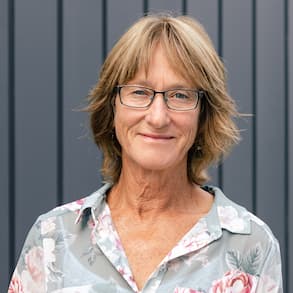

Car-share schemes work around the world and Goedele Van Cauteren says why not Māpua?
Like 20.8 per cent of Tasman she works from home, and the family decided they could manage with one car, ditching the expense of a owning a second.
Sometimes though, a car would be handy, if only for an hour or two, and she says the eBus timetable does not yet have enough runs through the day to get to Richmond at a time that suits.
It means she has to seek transport with other people on the occasions she needs to be somewhere. “Quite often I have to take my son to afternoon sport and have to try and find a ride for him.”
That got her thinking about car-sharing schemes which are frequently used by family members in Europe.
They use an app to reserve a car and a code is sent to unlock the car. Car share schemes also operate in major cities around New Zealand, though she says they are usually commercial operations, whereas she thinks a community-driven scheme might work better for Mapua.
“You could have a community car which means anyone who is a member could drive it and they would have to have their driver’s licences checked to use it.”
In the village, she sees cars sitting in driveways with very little use, whereas a share-car scheme might give more people the option of quitting the expense of a car that spends most of its time parked.
In Europe, she says, it is often cheaper for people living in a city to hire a car occasionally than own a car and pay all the costs.
At this stage, she just wants to see if other people are interested in the idea and if so, how a scheme in Mapua could work – if at all.
In Nelson, Bowater Toyota launched the Toyota Mobility Project a couple of years ago, which enabled people to hire one of 15 different vehicles for as little or as long as they needed.
Bowater Toyota’s media and brand manager, David Eagle, says it was an opportunity for Toyota to assess the viability of such a scheme on a nationwide basis, giving people access to their demonstrator fleet so that they could use the right car, for exactly the right purpose, for 30 minutes, an hour, or even a weekend.
The result of the 18-month pilot project was “really successful”, he says.
“Every month it grew substantially. In terms of a business model, it stacked up and exceeded the expectations of all involved. Some of our users were very sad to see the end of the project.”
David says a car-share, subscription or mixed ownership model is potentially part of long-term mix of rethinking how people move around a geographically vast and diverse region, where families are scattered over large distances, as well as clustered in communities.
“There is a lot to unpack as to how this works into the future. The need for personal mobility will always be there, as well as mobility on demand, and specialised mobility for businesses in the region.
“There are exciting sustainable technologies on the near horizon which will change everything,” he says.
