
Hot chocolate used to be provided for pupils who brought their own milk and mug, and heating challenges prompted time-outs for warmups next to heaters.
Brooklyn School on the fringes of Motueka has gone from strength to strength since its first lessons in the front room of a farmhouse owned by a Mr and Mrs Duncan in the early 1840s.
After the property was razed by fire, it was resurrected in 1874 on Old Mill Rd land that was also owned by Mr Duncan.
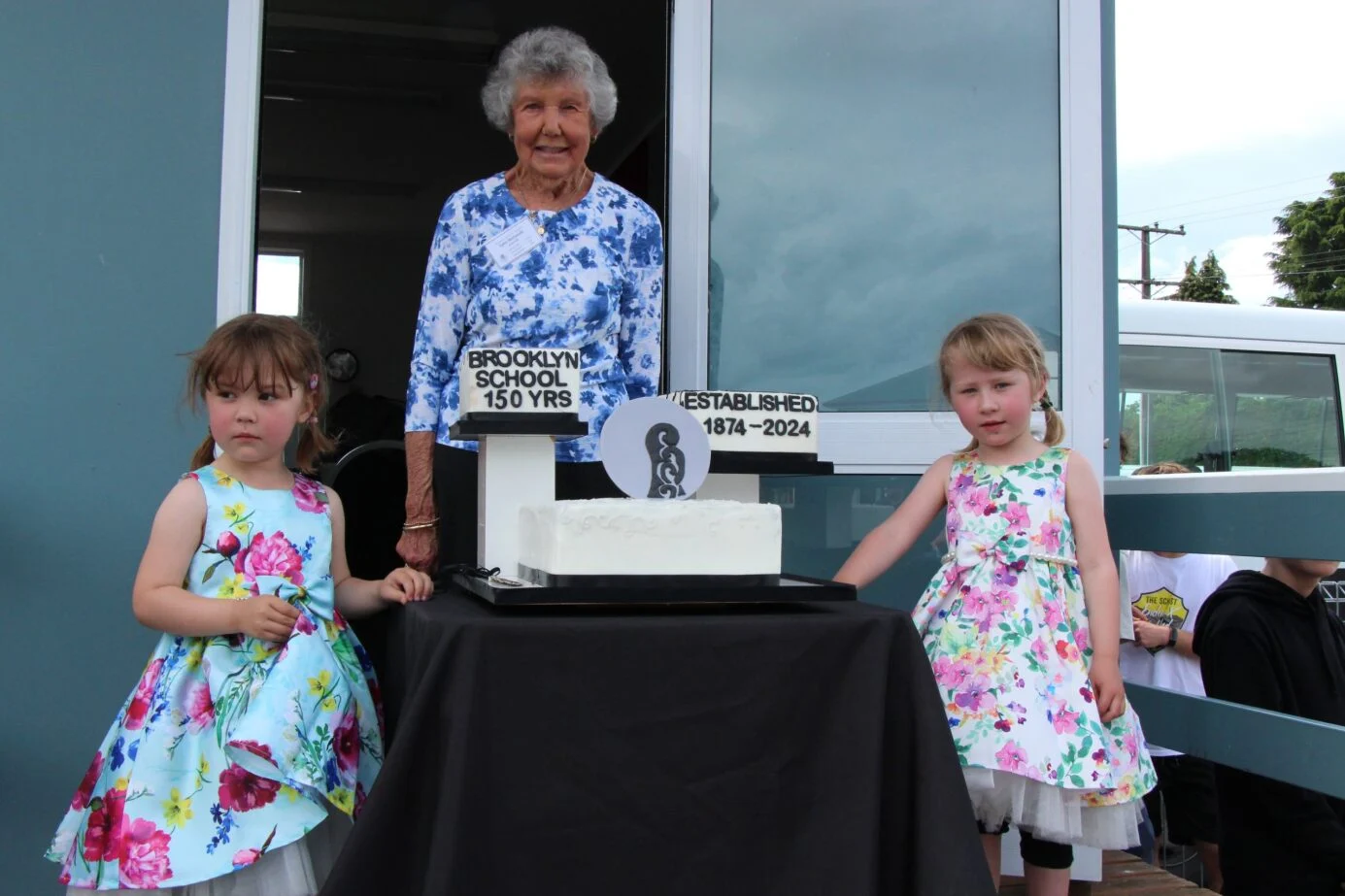
Its 150th year, attended by former students and staff, was celebrated on Friday and Saturday with reminiscing, speeches, decade photos, an anniversary kōhatu (stone) unveiling, an anniversary dinner at the Riwaka Rugby Club and an exhibition at the Motueka Museum.
It was reported that the first building was one long room with two fireplaces before a new and larger building was built in 1887.
Its “very high-peaked” structure caused heating challenges even when a big steel coke and coal burner in the middle of the big room was installed in later years.
By 1937, the Nelson Educational Board decided to provide better and healthier facilities for children and teachers, and in February 1938, the new building was opened by the school’s most famous export Sir Keith Holyoake who went on to become Aotearoa’s Prime Minister and Governor-General.
A plaque on the school grounds honours him.
Today, 135 students and around 18 staff make up the rural school.
Chris Kemp, current principal for the past 14 years says, the community was the top of the class in the school’s prosperity.
“The connection to our local environment, understanding where we sit within the history of Motueka, and that development over time so it stems from those strong foundation points, most good things have grown from there,” he says.
“The future plans are to keep providing a great learning environment for the diverse range of students we’ve got here, staying connected and looking ahead.
“We’re on a fantastic trajectory continuing to produce well-informed students who are ready for the challenges of the global stage throughout their academic growth,” he says.
