
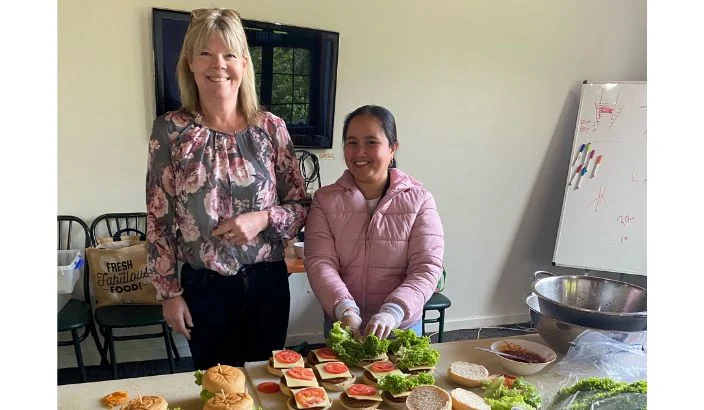
The principal of Murchison Area School is appalled that the Government is dumping the locally-run school lunch programme that now ends in a few weeks, with little consultation about how lunches will be delivered daily from Christchurch.
Andy Ashworth was part of a Ministry of Education conference call two weeks ago to learn about the new programme, called The School Lunch Collective, but he says 200 people took part in the video call and it consisted of a statement that lasted two minutes.
Along the road from the school, Jeanine Gill and her team at Beechwoods Café have been supplying nearly 200 lunches a day to the local school, tailoring to different allergy requirements, and that is all about to come an end.
Associate Education Minister, David Seymour, last week outlined the new school lunch programme that is aimed at slashing $130 million from the annual cost of supplying lunches to schools around the country.
Andy understands that Murchison’s meals will likely be made in Hamilton, sent through the ministry’s distribution network to Christchurch and then delivered daily to the school in insulated carriers so they can be handed directly to students.
The meals have to be ready to hand out as the school does not have the ability to heat and store them.
While he says the scheme should work well in larger suburban areas, he has numerous unanswered questions for the ministry such as what happens if weather or something else closes roads and the lunches do not arrive. Many students arrive by bus and cannot simply be sent home, he says.
“The road has been closed a number of times, so what are they going to do when they can’t get food to us? We won’t know until later on and our school students will have turned up without lunch.
“I’m appalled by losing a very successful model and the downside of losing that, and appalled by the lack of consultation. It’s just a joke. What am I supposed to tell my community?
“There’s a whole bunch of things we’re concerned about and we’ve had a really successful model here with a local provider that has limited waste and is a real positive example of how to do it.”
Jeanine now has only a few weeks left to deliver lunches to the school; a contract that employs two staff working 25 to 30 hours each week. One is leaving and will not be replaced now, while the plan is to try and redeploy the other in the business.
“It affects our business and our staff dedicated to that role. We have that to work through,” she says.
“It’s huge. It takes money off our bottom line. We lose revenue, we lose profit and it kind of decreases the value of our business.”
West Coast-Tasman MP Maureen Pugh says the priority has to be delivering lunches at a cost that’s affordable to the taxpayer.
“I acknowledge some businesses will lose contracts as part of the new model,” she says.
“We can’t justify keeping the old model when it’s possible to deliver at half the cost.
“It’s also important to acknowledge the many businesses, nearly 20, who make up the School Lunch collective and their supplier partners who will be contracted to supply lunches from now on.”
Jeanine questions how the new scheme will deal with waste and the food miles to get meals to remote schools.
She has been delivering meals in recyclable containers and food waste has been picked up for animals.
Recipes from the café’s school lunches have been shared nationwide as an example of nutritious meals that could be duplicated elsewhere.
Ministry of Education’s operations and integration leader, Sean Teddy, says all meals will be made in a central kitchen – which it has previously reported as a
Hamilton kitchen - and delivered to 29 production kitchens located around the country, with venues yet to be finalised.
The meals will then go by road to schools.
Four Tasman schools are in the new school lunch programme, with three including Murchison using the external model where meals are brought in. The fourth will use an internal model where they order food and ingredients from The School Lunch Collective.
For schools potentially affected by severe weather or closed roads, he says the collective will ensure they have non-perishable foods available and will also draw on the networks and logistics of its partners Gilmours and Foodstuffs.
