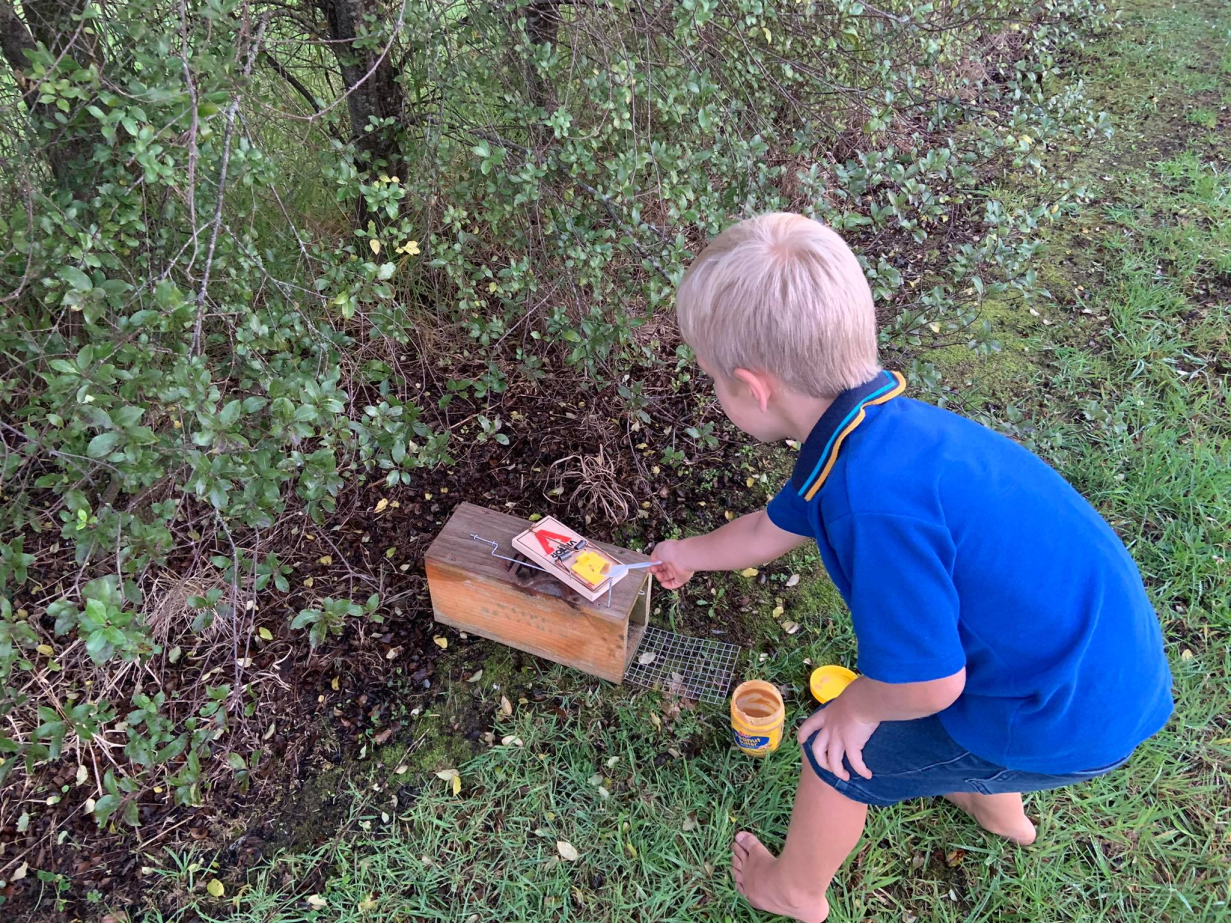
The Tapawera community has the opportunity to step up to help create a Predator-Free New Zealand by 2050, where our native species thrive alongside us.
Local groups the Motueka Catchment Collective and Tapawera Connect are working together on a project to protect native birds, frogs, lizards, and crops from the damaging effects of introduced pests – and everyone has a role to play.
Predator Free New Zealand 2050, a part funder of this project, warns that native species are disappearing at a rapid pace. Rats, stoats, and possums kill an estimated 25 million birds each year, threatening around 4,000 native species with extinction—one of the highest rates worldwide.
In response, Motueka Catchment Collective and Tapawera Connect are supporting the Tapawera community to start trapping these harmful predators.
“Pest control is important to help maintain and enhance our native biodiversity,”
Jacob Lucas, who volunteers for the Motueka Catchment Collective, explains.
“We are hoping this will be the start of building a trapping network to benefit both the residential and rural area around Tapawera.”
Backyard biodiversity is the plants and animals that live in your backyard. Backyards can provide food sources and safe refuge for native species, and act as ecological ‘stepping stones’.
Kate Radloff, a Tapawera local and member of the Motueka Catchment Collective, stresses the importance of backyard biodiversity.
“It’s really important we acknowledge what biodiversity is and realise that a loss of biodiversity is equally important as climate change. By working together, the Tapawera community can help bring back insects and birds to places like Shedwood Bush, farms, the river, the school, and even the town.”
For more information on trapping to protect our unique environment visit the Tapawera Market on Saturday, 24 November, where the groups will be offering rat traps and advice on how and where to set them for residents of Tapawera community – koha appreciated.
