
By Darren Crawford – Fire & Emergency Te Ihu – Nelson/Marlborough
The Nelson-Marlborough Summer season brings an increased risk of unwanted wildfires. All it takes is one spark and in the right conditions fire will be off like a skinny Hogget.
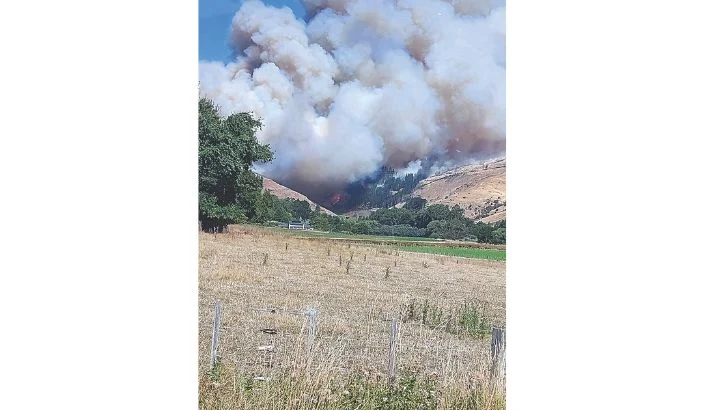
Spark generation and the potentially disastrous outcome of accidental ignition is of special concern to rural and farming communities, some of whom may have experienced first-hand the devastation caused by the month-long Pigeon Valley wildfire four years ago.
The Pigeon Valley fire destroyed 2,400 hectares of land and forest after farming equipment generated a spark. Events such as this are devastating to the communities that experience them, which is why a community effort to reduce the risk of fires occurring is so important.
As the temperatures across the region are ramping up, BUIs (Build-up Index) are increasing - providing a timely reminder of the potential spark hazards that hot works and high fire risk activities pose during the dry season.
BUIs are the availability of dry vegetation and light fuels (such as grass, pine needles) which could supply a fire. Activities like welding, mowing, chain sawing, ploughing, or driving in dry, grassy or vegetated areas have the potential to generate sparks which could start a devastating wildfire.
Community members wanting to undertake heat or spark generating activities are encouraged to first check NIWA’s fire weather information site and www.checkitsalright.nz before beginning, to help you make an informed decision about the suitability of the fire weather for their operation. Doing your research and determining the suitability of current fire conditions could be the difference between avoiding an incident or accidentally starting a wildfire.
Wildfires are unpredictable, so preparing your property for the potential is an important step. A great way to do this is managing the volatility of vegetation planted around your property by creating a ‘defensible space’.
This increases the probability of your house surviving a wildfire. Removing highly flammable natives such as Kanuka and Manuka, in favour of low flammability species such as Papauma/Broadleaf or Karaka reduces the volatility of surrounding vegetation, providing little fuel for a wildfire.
Planting low flammability plants away from the house can also create a ‘green break’ to reduce fire hazard to the property. The first 10 metres around a house should be free from debris and potential fuels that could ignite. The following 10-30 metres should contain well-maintained with grass kept short and plants pruned above the ground and with gaps between other vegetation.
Jeff White, advisor risk reduction and specialist wildfire investigator, also adds that at this time of year, it is crucial for landowners who have conducted open-air burns to thoroughly recheck their ash piles and ensure they are completely extinguished.
Hot ashes buried deep within an ash pile can remain dormant for several weeks, reigniting under favourable conditions such as high winds and low humidity.
A recent incident in Golden Bay highlights the importance of this vigilance. A fire quickly spread through more than two hectares of vegetation and came dangerously close to a hay barn. This fire originated from a modest burn pile the landowner had operated several days earlier. Although the initial burn was conducted under controlled and favourable conditions, the remnants of the fire posed an ongoing risk.
Three days later, weather conditions deteriorated. Strong south-westerly winds gusted over 50 kmh, temperatures rose above 30°C, and relative humidity dropped to 19%—perfect conditions for an extreme wildfire. Hot ashes from the old burn pile reignited, and embers were rapidly carried to the surrounding vegetation.
Thankfully, the swift response of the local fire brigade, supported by three helicopters and heavy machinery, helped contain and control the fire, minimizing losses.
Unfortunately, such fire incidents are all too common yet entirely preventable. It is critical not to assume that a burn site is safe once flames and smoke are no longer visible. Thoroughly soaking the area with water and conducting regular checks in the days following a burn are essential steps in preventing these dangerous flare-ups.
