Roger Goodison knows a thing or two about the sea after a 49-year career that took him from a North Sea winter to New Zealand’s subantarctic islands and navigating a ferry across the Cook Strait.
For a period, he captained the Strait Shipping ferry between Wellington and Nelson, carrying stock and freight over a stretch of water known as one of the most rugged in the world.
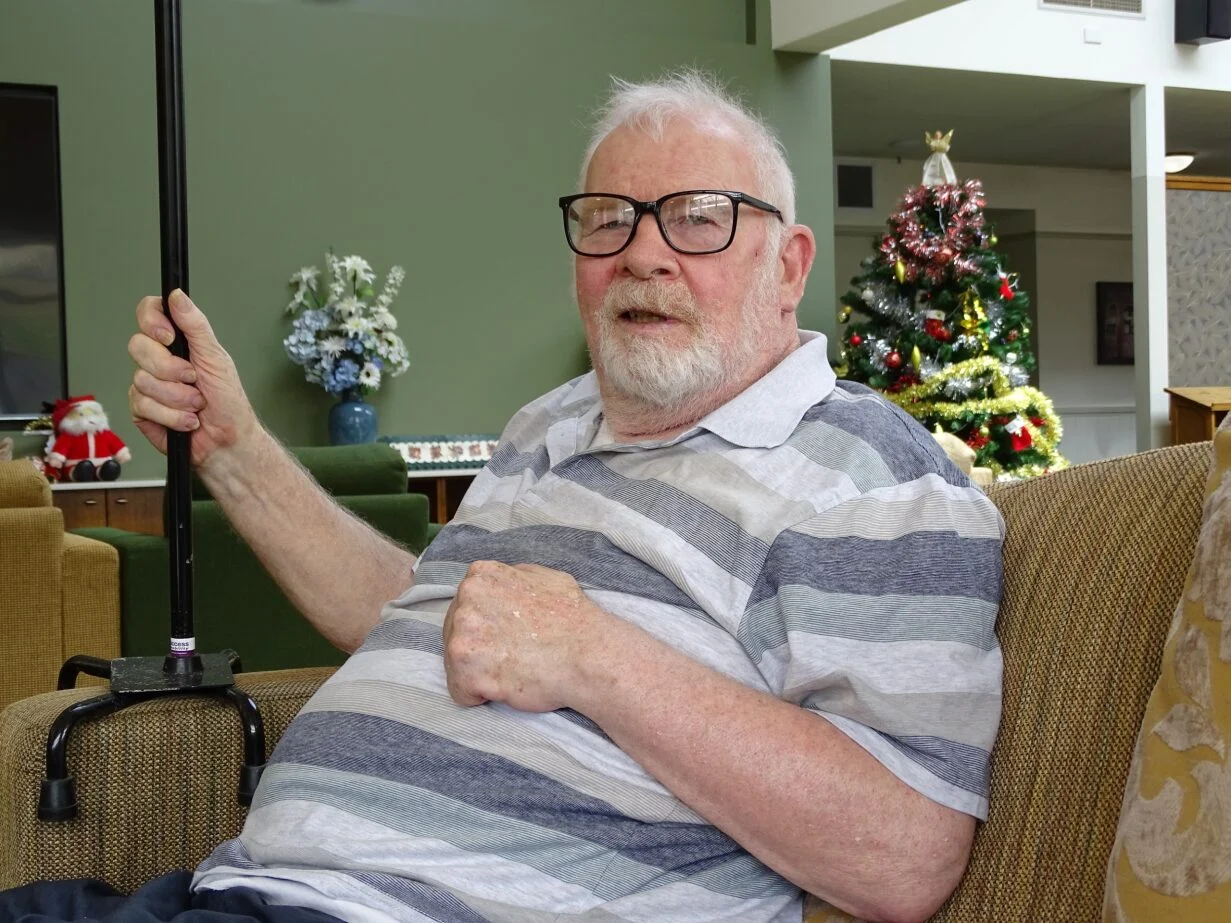
"It has its moments,” Roger reflects, as he sits in the Arvida Oakwood’s retirement village lounge, where the 74-year-old is on the long road of recovery from a stroke several years ago.
“It cuts up rough when the wind is against the tide.”
That’s one of the reasons he liked Labour’s iRex plan to replace the ageing Interislander ferry fleet before it was dumped by the National-led coalition government. He concedes that was an expensive deal and believes the Deputy Prime Minister, Winston Peters, is the right person for the job ahead.
“I think we owe the travelling public and commercial drivers a smooth and safe trip across the Cook Strait.
“It just needs to happen.”
He would have liked an overnight run between Wellington and Lyttleton considered again to take pressure off Picton and he is emphatic any new ferries need to be rail enabled but, recognises the challenges of balancing costs with needs. “It’s a conundrum.”
Keeping the ageing ferries going requires increasing maintenance and Roger says it sounds as though there could have been more maintenance carried out in the past, even though that can be challenging for ferries running on timetables.
His own seafaring days were with the merchant navy and at one stage he was first mate on a supply vessel in the North Sea, working out of the west coast of Denmark to an oil rig. During winter, it was “cold, wet and windy”, with the first light of morning appearing about 2am, but disappearing by 2pm.
That came to an end when the drilling rig they were supplying hit a pocket of gas and the rig exploded, basically “blown out of the ground”. Roger’s vessel was in port at the time and another ship towed the rig clear, with several casualties from the explosion.
After that, he returned to New Zealand to captain the former Ministry of Agriculture and Fisheries’ research ship, James Cook, where he spent a decade between the Kermadec Islands in the north and the subantarctic islands to the south. He worked in an environment of wild landscapes, unique wildlife and witnessed whales broaching as part of his job. One of the team’s tasks was working with Department of Conservation staff to remove introduced animals from the Auckland Islands. In the late 1800s, he explains, the Government at the time placed pigs, goats and cattle on some of the islands to be used as rations for shipwrecked sailors.
“We went down to remove them. We had a wee bit of an adventure one day driving the inflatable to pick up live goats. DOC people put them in sacks and this sack, opened and one of the goats escaped. We managed to get it back into the boat and back in the sack, and I think those goats came back to a farm somewhere.”
He went on to captain the replacement research vessel, Tangaroa, and at the end of the 1990s was seconded to Strait Shipping on the forerunner of the Bluebridge ferry for a couple of years, before returning to the Tangaroa.
A year after his retirement in 2016, he suffered a severe stroke that put him in hospital and his retirement has not gone according to plan. He’s working on his recovery and plans to return home when he can.
