
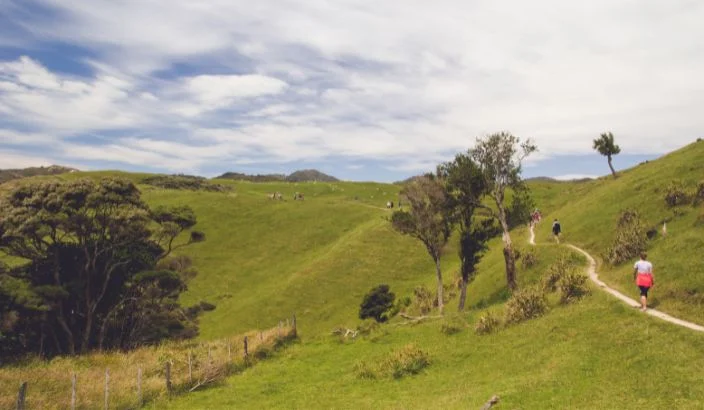
HealthPost Nature Trust is one of two parties chosen to manage Pūponga Farm Park that bounds Onetahua/Farewell Spit and aims to build a 3km-long predator fence to keep predators off the spit.
The farm park has long operated as a working farm on a lease agreement and last year the Department of Conservation sought proposals for managing the area.
While HealthPost Nature Trust will lead the restoration and predator project for 200ha against the base of the spit, neighbouring farmers Pax Leetch and Ellie Miller will graze land from the west of Old Man Range to Greenhills and operate it as a working farm.
The trust has worked in partnership with Manawhenua ki Mohua and DOC for several years which has led to pakahā/fluttering shearwaters translocated to the area. Now it plans to carry out restoration work in the Triangle Flat area of the farm park and build the predator fence across the base of the spit to protect native species from possums, stoats, pigs and hares.
It will also fund 50 per cent of a salary for a DOC ranger to be based in Pūponga and work closely with Pest Free Onetahua which is a large-scale conservation project removing pests from the spit and surrounding areas.
Both concessions for the farm park run for five years while DOC works with local iwi who are treaty partners to develop a long-term strategic vision for the site.
DOC Golden Bay operation manager, Ross Trotter, says the Onetahua/Farewell Spit Nature Reserve is a unique ecosystem and a significant biodiversity hotspot, with several rare plants and more than 90 bird species recorded in the area.
“HealthPost Nature Trust’s vision is exciting because if we can get predators down to really low numbers, Onetahua would be a much-needed safe haven for some of our threatened species in the area. It might also mean more rare species could be released into the area in the future.”
HealthPost Nature Trust chair Peter Butler says that apart from gannets on a sandspit at the very tip, the area is not a safe place for any native species to raise their young and together with its partners in the initiative, the trust aims to change that.
“If we can defend the base of Farewell Spit, and with our partners tackle the predators, it’s going to become much more than just a great feeding ground for migratory birds.”
DOC’s senior seabird advisor, Graeme Taylor, says that if the joint predator control effort succeeds, the entire 2,000 hectare, 50km-long coastline could one day provide a safe haven for endangered species. Potentially, burrowing seabirds might return to the stable dunes near the lighthouse.
Eight proposals were received and an evaluation panel made up of Manawhenua ki Mohua, Nelson Marlborough Conservation Board representatives and DOC staff decided on the successful applicants.
The area will remain open to the public and an open day on the restoration proposal is being held at the trust’s whare on Triangle Flat on March 22 between 1pm and 3pm.
