They may be scared and angry sometimes, but kids usually don’t know how to explain what they feel or what to do about it. Now, Wakefield School is the first in the country to adopt a programme that shows kids how their brain works and what they can do to become more relaxed and happier.
Deputy principal Emma Hunter is the push behind the introduction of an overseas programme called Reboot, in collaboration with New Zealand charitable trust, BrainHug. It’s all about social and emotional regulation – understanding emotions that lead to stress and learning what to do about it.
She has been working for 20 years with children who have complex special needs and disengagement. It’s a decade since she carried out a study on school attendance – or rather why some weren’t attending – and the emotional problems she sees among school children has continued to worsen.
“We think we’ve seen it all, but every year we’re shocked. It’s very sad and it’s confronting and shocking.”
She attributes much of the stress and behaviour she sees in children today to a whole range of issues, from the cost of living, devices, split families and back to the Covid-19 pandemic.
“It’s just people are stretched, and time with children is the most important thing to develop brains and especially in the first seven years.”
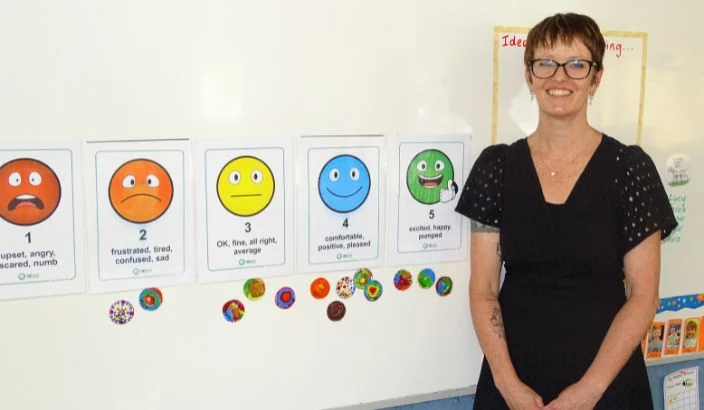
Now, classrooms at Wakefield School have a visual display panel of emotions so children can rate how they feel and learn strategies to stop them from becoming stressed. On a good day, they may choose ‘excited, happy and pumped’, while other days they’re at the other end of the chart and upset, angry, scared, or numb.
Emma says Reboot is about building more tolerance to stress and having a common language to talk about it and understand it. Parents are also being included through the school newsletter, with plans to run more parent evenings.
The programme revolves around neuroscience and how the brain responds to stress and trauma. Since the beginning of the year, Wakefield children have begun learning about the different parts of the brain and how the emotional part influences the frontal cortex where the learning happens. That’s something we all should understand, she says. While the programme will be introduced to more local schools and she has hopes it will eventually be rolled out nationally, she says adults can also benefit from Reboot to develop strategies for coping with stress so they do not lose control – which has become the norm.
“Self-control or emotional regulation are the main drivers of wealth, health and happiness. The economic stability of our country rests on that.”
