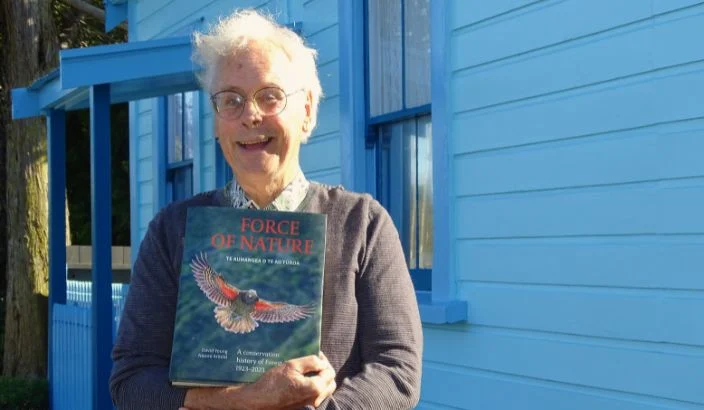
It took nearly four years to write the book for Forest and Bird’s centenary and the end result from two local authors is a colossal book that makes a statement.
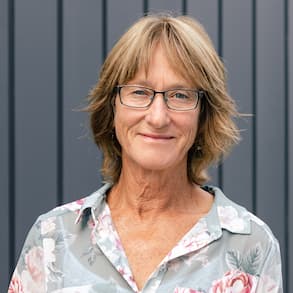
Tasman writer David Young suffered a massive heart attack while beavering away on Force of Nature Te Aumangea o te ao Tūroa and the mission became a team effort with Nelson author Naomi Arnold.
The result is a “monumental weighty book” that made it to the long list for the Ockham Book Awards. It really is a physically huge book, with an eye-catching cover photograph of a kea in flight.
It traces the history of New Zealand’s oldest independent conservation organisation which has been involved in environmental campaigns to protect native birds and their forest habitat, create national parks, protect the marine environment and then attempts to tackle climate change.
It’s heavily illustrated, including recoloured older photographs from early days, with a focus on the people involved in conservation work.
For David, it’s a subject close to his heart as he has long been a conservation writer and advocate for environmental justice, as well as community regeneration efforts around coastal Tasman where he lives.
He remembers his first conservation story back in the 1970s about air pollution and over the years he has “written a lot about water”, but Force of Nature is his biggest project.
The book was published in November by local publisher Robbie Burton, and David is quick to point out that the book couldn’t be done without their researcher, Michael Pringle, who brought much of the information together. Over 100 years as an organisation, there was a colossal amount of information to sort through and condense into one book.
“Knowing where to stop was difficult,” he concedes. “These things do run your life; you don’t do a lot else!”
He engaged with Māori from the beginning of the project and says mātauranga Māori, or traditional knowledge, has played an important role in Forest and Bird.
Today, the organisation is more important than ever, he says, as it continues to campaign on issues from fresh water to climate change.
“It’s also reminding people that these things should be above politics. We are talking about something sacred. It’s vital because where else is the advocacy at the moment?”
