
Robyn Parkes
“A man named Bagent has erected a very complete sawmill in Waimea South, on Captain Wilson’s section about three miles this side of Wakefield. It is the intention of Bagent to construct also a flour mill which will be a great convenience to the numerous cottages in that district”.
This small article, with the surname wrongly spelt, appeared in the Nelson Examiner in March 1844. The article comes across almost as an afterthought piece on a man of no great importance. Little did the writer know that ‘the man named Bagent’ would become one of the most notable people in the history of the district.
Edward Baigent arrived in Nelson in the ship Clifford in May 1842, with his wife Mary Ann and five children, Edward Jnr, Alfred, Elizabeth, Arthur and Samuel.
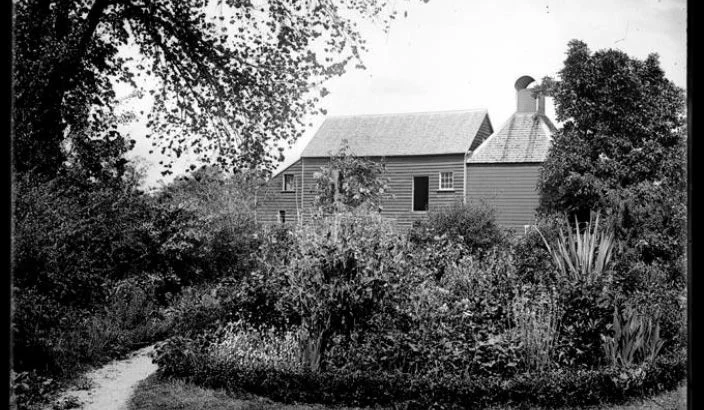
He settled for a short time on a leased property in the Brook Valley, but by 1844 had relocated to Waimea South. He built a water race on the Wai-iti River and erected a sawmill and a flour mill; the plant he had brought out with him from England.
He continued the flour mill for some years and the early settlers were able to bring small quantities of corn to be ground up.
Later, with another flour mill being built in the area, Edward focused on the sawmill. Mary Ann, by mid-1843, was teaching children in their home in Wakefield until a school was built around January 1844.
In 1853, Edward won the election for the Waimea South electorate for a position on the Nelson Provincial Council and was very active in meetings to do with the development of the settlement.
He represented the electorate until 1870, when Joseph Shepherd won the seat. However, Edward was re-elected in 1876 until 1879 when he retired.
Throughout Edward’s civic career, there were times when he was involved in some heated and acrimonious discussions concerning issues to do with infrastructure of the settlement, education and other subjects, and at times these became personal.
He was, however, a respected man, as could be seen in August 1859 when the inhabitants of Wakefield held a dinner to thank him for his services as a member of the Road Board.
Edward helped to select the site for St John’s Church, supplied £5 of timber for the building and oversaw the church’s construction, and he continued to be a trustee until his death.
He also built the day school in Wakefield and was one of the promoters of the Waimea South Institute at Wakefield, giving two acres of land for the purpose.
He was a member of the local school committee for many years, and chairman of the Road Board for a time. In both business and private, the words generous, kindly, gentleman, benefactor, and respected were often spoken in relationship to the man.
Edward and Mary Ann celebrated the jubilee of Nelson in 1892, but became unwell soon after. Mary Ann passed away on 3 November and was remembered as being of a gentle, motherly, and sympathetic nature, who won the affection of the people in the district.
She took a lively interest in those whom she was surrounded by and was known as always being ready to assist in the community.
Edward passed away only six days later on 9 November aged 80 years. In summing up, “the man named Bagent” his children and descendants are forever solidified in Nelson history.
