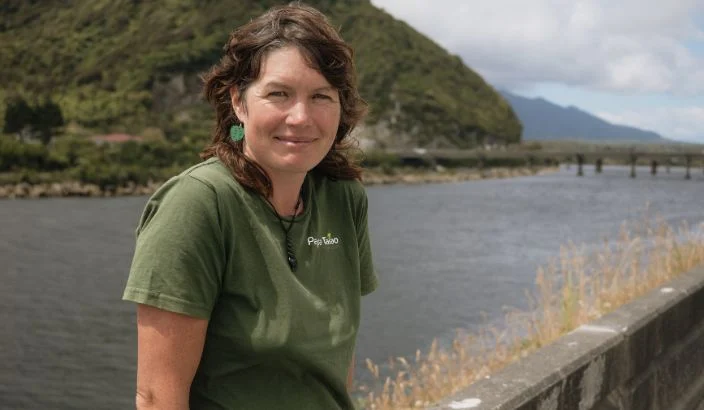
The launch of Future Farming Mohua, a new course for youth in Golden Bay, has been made possible thanks to Miriam Sherratt.
Raised on a rural block on the main highway into Tākaka, Miriam always sought more learning opportunities as a teenager.
“The kind of opportunities I was looking for just weren’t available in the Bay,” she explains. “So, I moved to Nayland College to pursue further study.”
That experience had a lasting impact, inspiring her to one day create more and different opportunities for young people in Mohua/Golden Bay. After completing college and a five-year OE, Miriam studied environmental science and biology at university, which led to a role in Wellington with Papa Taiao Earthcare—an organisation dedicated to empowering young people through hands-on learning in sustainability, enterprise, and environmental action.
“After five years with Papa Taiao, I was fortunate to step into the general manager role and take it remote, allowing me to return home to Golden Bay.”
While back in the Bay, Miriam spent a year as Collingwood Area School’s horticulture teacher and running short courses in the region.
“Through my connection with schools in the area, I learned about the many students who weren’t engaged by traditional classroom learning but thrived outdoors, many of whom are still a bit young to enter the workforce,” she says.
“So I started talking with the Top of the South Trades Academy about trialling a practical, hands-on programme that could inspire youth and build skills in farming and agriculture that are directly relevant to the area they live in.”
The combined support of Papa Taiao and the generous funding from Top of the South Trades Academy and Te Aho o Te Kura Pounamu - Correspondence School helped bring the programme to life, with nine students from across the Bay taking part.
Since its launch in mid-March, the students have gained hands-on experience in a wide range of areas, including beekeeping, soil testing, effluent management, milking, and seed drill driving.
“Local farmers and business owners have been incredibly supportive in helping get this programme off the ground in a way that really connects with the students,” Miriam explains.
“Young people don’t always see themselves in a classroom teacher, but they can relate to a young contractor running his own business or seeing others working and learning the skills needed in the working world.”
Miriam points out that youth aged 15–18 are often the hardest group to connect with earth care, but she feels the programme has already been a success.
“The nine I’m working with are building, learning, and working. They have energy that can be put somewhere through being hands-on on.
“It’s amazing to see already how powerful this experience has been for these young people—how they’re beginning to develop an earth care mindset, gain confidence, and now have the understanding and communication skills they didn’t have before.”
Looking ahead, Miriam is excited to see how the rest of the year unfolds.
With Tākaka’s PGG Wrightson offering sessions on chainsaw and quad bike maintenance, Merv Solly teaching soil testing and the importance of feeding the plants that sustain our animals and us, and young self-employed contractor Tim Muntwyler sharing his skills—and his story of how basic maths became essential for managing his business despite not enjoying it at school—these are just a few of the upcoming opportunities.
There will also be hands-on learning in fencing, predator control, forestry, calving, and sheep care. Miriam is confident that the students will have plenty of chances to be inspired by both practical learning and the future of farming.
