
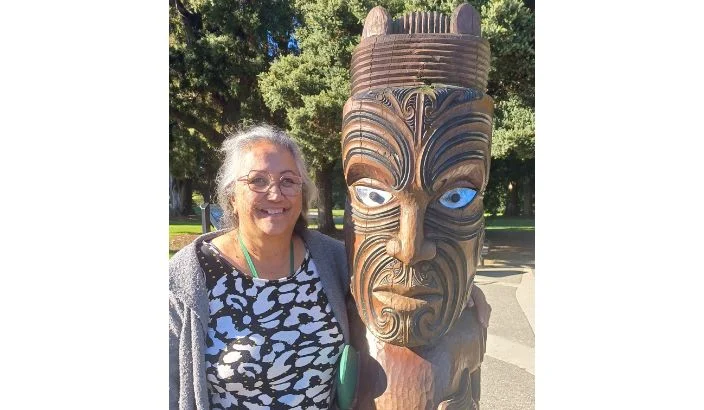
When Rima Piggott’s parents met, there was something of a cultural divide.
Her Ngāti Ranginui and Ngaiterangi mother, Joyce, who had fled the North Island to avoid an arranged marriage, spoke only te reo Māori. Her father, whose iwi were Ngāti Rārua and Te Ātiawa, had absorbed the colonial messaging that being Māori was undesirable, and so he looked and sounded like a perfect English gentleman.
Joyce was highly impressed, assuming that Warren, her new beloved, had some serious wealth behind him. She soon learned otherwise.
While many Māori were driven from their Motueka lands, the Stephens family, including Warren’s parents and a handful of his extended whānau - stayed on. It was understood that if the entire iwi left the whenua, it would also essentially mean forfeiting their land, and so Rima’s tipuna remained, through poverty and oppression, standing fast against the pressure of colonisers and the broken promises of government.
These families were the ahikaaroa, tending the burning fires to occupy and maintain mana whenua and their rights over the land.
Stories from local iwi Ngāti Rārua, both past and present, will be on display at a new exhibition that is opening at the Motueka District Museum this Sunday. Its name, Te Heke Whakangā, translates to “the pilgrimage”.
The first Te Heke Whakangā exhibition was held in Marlborough last year and had 7000 visitors. Each exhibition is tailored to tell local stories and use abundant local images.
It will include Māori art, information about the Whakarewa land, Te Āwhina Marae and the 28th Māori Battalion.
Rima, who is now Te Āwhina Marae Board chair, says that during her childhood there was “0.1 per cent Māori and our family was it, basically”.
These stories are not new to her – she has grown up with them.
“It’s engrained in us. It’s in our DNA.”
She believes that future generations of Māori “aren’t going to have those hangups” that her peers have contended with, and that Pākehā will be the ones to “take the reo to the next level”.
Exhibition curator Dr Lorraine Eade, who is also of Ngāti Rārua descent, muses that the exhibition is “like a steppingstone” for people to improve their knowledge of this local history.
“It’s in the past, we acknowledge that, but we also want to lift the knowledge base so that we can understand that history.”
Te Rūnanga o Ngāti Rārua board chair Olivia Hall agrees the exhibition is a chance to look back on history as we move into the future.
“Ngāti Rārua signed Te Tiriti o Waitangi in good faith on 17 June 1840 and after 173 years of Crown breaches, in 2013, Ngāti Rārua signed their Deed of Settlement.
“Te Heke Whakangā tells just a few Ngāti Rārua stories relating to Motueka. This will give people some insight into the scale of what Ngāti Rārua have lost and experienced, across generations.
“Looking back is important, because recognising where you’ve come from supports and strengthens how you move forward.”
The exhibition, Te Heke Whakangā, opens to the public at Motueka Museum on Sunday, 18 May, and will run for 11 weeks. On the first day, people are welcome to gather outside the museum at 9am for a 9.15am blessing and opening.
