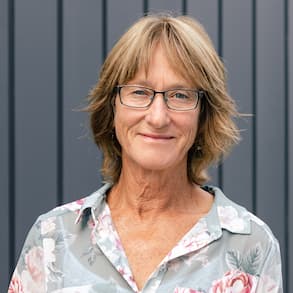
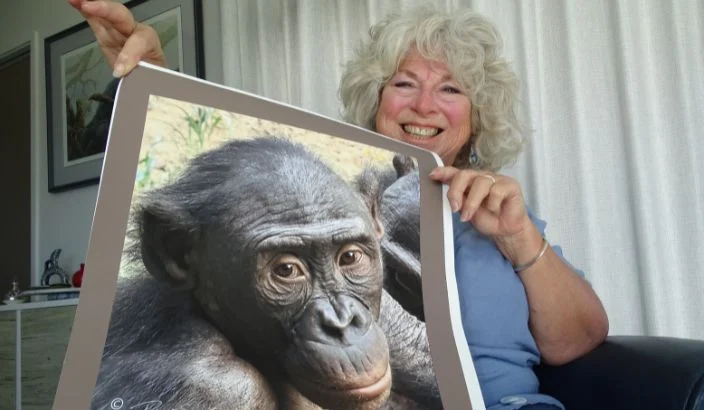
Sharing your tent with crawly critters and fighting your way through a steamy jungle in the dark, then having primates urinate on you from the treetops is not everyone’s idea of fun. But for Dr Donna Swift, the end result is the photographs of her endangered relatives and educating people about their plight.
It’s a tame setting looking out her window at Arvida Waimea Plains retirement village and vastly different to her recent five-week trip to the Congo Basin in search of the very rare great ape that shares 99 per cent of the same DNA as humans, the bonobo.
Seeking primates to photograph is her retirement project because though she started in a career of primatology, she “got sidetracked” into social and cultural anthropology. That led to women’s health and studying the violence that too often occurs with women. A research grant followed for a study on teenage girls’ violence between themselves.
But as retirement beckoned and the presence of alzheimers in the family genes, Donna decided it was time to work through her bucket list and primates featured very strongly on that list. She got out her camera, graduated to better and bigger lenses, and set off on adventures that have “come fast and furious”.
This year she has also visited nine national parks in the north of India with a guide to find Hoolock gibbons and last year she spent three months in south and eastern Africa as she made her way north.
Seeking bonobos in the Congo was another level of adventure; negotiating different countries and paying bribes to get across the Congo River, just to get to the Democratic Republic of Congo where these primates live. Village guides take small groups in the early hours of the morning through the jungle to where they suspect the bonobos might be, and listen for them stirring as morning approaches.
“When the bonobos start moving, you’re trying to track them through the jungle. They’re going fast and you’re trying to keep up and you keep going as long as you can before they’re gone. It’s very well managed – you only get an hour around the animals before the guides get you out, so you don’t stress them.”
Because they are endangered and share human DNA, the guides ensure visitors wear masks to protect the animals from potential diseases.
“You’ve got your mask on, you’re fogging up and the gorillas are peeing on you. The temperature is in the 30s, its misty and humid, you’re sweating buckets. It’s challenging, but it’s an adventure!”
On the Congo trip, she also spent a night on a manmade research platform eight metres above a busy elephant watering hole.
“The elephants were rubbing against the poles of the platform and trumpeting below. That was pretty spectacular.
“People ask me if I get scared, but I’ve stopped getting scared. What’s the worst that can happen? I’ve had a good life and I’m doing what I love.”
Back home, she gives talks about her trips and is selling photographs to educate people about the primates – and also raise money for the next trip.
“These primates are our relatives. I love how you look at primates and see how dexterous they are with their hands and their natural love and caring. They’re very affectionate with each other and we’ve lost a lot of that.”
Later this year, Donna is off to Borneo, Indonesia and Vietnam seeking primates and next year it is Madagascar with a primatologist in search of lemurs.
