
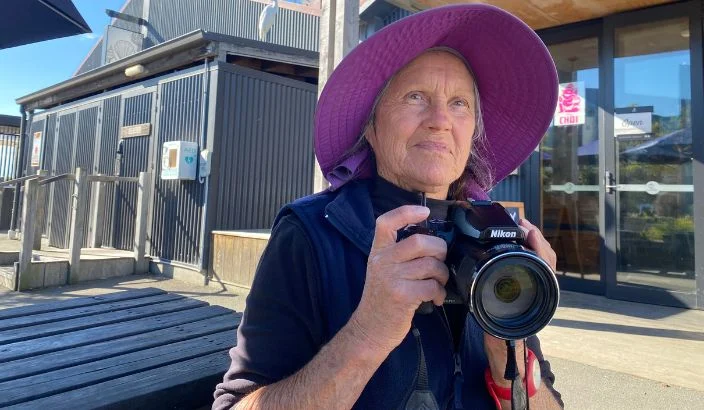
Pearl was late this year, arriving in Māpua in early May, and as always, Raewyn Wood was there with her camera to capture the elegant heron who has been a regular now for nearly a decade.
Raewyn has taken hundreds of photos of the white heron over the years as she watched her fishing, preening, having a bath and hanging out on the rooftops, especially the local fish and chip shop.
At home, she has all of her sightings of the heron meticulously recorded, way back to just one day in 2012 and again for a day three years later when she was perhaps checking the area out. Then choosing Mapua as her permanent wintering spot since 2016.
“I’m just a lady with a camera taking bird photos,” she says.
“I just wander around Māpua with my camera and have a real headache at night when I have to download my photos. As soon as I see the big white bird fly by, I’m off.”
Though Pearl has a feminine name, Raewyn says it’s difficult to tell whether she is male or female. Whichever the sex, she arrives with her yellow-orange bill and by the time she flies back to her breeding area on the West Coast, her bill has turned a dull black and her facial skin brightens to a bluish-green.
She also develops her ‘nuptial plumes’; the lacy plumes of feathers on her back which Raewyn says are a sure sign she is getting close to heading off for breeding.
From Raewyn’s records, Pearl usually heads off in August or September to the sole breeding site on the Waitangiroto River near Whataroa. Until then, Māpua is her wintering home.
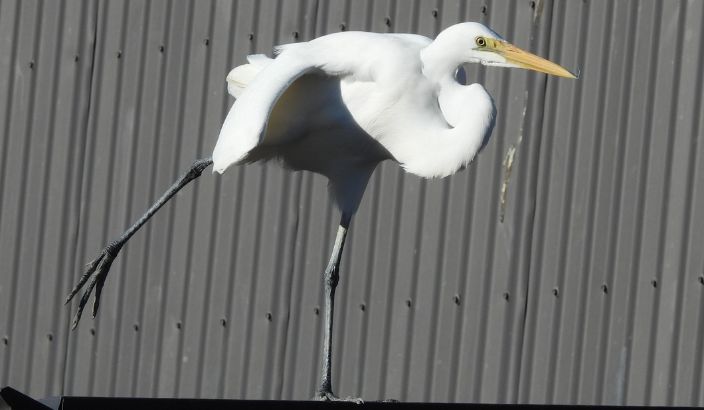
“I get pretty excited when she arrives and get pretty sad when she leaves and hope she’ll be okay.”
Māpua has long been a popular wintering spot for white herons, with a previous heron named Hamish returning for about 30 years. Then several years passed without a resident heron, until Pearl showed up.
