
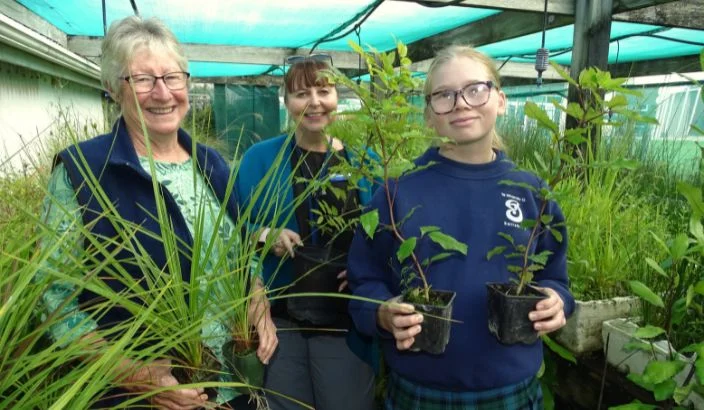
The House of Seeds is on the move at Salisbury School in Richmond and it is going to need funding and donations to construct a new plant nursery for a project that has now been running for more than two decades.
Carolyn Shirtliff joined the school staff 40 years ago and she sowed the idea for a native garden and then a native plant nursery, aptly named The House of Seeds. It has since supplied thousands of plants for native regeneration around the region.
Since 2018 alone, nearly 10,000 plants have been planted by The Battle for the Banded Rail group around the Waimea Inlet and surrounding wetlands. However, the Salisbury School site is being redeveloped, and boundaries reconfigured, which means the plant nursery will no longer be on the school grounds and needs to move after this winter’s planting season.
Over the years, the old plant nursery grew piece by piece rather than by design and has a tiny propagation area in an old shed. Whereas, a purpose-built nursery will be more communal and inclusive for students, including a propagation area big enough for a few students to work together.
Carolyn says much of the project will be made from recycled materials, but the groundwork will be the biggest cost and depends on labour. Principal Ellie Salcin-Watt says they will build it in stages if necessary and the school is actively seeking donations of material and labour as well as grants.
She says the plant nursery and the native garden - which has grown into an area of regenerating bush - has been invaluable for the students who attend the national residential specialist school for girls.
“There’s lots and lots of teaching for us around our enviro work. These are girls who haven’t found success in their home schools, so to come here and have hands-on real learning and tailoring it to their passions, and seeing how they participate, but also contribute to their community, is a key to their success.”
Carolyn says it all began when the school had a big paddock and there was a group of girls in horticulture and another group in environmental studies who wanted to plant the area with species that once grew there.
Nearly 25 years later, the regenerating bush block has a lizard sanctuary, young future giants such as kahikatea and even a ‘back-country’ hut built on the edge of it. The school’s connection with the environment led to it becoming the region’s first Green-Gold Enviroschool.
“It’s been a huge learning experience and some of our girls have really taken it to heart.”
Now, other schools come to visit, propagate and plant, leading to Salisbury students taking tours through the bush garden and organising treasure hunts.
Students help gather seeds from the school’s regenerating bush and also Faulkner Bush at Wakefield, then assist with propagation and potting the growing plants for sale or planting in their bush garden. Potted native plants will begin to leave the school at the end of the month as winter planting begins.
This year, as well as selling plants to the Battle for the Banded Rail project, some of the plants will go to the Tasman District Council. Ellie is also contemplating selling some at markets later in the year, which the girls enjoyed in the past.
