For years there has been talk of a central city playground but plans always fell short. Now an innovative idea, with funding, is on the cusp of becoming a reality. Charles Anderson reports.
It began, as many great civic ideas do, with a simple question: Do you want to build a playground?
Not just any playground, but a space that would speak to the past, present, and future of Whakatū Nelson - a place as much about tamariki joy as it is about cultural renewal, urban revitalization, and radical inclusion.
And now, a decade after it first surfaced in long-term planning documents, the vision for a destination playspace at Rutherford Park is finally taking shape.
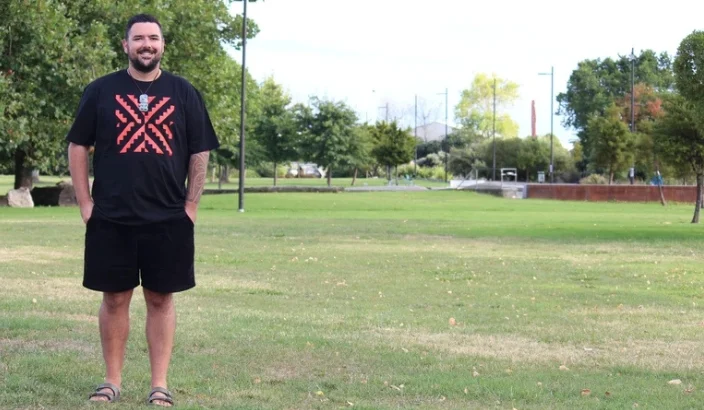
"It's been talked about for a very long time," says Johny O'Donnell, the project lead and spokesperson for Ngā Iwi o Te Tauihu.
The seeds of the playground were planted as early as 2009, when the idea of a signature city-centre playground first entered public discourse. Over the years, the concept ricocheted between various council documents, reports, and debates. Funding was approved, then delayed. Sites were shortlisted, then changed. For a while, it looked like the project might fade into the purgatory of good intentions.
Nelson city councillor James Hodgson, who is leading the playground project, remembers those years well.
"I was hearing from so many people the frustration that it hadn't happened, and they had been waiting for such a long time,” he says. “It had been signalled, then it had kind of died off, and then it was delayed. And I think everyone kind of looks at all these other regions and feels a bit jealous."
Johny, who lives in the city with his partner and two young children, says the local play offering had long fallen short. The eventual focus on Rutherford Park, he says, gave the idea new life.
The area is accessible, it’s central, and it has history. But it’s also complex. That’s what, he says, made it the perfect canvas.
What makes this playground truly novel isn’t just its design - it’s who’s leading it. In a historic first for Nelson, the playspace is being developed not by council alone, but through iwi-led design and delivery.
The initiative emerged from a broader programme of collaborative work between Nelson City Council and local iwi, grounded in the arts and creativity strategy known as He Tātai Whetū. Within that framework, the model flipped: instead of council leading and iwi consulted, iwi became the principal deliverers - with council in a supporting role.
The shift, Johny says, is about more than structure. It's about ownership, accountability, and storytelling.
"Iwi just saw the same vision and community aspirations as others ... Play is a really, really sensible place to start, because it connects with a younger audience who are already engaged in local kōrero and identity."
It’s also operational. The model builds off the success of other iwi-led projects in arts and culture, biodiversity restoration, housing and economic development.
"When I look at projects like the papākainga housing in Motueka, it is clear that the delivery model achieved far better outcomes. Suppliers were eager to work on kaupapa Māori projects and got far more invested in the project because of this. As a result, 20 new homes and a community centre were delivered on time and under budget.”
He believes the same energy will also be delivered with the Rutherford Park Playground.
If the governance structure was new, so too was the understanding of the land. Rutherford Park, once a reclaimed estuary and site of a former landfill, carries deep historical and environmental layers.
Parts of the park were taken under the Public Works Act - land originally belonging to tangata whenua, repurposed for recreational use. It borders a waka landing site and sits adjacent to Nelson Tenths land owned by Wakatū Incorporation. It's a place of literal and metaphorical reclamation.
“It's really culturally significant, but it's got layers of history on the site."
Before any design began, the team commissioned extensive geotechnical, environmental, and consent-related studies. The site has contamination and inundation challenges to contend with which brings constraints, but also opportunity to design in a way that responds effectively to them.
“We front-loaded heaps of due diligence on the site and got as clear a picture as possible of the challenges that exist there.”
From the outset, this was never going to be a cookie-cutter park. Instead of approaching a playground company with a standard kitset wishlist, the team started with a landscape analysis.
The goal?
As Johny puts it, to create a place that "couldn't exist anywhere else”.
"We're looking for a destination play space that will look and feel different... we want it to be iconic and, like, visually magnetic."
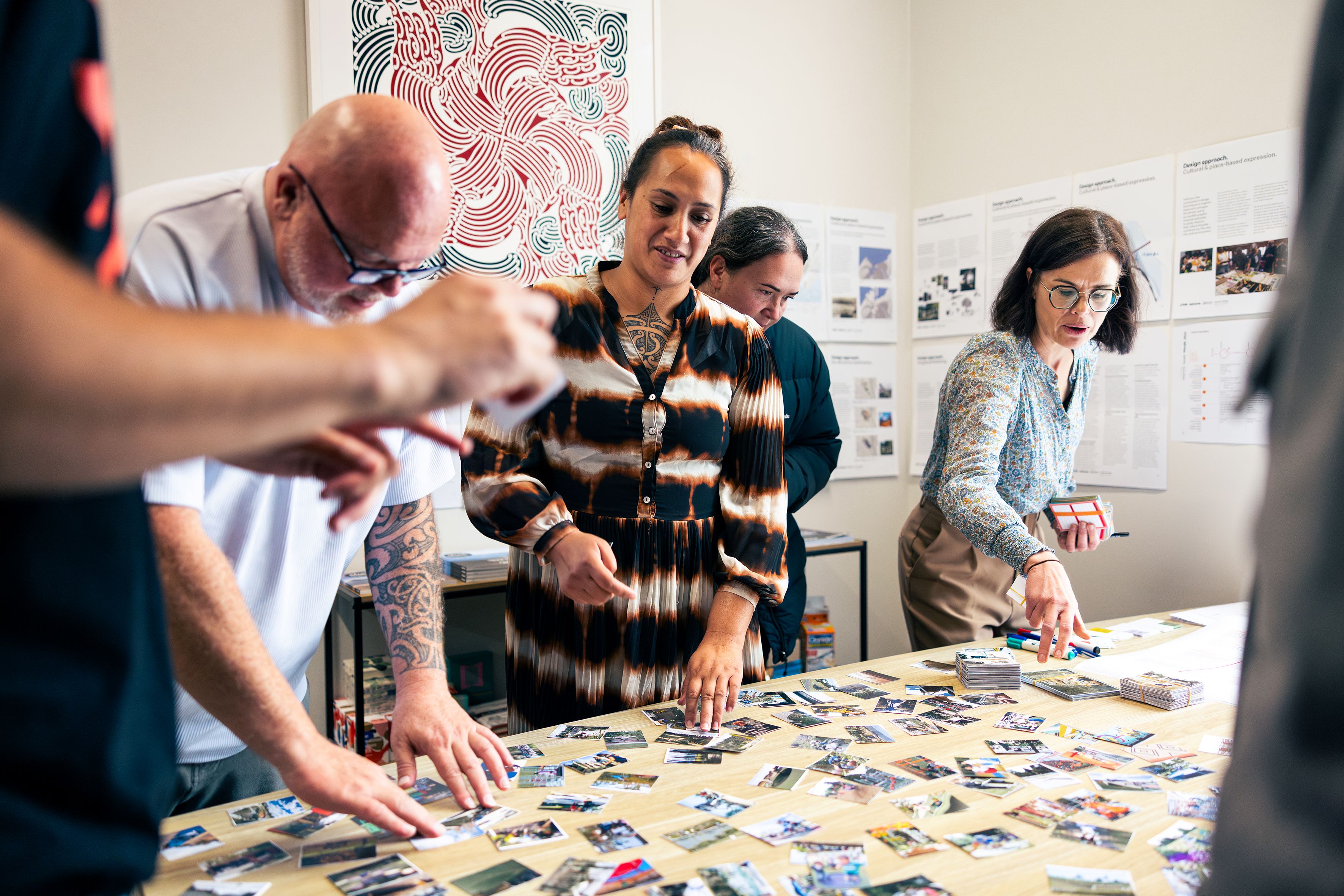
To get there, the team turned to the people who would use it most: tamariki.
"We started with the tamariki," says Johny. "And then did the kind of wider community engagement and input as well."
Over 200 students across four schools participated in the design workshops.
"They just took to it so quickly... they were showing up talking about their space, their playground."
Their ideas ranged from the fantastical ("a Kardashian-themed playground") to the deeply rooted ("we should have a waka"). One student said: "It needs to be like an artificial island... all water... they need to have engines on the waka."
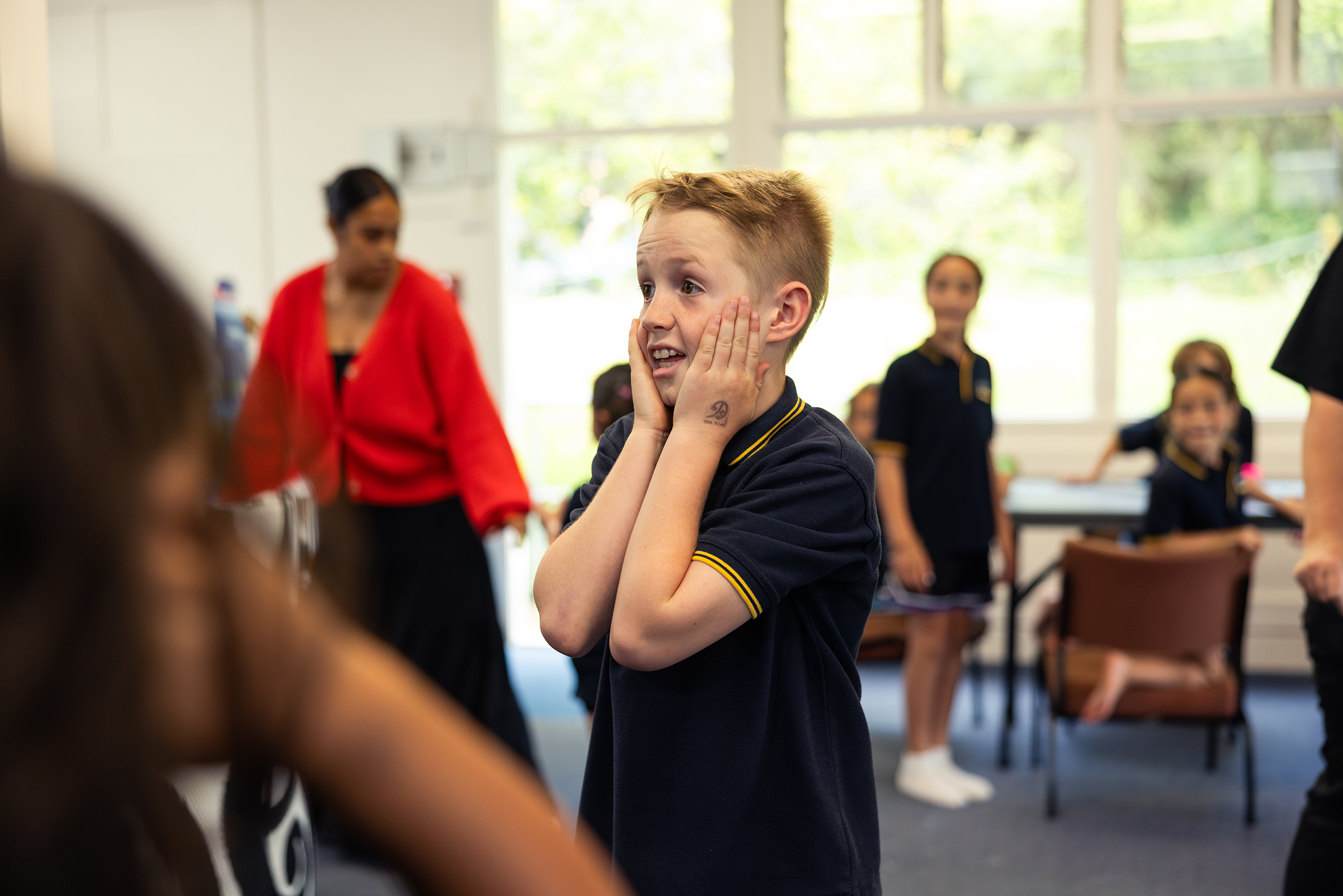
Others wanted a giant mako shark head, a plane, a swimming pool and a candy machine.
Johny chuckles at the memories but takes their feedback seriously.
"What I had underestimated is that they were showing up talking about their space... and they will be able to follow the journey through and be a part of the opening."
“It has to be unmistakably Whakatū,” Johny says. “Something that feels like us, looks like us, and tells our stories.”
The themes emerging through consultation point clearly in that direction. The Playspace Community Engagement Report gathered input from more than 700 residents, including the four schools.
One of the most transformative insights came from disabled community members: Accessible features should not be segregated. “Why are the swings always off to the side?” asked one participant. “We’re not contagious.” That feedback is now central to the design.
"Shade and seating was the most mentioned by far," says Johny. "By far and away, water play was the most popular by quite a margin."
But there's a catch.
"Splash pads, water park... not going to be deliverable within this," he said. "It's not just the upfront investment, which is already a challenge, but we need to deliver an asset that the city can afford to maintain and that is appropriate for the site conditions.”
Still, the team is looking for innovative solutions.
"Something that doesn't blow the budget.”
The emphasis on inclusion was another dominant theme.
"The clear message was, we want to be together in the same space, not in a separate space, because we have different needs."
The same goes for fencing.
"A fence around the entire room of the play space was not something that we had factored in,” says Johny.
The playground isn’t just for children - it’s for communities. Johny emphasises that the space must support connection.
That philosophy is guiding everything from materials to layout. The design brief calls for climate-resilient features, natural materials, native plantings, and recycled structures. It balances imaginative flair with practical needs - like wheelchair-friendly surfaces and medically-equipped toilets.
The concept of manaakitanga - care and hospitality - is embedded in the vision. Shade structures, shared kai spaces, and quiet corners are not afterthoughts.
“Whānau deserve a place they want to linger,” says council lead James Murray. “Not just stop in.”
Funding was always a precarious thread. Originally underwritten by the government’s Better Off fund, the project faced uncertainty with a change in government. With just $600,000 in Long Term Plan funding committed from the council, the external funding has been critical to getting the project off the ground and helped push the project forward.
“Momentum is key,” says James. “The worst thing would be to fall back into another holding pattern. We wanted to show this is happening - not just planned to happen.”
Still, with a budget of $3 million, there are limits. Taranaki’s new playground cost $6.8 million. Tauranga’s waterfront park topped $5 million.
The highlight of Tauranga’s new playground is a 8m tall waka tower structure. There are several ways to access the waka tower, including an elevated pathway with connecting bridges and climbing ropes.
New Plymouth’s Destination Play covers two hectares and includes a dozen zones, featuring a BMX pump track and a water-play area, and everything in between.
Nelson is going leaner, but smarter. “The budget won’t stretch to a full water park,” James concedes. “But we’re exploring creative ways to celebrate water—without draining resources.”
Sponsors are also being eyed for big-ticket items like a basketball half court or a flying fox “running the length of the park. That would be epic,” Johny says.
He believes that’s something a local brand would be proud to put their name on.
If all goes to plan, Rutherford Park’s playspace will be open by summer 2026/27. The design process is being conducted in stages, with the intent to integrate community feedback at every step.
Johny offers a vivid picture of what success will look like.
"I can see so clearly that space being fully activated by the whole community ...You can hear a lot. It's noisy, there's lots of kids running around, there's lots of families, lots of people connecting, doing things that are really hard to do in the city centre right now because we don't cater for that well."
And from a cultural perspective, it's about visibility and recognition.
"The kind of inclusion of something uniquely Māori and unmistakable Whakatū in that space will be a really exciting turning point for a city that's had the same design language for the last 150 years."
James Hodgson shares a similar aspiration:
"How I'll know that we've been successful is that Nelson loves it so much and makes such a noise about how much we love it that it puts us on the map for out of town visitors... whether it's someone who's retired, who's just looking for an afternoon out... or that family that's like at breaking point... that this is somewhere that feels like a place of respite... then I think we've won."
Johny says the playground is a turning point in another way. There is a marina promenade upgrade on the way. Wakatū Incorporation still have plans to develop the Riverside precinct and the Millers Acre bus exchange will also come online around the same time as the playground.
“Things always feel like a long time away in Nelson … But we can see that within a couple of years, there will be a new bus exchange there, there will be an upgraded Marina public space, and there'll be a new play space base at Rutherford Park … and it will be as shovels are going into the ground on Bridge Street to do what is a once-in-a-generation streetscape transformation in our city centre as well, and the first time that we've done that at scale.”
Ultimately, though, the playground is more than a playground.
It’s a reclamation of story, of space, and of who gets to shape the city’s future.
It’s a space where Māori design is not decorative, but foundational.
It’s a signal that Nelson is ready for something new - and that the people building it are ready, too.
Because building a playground, it turns out, is really about building a city.
What the people asked for
Across hundreds of submissions, five key priorities emerged:
1. Water play – The most requested feature by far. Splash pads, fountains, and river-like channels were high on the wish list. Yet, ironically, it’s the one feature that may not make the cut.
2. Fencing and inclusion – Whānau made it clear: security is not restriction. A fenced playground supports neurodivergent tamariki and provides peace of mind for parents.
3. Shade, toilets, and seating – As one submitter put it: “Shade makes it usable all day.” Public toilets, currently earmarked in councils Long Term Plan, are non-negotiable. And seating must work for all ages and mobility levels.
4. Cultural identity – From waharoa to tree carvings, every part of the playground should speak to place. "Let our kids slide through their stories,” one tamariki suggested. Another proposed embedding the Tino Rangatiratanga flag into a slide.
5. Imaginative, active play – Flying foxes. Trampolines. Ninja courses. Spaces to climb, dream, and tumble. “Make it wild,” they said.
