In some European countries, cohousing building projects can be up to five per cent of new builds, whereas in New Zealand it is infinitesimal, and a local project manager says there is an isolation crisis in society that could benefit from more.
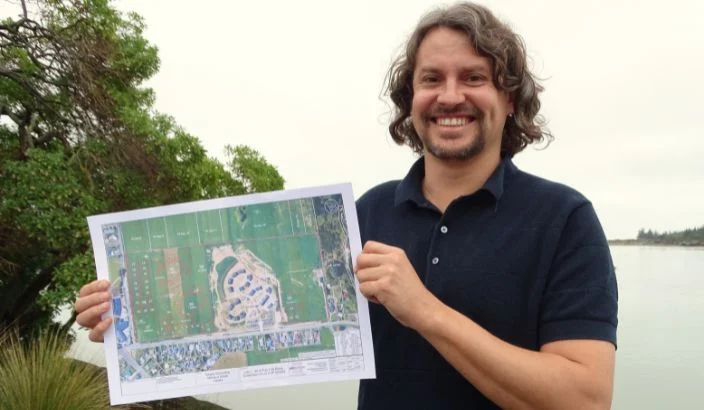
Vincent Revell from Māpua has been part of the team that built the Tākaka Cohousing neighbourhood, and though he says the idea of clustered homes with shared facilities does not appeal to everyone, it reduces isolation which can lead to loneliness and depression.
“In New Zealand, we have high rates of depression and loneliness – people don’t know their neighbours and there’s a lack of a support network. If you step back and look globally, the individualistic way we live in western society is unusual.
“There’s a lot of loneliness that people perhaps don’t even realise stems from living in such an isolated way.”
Few people know that cohousing could be a solution for a problem they sense but haven’t identified, he says.
“Which is a challenge. People haven’t lived in a more connected way, so haven’t had that to aspire to.”
Vincent says the more isolated people are in society, the more polarised they become and that is increasingly being seen in New Zealand.
He’s looking at more cohousing building projects in the region through a company called Circle Living, which was born out of the Tākaka development. So naturally he wants to see more cohousing, but says there’s a bigger need for this type of living around the country and it’s just another housing solution in the mix.
Globally, there are about 30 different housing models, he says. Whereas in New Zealand, there are about three. The idea of cohousing is collective ownership, sharing resources and creating areas called “bump spaces” where people see other people, stop, chat and socialising becomes easier.
“You have all sorts of different characters and maybe we wouldn’t be friends, but we have to get along. In New Zealand, I feel that is maybe a social skill we have lost. It would be great to get to a place where we can have healthy disagreements. There’s a lot of guesswork in our culture and we could benefit from being a bit more direct.”
Living in collaboration with other people, helps to bring back those social skills and connect with people more easily, he says. Cohousing projects have been in New Zealand for 20 years or so, with Earthsong Eco-Neighbourhood in Auckland now well established, and Vincent says Māori culture has a strong understanding of the benefits of collective and intergenerational living.
Locally, Circle Living is “having conversations” with landowners and he says the next six to 12 months will be working on creating a pipeline of future projects in the region, with one being explored around Tapawera. He says there is a place for investors buying homes as well, so that people who cannot afford to buy, can rent a home in a cohousing development.
“We’re trying to have a really good crack at coming up with alternative housing models for people who need more connections, have limited budgets and want to think sustainability.”
