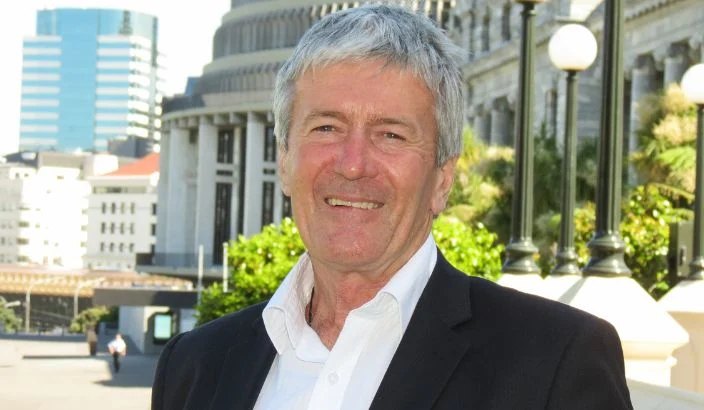
DAMIEN O’CONNOR
List MP Labour
There’s a lot happening across agriculture in the lead up to winter. Most farmers are enjoying a great autumn and strong dairy and meat prices in spite of the global disruption around tariff uncertainty. It’s also the season for meetings and gatherings where people hear from a whole range of opinion leaders, experts and practitioners. The Otago University Ag@Otago’s agriculture symposium, E Tipu, the Fieldays and the Primary Indus-tries Summit are all opportunities to hear and learn from those in positions of influence.
Hopefully there will also be leaders present. That is people who take all that wisdom, expertise and experience and commit to share it across the country with the thousands of farmers and people reliant on farming for their incomes and wellbeing. I’ve said before, in a somewhat polite but provocative way, ‘There are many leaders but insufficient leadership.’ What I mean by that is a commitment to speak of and pass on quality, contemporary information in a factual and unbiased way so farmers and others can learn and engage, rather than be reactive and offer emotional opinions.
No one of us can claim a monopoly on wisdom but leaders are often advantaged by the opportunity to attend these informative and inspiring forums. However, taking infor-mation out to a wider audience when often it challenges conventional thinking and practice requires self-confidence and bravery. Creating unnecessary tension in small rural communities over debates on farm practice and systems is something most of us try to avoid - but without such tension, change won’t happen; change is seldom easy.
We’ve had debates on inductions, tail docking, riparian planting, water quality, bobby calf management and now afforestation, greenhouse gasses, winter grazing and ani-mal shelter. The issues won’t end there as the world and market demands shift with a more demanding, sometimes confused but highly motivated consumer audience. The absence of a clear strategy to deal with these evolving issues makes the tasks ahead of us much more difficult. But what we cannot afford to do is ignore the messages from the gatherings of minds over the next few months at these forums. Nothing will be black or white but ignoring the wisdom they share will leave us in a future of grey and misery.
The future for agriculture and food production is very bright if we are adaptable enough to identify the trends and meet future market demands. It’s ultimately up to the quality of our leadership. Let us listen not to speak, but to hear, learn and lead.
