
The village of St Arnaud should be renamed Rotoiti, according to an application to the NZ Geographic Board (Ngā Pou Taunaha o Aotearoa).
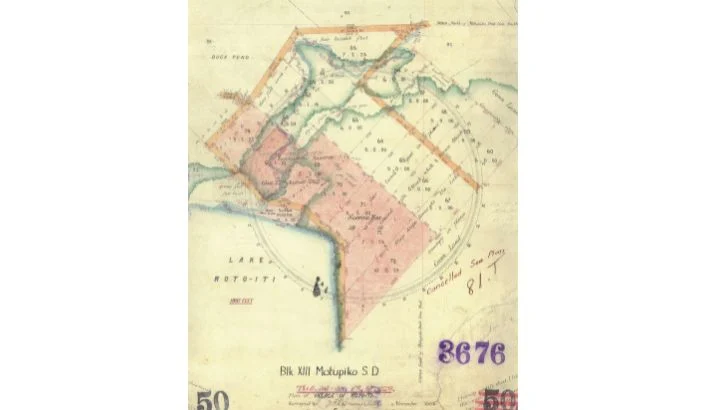
Long-time Rotoiti bach-owner and scientist Annette Walker, who has made the submission, says the St Arnaud name was always controversial, as the town was called ‘Rotoiti’ when originally planned and surveyed in 1864.
During research for her new book, Up The Lake: The Story of Rotoiti, she has looked deeper into how the name was changed to St Arnaud, and who it was named after.
She says the town was called ‘Rotoiti’ up until the late 1940s when the Post and Telegraph Department decided on a change because of confusion with Rotoiti in the Central North Island.
“Locals lobbied against St Arnaud.”

In 1950, a petition with 42 local signatures was presented to the Government stating, ‘We do NOT want [a change] to a name that few have ever heard of.’
Forty-two was a large percentage of the village’s permanent population then, according to Annette.
Debate continued off and on until 2007 when the geographic board ruled ‘St Arnaud’ was the official name.
Annette says the label came from the nearby St Arnaud Range, named by Nelson lawyer and explorer William Travers in 1855.
“The Crimean War was raging and obviously in the mind of Travers. He also named Crimea and Raglan ranges, Turk Mountain, Balaclava Ridge, Alma Heights and Inkerman Range; the last three after recent battles.”
Marshall Armand-Jacques Leroy de Saint Arnaud was the French offsider of the war’s British Commander-in-Chief, FitzRoy Somerset (Lord Raglan).
“As far as I know St Arnaud never visited New Zealand and he was a despicable man,” Annette says.
After many debts and scandals, St Arnaud was forced to flee France to Algeria. Here as captain of the French Foreign Legion, he herded some 500 Arab men, women and children into a cave where they were burnt alive or asphyxiated by smoke.
“He called this ‘his duty’,” Annette says. “Do we really want our peaceful village to be named after such a rogue? With the advent of postcodes there should be no problem now of mail going to the wrong Rotoiti,” she says.
Up The Lake: The Story of Rotoiti was written with the help of local author and historian Paul Bensemann, published by No Catchem Press, Rotoiti, produced by Potton & Burton, Nelson, and is distributed by Clare Kininmonth of Māpua.
The book is available by emailing: rotoitiupthelake@gmail.com
