ROBYN PARKES
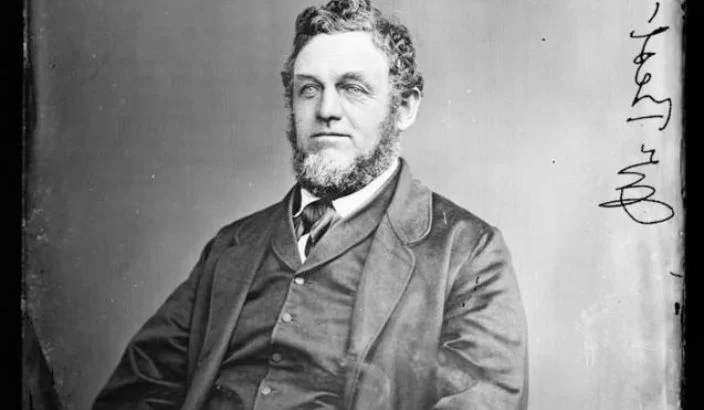
Great sorrow was felt when the news spread in the Waimea district of the death of Charles Best on 3 September, 1892. Having arrived in Nelson on board Sir Charles Forbes in August 1842, he and his wife Ann and son Daniel stayed at the Immigration Barracks in Nelson.
Ann was the daughter of John Withey, from East Lambrook. The family arrived with little to no resources, materially or financially, but what Charles and Ann did have was spirit, courage and determination. For a short time Charles was working at the Moutere, but within a couple of years he had enough money to purchase land on Lansdowne Road in Appleby.
A very basic house was built by Charles and he then set about tending to his land, successfully growing enough wheat to make bread. Having depended on the wages from the New Zealand Company, which had guaranteed work for those who came out under that scheme, the company collapsed leaving the districts’ settlers in dire straits. Unemployment skyrocketed and people starved with no means to feed their families. Good fortune, at least, had seen him buy a calf and two steers which soon bred, and Ann was able to make butter from the cream. Through selling some of this they were able to cover some costs.
Sheer hard work got the couple through some dark times and eventually Charles was able to purchase more land and stock until the family were considered quite prosperous.
Charles and Ann were mindful to remember that not everybody was doing as well, and they were well-known for sharing what they had with others.
The couple had eight children: Daniel, William, Robert, John, Joseph, Philip, Alice and Annie, the youngest. Daniel drowned in the Appleby River in 1844.
Ann died on 21 January 1872, at Appleby, and this was a major blow for the family. Charles remarried in February 1874 to Elizabeth, the widow of Henry Boddington and the eldest daughter of Edward Baigent. Her death in September 1885 was a shock to all. She was in good health and spirits and in the morning of her death she had driven to Richmond, while in the afternoon she accompanied Charles in a drive around their farm. Early evening she began to feel unwell and went outside to get some air, but a few minutes later was found lying on the ground. Medical assistance was sought but she died in the early hours of the following day.
Charles, now twice widowed, was once more alone and yet he still had his now large family around him. In February 1892, the family gathered at Charles’ house, sons, daughters and grandchildren, totalling to around 58 people. Following lunch, Tyree the photographer took a photo of the group. Charles’ health then deteriorated and some seven months later he was dead. He was buried alongside Ann and Elizabeth in St Alban churchyard, Appleby.
The estate was sold by auction in March 1893, either in one lot of 505 acres with buildings or, if that failed, in three lots. Lot 1 of 162 acres of land with a house, dairy, stables and farm buildings, Lot 2 of 102 acres and Lot 3 of 241 acres. Following that, the 300 acres island (Best Island) was auctioned off.
