
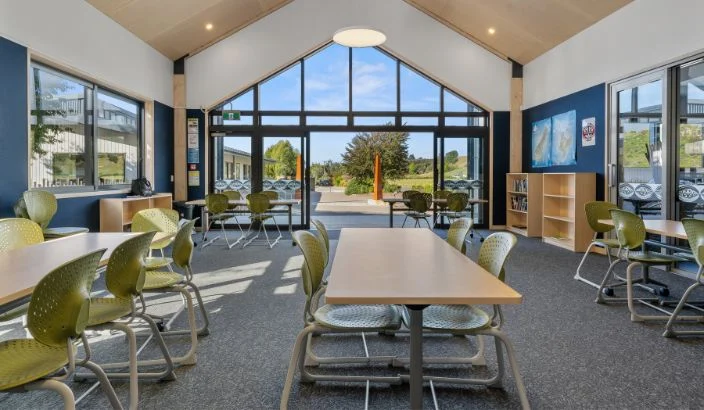
A rebuild of Golden Bay High School has claimed a special award acknowledging the collaboration at every level, and thoughtfulness of culture.
Spanning 1,500 square metres, the Golden Bay High School rebuild delivers state-of-the-art facilities that reflect the community’s rich heritage.
The project features new classrooms, a library, and administration spaces, all designed with sustainability in mind, incorporating energy-efficient materials, solar panels, rainwater harvesting, and low-emission HVAC systems.
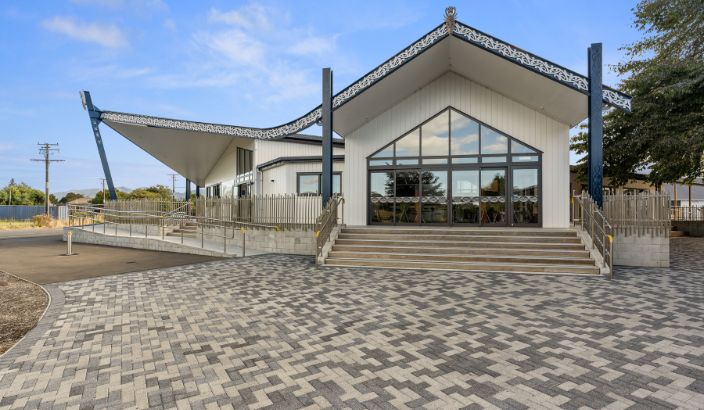
Cultural narratives are woven throughout the design, with kōwhaiwhai patterns by local artist Robin Slow celebrating the history of Mohua and strengthening the school’s connection to its community.
This rebuild stands as a model of sustainability, cultural respect, and collaboration, creating a vibrant environment for learning and growth in Golden Bay.
The project won a Gold and a Special Award in the education category at the 2025 New Zealand Commercial Project Awards.
Golden Bay High School tumuaki/principal Jono Hay says the entire school is pleased with the end product and the usability of the spaces.
“They’re beautiful, light, airy and comfortable. All of those key design elements, and the light and acoustics have been carefully planned.”
Cameron Orr, project manager at Naylor Love Canterbury, says the rebuild touched almost every part of the school, from demolitions and refurbishments to full new builds - the only exception being the technology block, which is to follow soon.
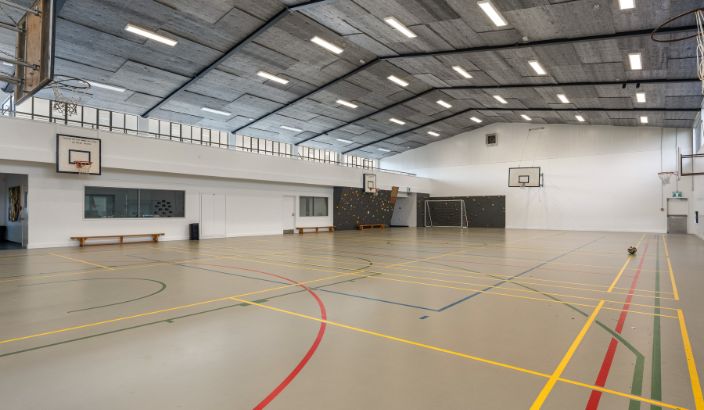
“We built a new teaching block, a new administration and library area attached to the hall, and refurbished spaces like the gym and the science and arts rooms. Even the playground and courts were relocated or resurfaced.”
Delivered under an early contractor involvement model, the project brought builders into the design process early.
Cameron says this helped refine the structural systems and ensure efficient material use, including laminated veneer lumber sourced locally from Nelson Pine.
But for Cameron, what made the project truly unique was the depth of community connection.
“Our site team lived in Tākaka for the build - some of us for up to three years. We got involved in the community, played netball on weekends, built relationships with local suppliers, use local contractors where possible and hired some locals to work for Naylor Love. We didn’t just want to work here, we wanted to be part of the community.”
Robin’s cultural input was another standout.
“He lives just a few doors from the school, and he used to teach here. When we were working through the cultural narrative, he explained the meaning behind the designs. That gave the build an extra layer of purpose you don’t normally get.”
The remote location, combined with Covid-19 disruptions, severe weather and supply chain shortages, brought significant challenges.
“There were big floods early on, and just getting over the hill to site was a mission. But everyone - designers, contractors, the school - worked together to keep it moving. We constantly reviewed budgets, and found smart ways to control costs without cutting quality.”
The awards judges praised the team’s deep integration with the community, saying the result was “not only a vastly improved school, but a shared community asset”.
They noted the strength of collaboration, cultural care and sustainable delivery, calling it “an example of what can be achieved with exceptional commitment, care, and collaboration”.
