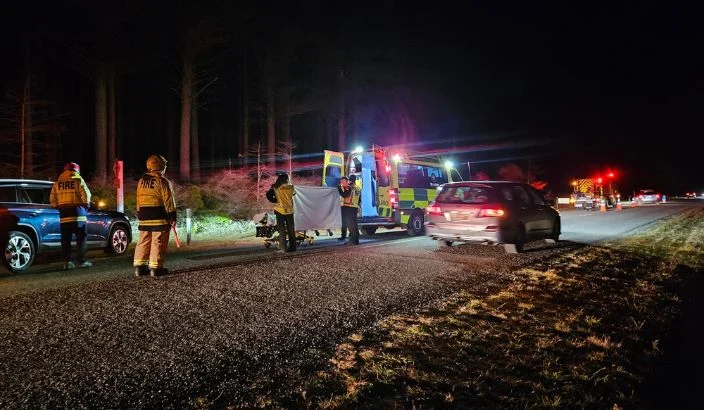
Eighty young local drivers have just completed a course with emergency services to learn about making good decisions on the road and how to react when there’re flashing lights and sirens.
A pilot course was run last year on Moturoa-Rabbit Island, and following its success two courses have been run this winter for school-age drivers who connected them with police, fire and ambulance services.
Road policing manager for Tasman, Nathan Snell, has been running this year’s events and says the course is based on an Australian programme aimed at interaction with emergency services, but takes it a step further.
“We find our young drivers are quite a hard age group to connect with. This is a great way for us to interact with young people and have positive interactions with all the emergency services as well as put them in a controlled environment to make decisions.”
Part of the course is about making good decisions when they meet emergency services on the road rather than a panic reaction, while part of it is learning about the impact of their driving decisions on those around them.
“What we often see is that people will stop right next to a traffic island with no space for an emergency vehicle to get past. This helps them think about the best and safest place to pull over for the emergency vehicle to pass. The hope is that if we can influence 80 young drivers and their supervisors, they will go home and tell others in their families and friends and hopefully that message is propagated out further.”
Another message, pertinent to young drivers, is loud music drowning out the sound of approaching sirens and why they need to be aware of their surroundings.
“If you have your music up loud, you’re using your rear vision mirror to look for emergency services.”
When those flashing lights are calling for the driver to pull over, he says, the course explains how to find that safe place to pull over and wait for the police officer to interact with them.
The courses have been held at night when the island is closed to other traffic and while much of it is practical interactions with the emergency services using sirens and flashing lights, there is also the sobering messages to take home.
“We talk about the dangers of distractions and that attraction to the cell phone. We talk about speed, and impairments like drinking and drugs.
“We tell them it’s not just you that is impacted in a crash, but the family and friends and members of the public that come across that crash and the emergency services that go to the crash and deal with the trauma going on.”
So far, the courses have been filled via school newsletters, and each young driver brings a family member of supervisor. In future, Nathan says there is the potential to run courses for other groups such as new immigrants still learning about how New Zealand drivers should interact with emergency services.
