Brian Lloyd has spent decades working to protect some of New Zealand’s most mysterious and misunderstood creatures—bats. Once a Department of Conservation (DOC) scientist working on the iconic kākāpō, Brian’s fascination with bats began during long nights in the field, often encountering them in remote forests.
“On Codfish Island, we were spreading poison baits to eradicate Kiore (pacific rats) to protect nesting kākāpō, and I started wondering—will the poison affect the bats?” says Brian. That curiosity became a passion that led to a 10-year study on short-tailed bats throughout New Zealand.
After leaving DOC, Brian continued working surveying for bats around the Top of the South Island for Forest & Bird.
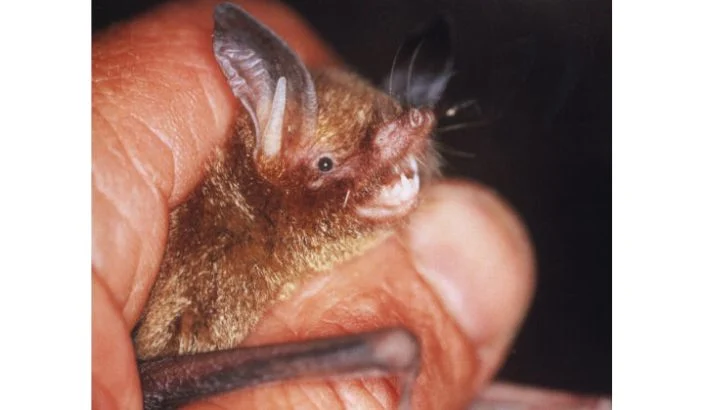
“Short-tailed bats are an ancient lineage,” he says. “They separated from other bat species early in the evolution of bats, over 60 million years ago. They are found nowhere else in the world. Unlike most bats, they can run around on the ground and have a very wide diet, which includes fruit, honey dew and nectar, as well as insects caught on the wing and on the forest floor. They probably played an important role in pollination and seed dispersal in NZ forests before humans arrived.”
Short-tailed bats are only found in large undisturbed areas of old-growth native forest. In the South Island, there are only two known populations, one in Fiordland and the other on Codfish Island. “Back in 1996, we discovered a small population of short-tailed bats in the backcountry near Karamea,” Brian recalls.
“Unfortunately, they vanished a few years later.” Long-tailed bats are more widespread due to their adaptation to human-modified habitats. They are found across much of the North Island and in some parts of the South Island, mainly in native forests on the island’s west. In the north of the South Island, they’re found in Kahurangi and Nelson Lakes national parks. Pelorus Bridge is the best place to see long-tailed bats, where a small population is protected by a Forest and Bird pest control programme.
The healthiest population in the top of the South Island is on d’Urville Island, where bats thrive without ship rats—their main mainland threat. “Ship rats’ prey on bats and their young in their roost trees” Brian explains. “Their absence on d’Urville Island has made a big difference. Predator control is key to protecting bat populations.”
Studies by DOC scientists show mainland long-tailed bats may soon go extinct without predator control. Suitable habitat is essential for long-tailed bats.
“Although they frequently use modified areas such as pine forests and farmland, they need a nearby network of big old trees for roost sites because they shift between roosts regularly. They also need good food sources. They often forage for moths in pine forests close to native forest and above areas of still water for flying benthic insects such as mayflies and stoneflies”. Water insects are vital in the Nelson area, where the high number of wasps have reduced other flying insects, bats would feed on.
Brian, now a consultant in ecological assessments and mitigation, emphasises the importance of bat conservation, when developments, such as new roads through forested areas, are planned. “If bats are found, steps must be taken to reduce the development’s impact on the bats.”
“All the evidence points to extinction within 60 years if we don’t support existing bat populations,” he warns. “We must control predators, and the introduced wasps that consume their food sources as well as protecting the habitats bats depend on.”
Despite the challenges, Brian remains hopeful.
“There’s still time if we make bat conservation a real priority. These creatures have been part of our ecosystems for millions of years. It would be a tragedy to lose them.”
