
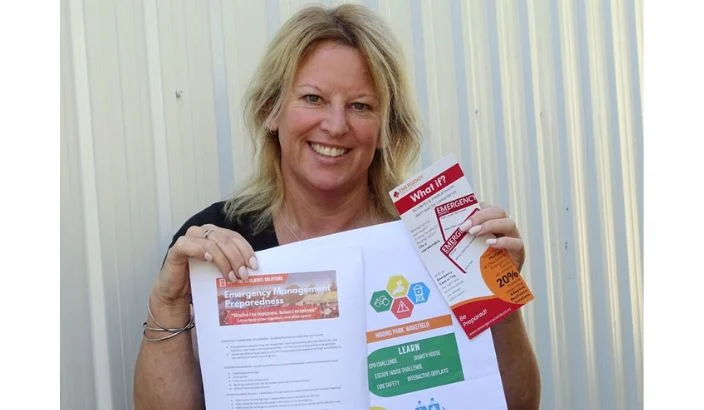
Without a cell phone tower and internet during the recent floods, old-fashioned bush telegraph filled a communication gap in Wakefield, but Dot Ashton says the main lesson for everyone is the need to have their own plan in place before the next emergency.
As part of a voluntary group that has created Adaptive Resilience Solutions, Dot says people are relying too much on technology now and don’t know what to do or how to get information when they don’t have it.
She says the village and surrounding area became pretty much an island during the flood, with no internet or phone for many people.
It prompted the fire brigade to set up an information board at the station, including information from Civil Defence, so at least some of the community could get there and, hopefully, pass it on to more people through the old “bush telegraph”.
“This time, everybody relied on Facebook pages but not everybody has Facebook and if you don’t have your phone working, you don’t have access to that either. It certainly highlighted we are probably too reliant on it.”
She says this flood also showed the community just how much it needed the community hub, so that everything can be consolidated in one place and everyone knows where to go for information or even a coffee and chat. This time, people didn’t know where to go.
A mobile Starlink service was established at the Wakefield Village Hall, but again, she says, people had to know it was there and be able to get there. While there was information on radio, she says updates were few and far between.
“We’ve probably become too reliant on internet and Facebook messaging and need to go back to some old school methods and probably use both platforms equally. I think that would make sense.”
Before the next big event, she says everyone needs to think about their own plan and not rely totally on agencies.
“It’s just that mindset where everything is a flick of a switch, click a button, or get an app. But when you haven’t got that, what have you got? You have to get back to basics and that’s the only real way we get through these emergencies.
“How do you contact people or get home if you can’t get home? Where else can you go? If you are going to self-evacuate, where do you go? You need to make those plans now and not when the water is lapping at your door. If you don’t feel safe there, you’ve got to have a place to go already. It shouldn’t come back to an agency to provide. They will always be there to do that, but that should be plan B, not plan A. It should be ‘what can I do for me - not what everyone can do for me’.”
Dot says the rural community tends to “just get on and do it” themselves, whereas in urban areas people are more likely to rely on flicking a switch and that has to change to become more resilient during emergencies.
Adaptive Resilience Solutions is developing a plan to prepare communities for events such as the flood.
