
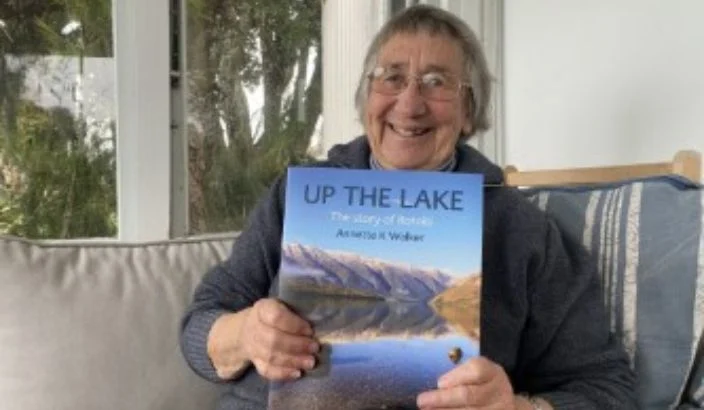
For the past 80 years, Annette Walker has been ‘going up the lake’ and hearing stories of its past until she decided to delve deeper and put it all together in a book.
Up the lake - the story of Rotoiti, is the culmination of more than 70 interviews and visits to museums and libraries around the country. It tells the tale of the area from its geology to its social history.
Annette’s connection with the lake began at a family bach that was created from two disused workmen huts that her father hauled from the lake shore. Much of her holidays were spent fossicking in the bush and alpine gardens for insects which led on to a career as an entomologist.
“My career was hugely influenced by Lake Rotoiti because I’ve always been fascinated by insects. It was my hunting ground for insects; it satisfied my natural curiosity about nature. I always reckon insects took charge of me as soon as I came out of the womb!” Her insect-focused career took her to Samoa, Switzerland and the Natural History Museum in London, but home was always New Zealand and Lake Rotoiti was her calm retreat.
It was in retirement, in a former boat shed at Māpua that became a family bach and then home, that she finally focused on the idea of a book. In the past few years, she has travelled the trails around Rotoiti that explorers used and visited the sites that feature on the pages, capturing information as she went.
“I felt if I didn’t write it, this information would be lost forever.” Māori were the first people to pass by the lake as part of the ‘greenstone trail’ to the West Coast, followed by European explorers and then settlers. When the Nelson-Marlborough road was constructed via the lake, road worker huts were built along the shore, which later became boat sheds and then removed. It’s all part of the history of the lake and St Arnaud – which Annette is working on changing back to its original name of Rotoiti – that comes together in the book.
