
From berry blenders to Bluetooth tags, space pioneers to puzzle games, the Top of the South has long punched above its weight in clever thinking. Shaped by isolation and a hands-on, can-do spirit, the region’s number 8 wire mentality has sparked a legacy of innovation that continues to ripple across the globe. Blending practicality with playfulness, this inventive corner of the country has produced world-firsts and smart solutions – often delivered with a healthy dose of Kiwi ingenuity.
Words: Alistair Hughes | Photos: Tessa Claus
In January 1865, The Nelson Examiner and New Zealand Chronicle newspaper advertised a recently-docked shipping consignment of ‘two miles of colonial sheep fence’.
A mundane necessity in most other parts of the world, to our region’s newly-arrived farmers and settlers this was nothing less than a welcome, multi-purpose DIY toolkit, still known today as number 8 wire. Isolation and lack of old world resources led to on-the-spot ingenious uses for leftover number 8: fixing, improving or improvising alternatives for farming and domestic mechanical solutions.
This can-do attitude became a national mindset born of necessity: the famous ‘number 8 wire mentality,' which still defines New Zealand today.
The Top of the South has continued to be no slouch in the field of local innovation, paying back that imported fencing wire by taking Nelsonian ingenuity to the rest of the world. The creativity springing from the minds of local innovators isn’t always sternly pragmatic.
Ernest, Lord Rutherford, and pioneering NASA Jet Propulsion Laboratory director William Pickering both attended Havelock school and went on to revolutionise exploration of inner and outer space respectively, through their mastery of theoretical physics.
But one of the first Nelson inventions to be appreciated internationally was, of all things, themed displays of carved and automated pixies created by Nelson inventor Fred Jones in the 1930s.
The Pixie Town exhibitions were popular enough to travel the world, including Britain, Singapore and the United States, before eventually returning to appear in department stores around New Zealand. It is amusing to reflect that our country was clearly exporting diminutive mythological creatures to great acclaim in other parts of the world long before Peter Jackson’s The Lord of the Rings and The Hobbit films did the same.
On a far more serious note, acclaimed refrigeration advisor and inventor of the freezer bag vacuum pump, Norma McCulloch, made her greatest contribution after settling in Ruby Bay in the early 2000s. She spent the first part of her supposed retirement years developing the ‘Breath of Life’ resuscitator, a manual CPR kit which revolutionised the work of medical first responders throughout the world.
Most recently, local fisherman Darren Hodgson responded to the timeless menace of untethered fishing hooks and weights by creating the LureLock and SinkerLock fastening devices. Encouraged to test overseas interest, his invention quickly took the global recreational fishing market by storm. Apparently, Hodgson developed the fasteners by experimenting with his partner’s hair clips and some Playdough - proving that the number 8 wire mentality clearly lives on.
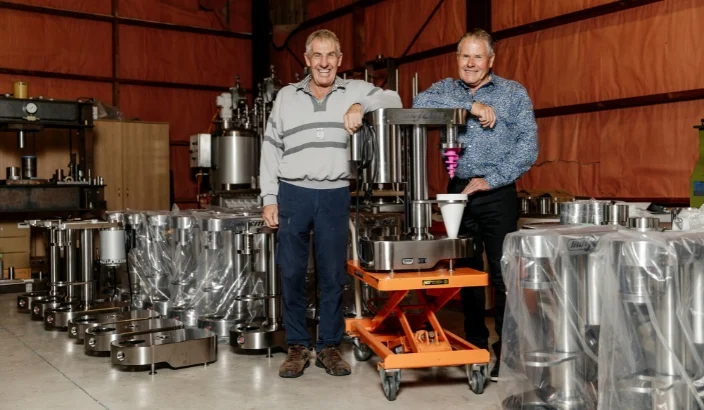
It was the lure of local fresh berry fruit and ice cream that set Nelson brothers Dennis and Chris Little on their way to international entrepreneurship. “We were market gardeners for many years,” begins Dennis. “Around the early 2000s our family bought Berry Lands, a pick-your-own berry garden in Appleby, and we installed a ‘real fruit ice cream blender’ into that business.”
Dennis had gained the rights to a blender out of Australia a few years earlier, and soon found that it was a very popular investment as hundreds queued each summer for that real fruit hit with their scoops. However, Dennis also became aware that available blenders were less than reliable, and often difficult to operate and clean.
“Although we were incredibly busy, the situation was a little bit problematic. So at that stage, my engineer brother Chris, who at the time was designing and manufacturing microbreweries for the Australasian Craft Beer industry, and I decided to put our heads together.”
They developed a design for an ‘elite blender’ which they knew could reliably produce that huge volume of ice cream each day. “We just thought there had to be a better way to build them than what was already on the market," recalls Dennis. “I had some ideas, but it was Chris's engineering expertise that actually turned these ideas into the ‘Little Jem Elite Blender’ we have today.”
An almost Darwinian ‘survival of the fittest’ evolutionary path for the Elite Blender then took place over the next four years. “Berry Lands was an amazing testing ground for our prototypes, producing close to 800 ice creams a day out there in the summer. Every year we would make further alterations to perfect the design, and take the result back the following season to do exactly the same thing again - pushing beyond its limitations to discover where we could continue to improve.”
Forged not in fire but ice cream, the ultimate blender was now ready for the international market, which had always been Dennis and Chris’s intention. However, as the development had taken time, so did initial interest.
“In the first year, we probably sold ten blenders,” remembers Dennis. “It was a pretty high-end piece of equipment and quite a bit more expensive than what else was on the market. But it didn't take too long for the value of quality to be appreciated.”
The number of machines purchased steadily rose each year and is still continually increasing, with many of their customers ordering multiple Little Jem Blenders to keep up with demand. Dennis and Chris now export to around 25 countries. This has even led to an article singing the praises of the Elite Blender in The New York Times.
The United States and Canada are Little Jem’s most profitable markets, but interestingly, it is the blender’s home country which is listed as the world's biggest ice cream consumer, with an average of 20.1 litres per person each year in New Zealand, according to 2023 data from Euromonitor International.
Dennis and Chris are proud to have been able to collaborate with other local and national companies. “We use Topliss Brothers Precision Engineers in Nelson to do our CNC work, [short for Computer Numerical Control machining, this is a manufacturing process which sees computer software controlling factory machinery], they are an absolutely incredible company to work with.” Dennis and Chris also collaborate with two manufacturing companies in Christchurch, as well as having their own in-house engineer handling fabrication, and Chris overseeing assembly.
Plans for the future remain under wraps, but in the meantime what has been dubbed as the ‘Rolls-Royce of real fruit ice cream blenders’ continues to bring Nelsonian ingenuity (and that famous ‘real fruit hit’) to all parts of the world.
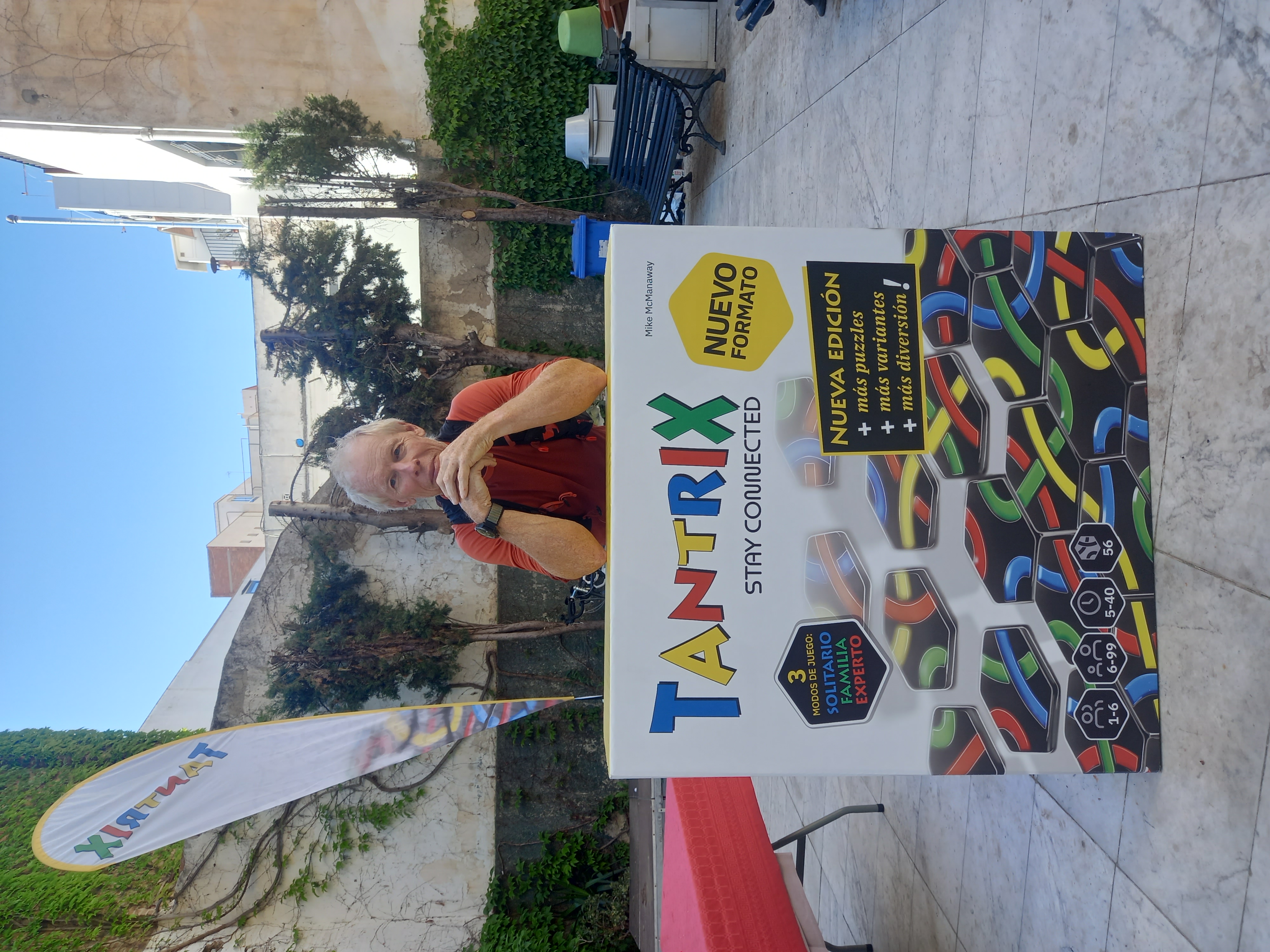
Golden Bay-based inventor Mike McManaway is what is traditionally known as a renaissance man. The creator of Tantrix, a strategy game now approaching four decades of existence and still popular all over the world, is also an accomplished adventure sportsman.
He met his wife Britta at the British paragliding championships, and it was their shared love of outdoor activities which brought them to the Nelson Tasman region. “We actually chose Nelson for the paragliding,” laughs Mike, “but when we were into caving, Britta and I spent a couple of years exploring the Nettlebed Cave, under Mount Arthur.”
The deepest and third-longest cave system in New Zealand, Mike and Britta even had their own gear cached deep inside the mountain at a campsite known as Salvation Hall. “But in the overall context,” he continues, “our caving career was short. We rotated through a lot of adventure sports, including rock climbing, and then stuck with trail running.”
Rock climbing actually led to Mike creating Tantrix back in 1988, in some ways as the solution to another puzzle. Confined to his tent by injury and relentless bad weather during a climbing trip in Patagonia, he had the rare luxury of abundant spare time but very few options for utilising it.
“Finally, in desperation, I pulled out this list of long term things that I had in my mind to do if I ever had too much free time. Number one on the list was ‘improve my Spanish’. But number two was ‘invent a game’.”
Although convinced that he had achieved this by the time he returned to New Zealand, this early prototype did not sell well.
“The manufacturing quality was down because I didn't know what I was doing. And the game was too complicated, or at least too strategic… the better player would always win.”
The curving, colourful path of Tantrix might have stopped there, but instead Mike decided to evolve the puzzle game from cardboard tiles to a modified plastic version. Once again, the quality wasn’t quite there and the project stalled – until two friends added the final impetus to make Tantrix take off at last.
By chance, a French acquaintance offered to sell the game in his own country, and Mike was also given the address of a Chinese manufacturer by another New Zealand game designer. “And their quality was just awesome, I guess that was one of the big lucky breaks.”
And almost forty years later, France remains the most popular outlet for Tantrix. “I've had a strong connection to France almost for half of my life,” reflects Mike, “but I also just think there's a very strong culture in France that respects puzzle games.”
Obviously it was huge here too, particularly among the tourist market. “We had a house in Mahana with a 7-metre climbing wall inside it, and an industrial-sized kitchen for having players from all over the world in big Tantrix tournaments. This was at our peak of New Zealand sales.”
Although he concedes that the heyday of Tantrix was a few decades ago, those distinctive black hexagonal tiles are still very much making tracks globally. Annual world Tantrix championships have been a regular fixture for almost 30 years.
“We have a yearly championship online”, explains Mike, “but also a table version where all the top players in the world fly to one city for one weekend and play each other. That is very prestigious, if you’re not one of the top 20 players in the Tantrix world there's not much point entering.”
Mike is happy to leave the running of these events to their organisers, citing that the inventor of the golf club wouldn’t try to tell players how to run a tournament. He is very content to continue perfecting Tantrix as manufacturing processes advance, and to develop further variations – when he isn’t trail running-through peaks in the Kahurangi National Park.
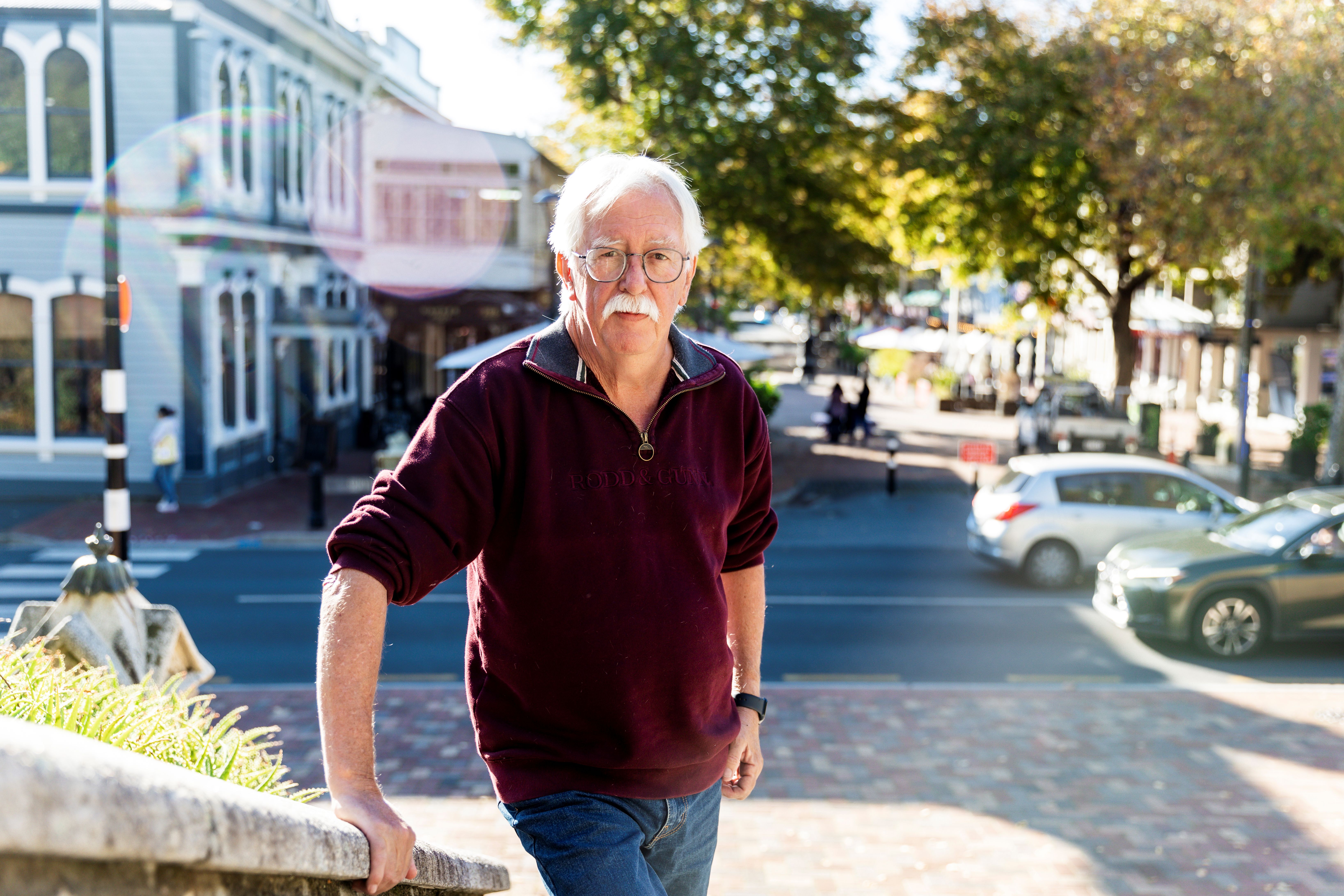
Software developer Ian Craig began his journey to technological entrepreneurialism by a desire to keep people honest. Specifically, carrier companies contracting to the United States Postal Service (USPS). The Kiwi systems inventor and his wife Annette Schleiss set up CORE transport Technologies in 2005, and the Postal Service was their major client with a particular problem.
“Air Carriers would commit to a contract with USPS that said, ‘Okay, I'm going to fly your mail on this flight and I'm going to deliver it at this time’, but there was no proof that they did. So we identified the tracking of mail containers as the best option for holding the carriers to account.”
Based on tagging the containers and tracking them in real time with Bluetooth technology, the system proved so successful that the carriers themselves adopted it for their own business needs. Air New Zealand was an early adopter and other global airlines soon followed.
“At that time, it was a bit leading edge,” recalls Ian. “It improved over time, and people got excited for the technology.”
Canadian international logistics firm Descartes was certainly excited enough to buy CORE for $45 million in 2019, but Ian and Annette’s company was to go through some interesting developments first.
“In 2008, we decided to come back to New Zealand, and we managed the business from Nelson,” building up a local technical team from the Nelson Marlborough Institute of Technology (NMIT).”
Ian acknowledges that he was providing an employment opportunity which saved graduates having to leave our region for Auckland or overseas, but maintains that CORE gained just as many advantages from the arrangement. “I was interested in young people who are well educated in technology, and flexible in their thinking,” he says. “People straight out of NMIT are very bright, and they're also adaptable and think about things without attempting to impose systems upon a small organisation that's trying to be entrepreneurial.”
So Nelson provided brain power, but why else did Ian choose this part of the country to return to? “My wife is South African, so I promised I’d find us the sunniest place in New Zealand. And the second reason was the education system in New Zealand, which, at least in 2008, was way better than we were dealing with in America. And so, good schools and good weather was basically the reason why we picked Nelson.”
He admits that the decision was the right one and they still like it here. “We worried at the time whether we'd be able to transfer our business here in terms of resources and things like that. But it actually turned out quite well.”
By 2019, Ian and Annette were eyeing retirement and the Descartes' offer provided them with the perfect exit strategy. However, Ian wasn’t quite able to let go of imagining improvements to his logistics tracking system.
“I had a five-year restriction on me for competing with Descartes, and I spent that time thinking about how we'd solve issues that we didn't quite overcome. So we started another company – again using local people – but this time utilising cameras for logistics, and taking a step beyond where CORE was.”
Ian says he is now at the proof-of-concept phase and has re-employed several people who started with him at CORE, to be a mentor to them. He certainly has a lot of knowledge and experience to pass on, and offers some valuable advice for other Nelson-based inventors and entrepreneurs.
“It’s easier to start a business in Nelson if you've already got an international market, but very difficult to do without those contacts," he summarises. “The key challenges are to gain those relationships somehow and always be thinking outside the country.”
Local ingenuity is internationally recognised today, but recent research by journalist Gerard Hindmarsh suggests that, like Cantabrian Richard Pearse’s flying machine, our history might be dotted with other unacknowledged firsts. Post WWII, Golden Bay mechanical engineer Malcolm Couper created a giant, tractor-drawn plough for breaking in large tracts of land and a tobacco planting machine widely used in Motueka. But evidence suggests that he may also have gone on to invent the hydraulic digger in the early 1950s. However, some industrial espionage apparently saw the eventual credit go to an overseas corporation, which unveiled their new mechanical digger a couple of years after visiting the unsuspecting local inventor.
Future innovation may lie in a sustainable relationship with our region’s coast, in what has become known as the blue economy. The Cawthron Institute’s new National Algae Research Centre is currently researching the beneficial properties of ocean microalgae, and New Zealand’s first Blue Economy Innovation Summit was held at the Trafalgar Centre last year. But regardless of which new technological frontiers are explored, there will very likely still be a degree of number 8 wire thinking in whatever our local inventors imagine next.
