
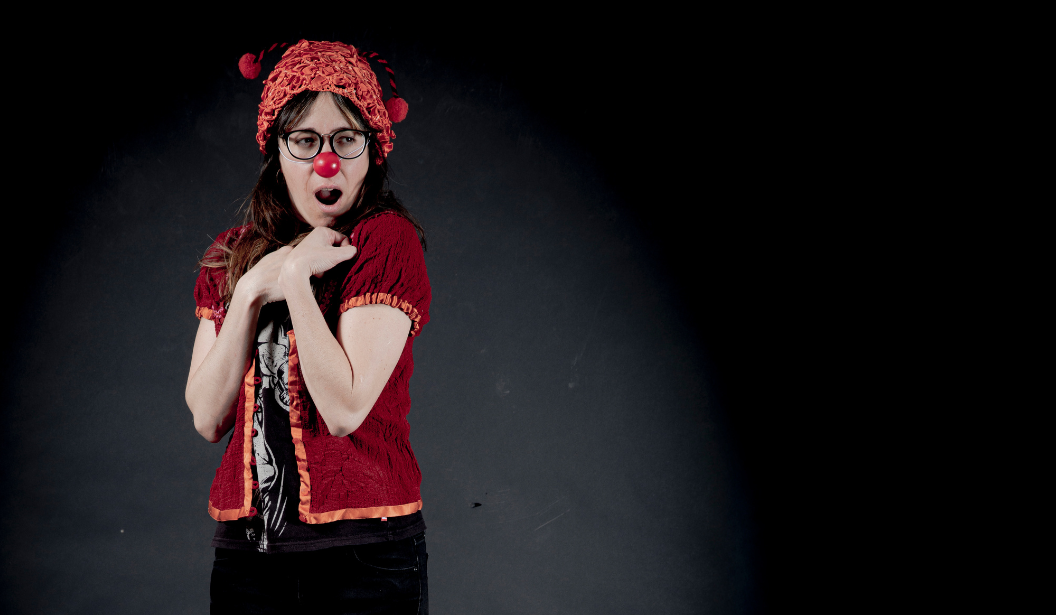
Making people laugh using physical comedy is as hard as it looks. The fine art of clowning is a study in exaggeration, comedic timing and authenticity. For one Nelson woman it was also reminiscent of a spiritual journey. Taking her way beyond her comfort zone, by clowning around, Ana Clara Ortega experienced the elation that only comes through being brave enough to try something difficult.
Words: Britt Coker
Argentina-born Ana Clara was not at all keen to learn how to be a clown but her friend, Jen Hyde, who was the facilitator of an upcoming workshop, had a persistent chant: ‘You should come, you should come, you should come’. Ana Clara went. To support her friend yes, but mostly to put an end to it. And that’s how she became really passionate about something she absolutely did not want to do.
Admittedly, the first class for her, was a bit hit and miss. “She [Jen] would say, ‘Walk around the room, and do all these things’, and I would look at people having fun with themselves, and laughing and [I thought] oh, I'm really boring. I just don't have that easy laughter coming to me. And so, after chatting with her, I said, I don't think this is for me, because I don't laugh much, and she said, ‘Actually, it's not about laughing or being funny. It's probably the people you were looking at; they’re feeling a bit too awkward with themselves to just leave space for exploring.’ It's actually about connecting to what is happening and then exploring that, potentially in a more exaggerated way. Clowning is about being exaggerated, this is my take. There's actually not a unified definition in the clown world of what a clown is.”
That’s a good point. What maketh the clown? The classic look can be easier to define. There is the orange-haired, red-nosed outfit that circus acts, children’s parties and horror films are made of. Versions of Ronald McDonald and Crusty the Clown who are in turn, versions of an iconic look that dates back to 1806 and the English entertainer, Joseph Grimaldi. There is also the melancholic harlequin versions, Charlie Chaplin’s The Tramp, and in recent years, Mr Bean has created comedic havoc just with contorted facial expressions and plans for a picnic. Physicality seems to dominate as a definition. To do silly things and say little, and while there was once a lot of emphasis on the outfit, TV and film have rendered loud costumes and big make-up as optional, unless standing out in a crowd is required.
The terms of buffoonand foolwere names used to describe a clown way before clown ever was. In fact, trying to make people laugh has been a career for at least 4500 years. The first recorded jokesters were court jesters in Egypt in 2400 BCE but the Egyptians were just one of the earliest people to be really great at journaling (on stone) and we can safely presume that people were employed to make others laugh way before then.
Famous female clowns from history are noticeably thin on the ground, perhaps because women have been too busy these last few millennia trying to be taken seriously. Slipping on a banana skin might have been a backwards step in more ways than one. Jen will say clowns are way more complex than a slapstick performance – and that the learning process offers a personal reward for the student that is far greater than just understanding how to entertain others.
“Laughter is a release of tension. We all walk around with different levels of tension in our body as we try and fit into different roles and society, as we hide the parts of ourselves that we have been told are too much – too loud, too weird, too awkward, the list of too-muchness is extensive. The practice of clowning is a peeling back of those layers, finding the parts of ourselves that long to just be allowed to be, and then playing with those parts. When the audience sees that, that tension is released. They see the clown and some part of them says, ‘I am like that too’. ‘I dream too big, I make mistakes, I fall stupidly in love, I say weird things.’ Sometimes that release of tension comes out as laughter, sometimes as a sigh. There are very sad and pensive and dreamy clowns that are absolutely delightful but aren't necessarily funny.”
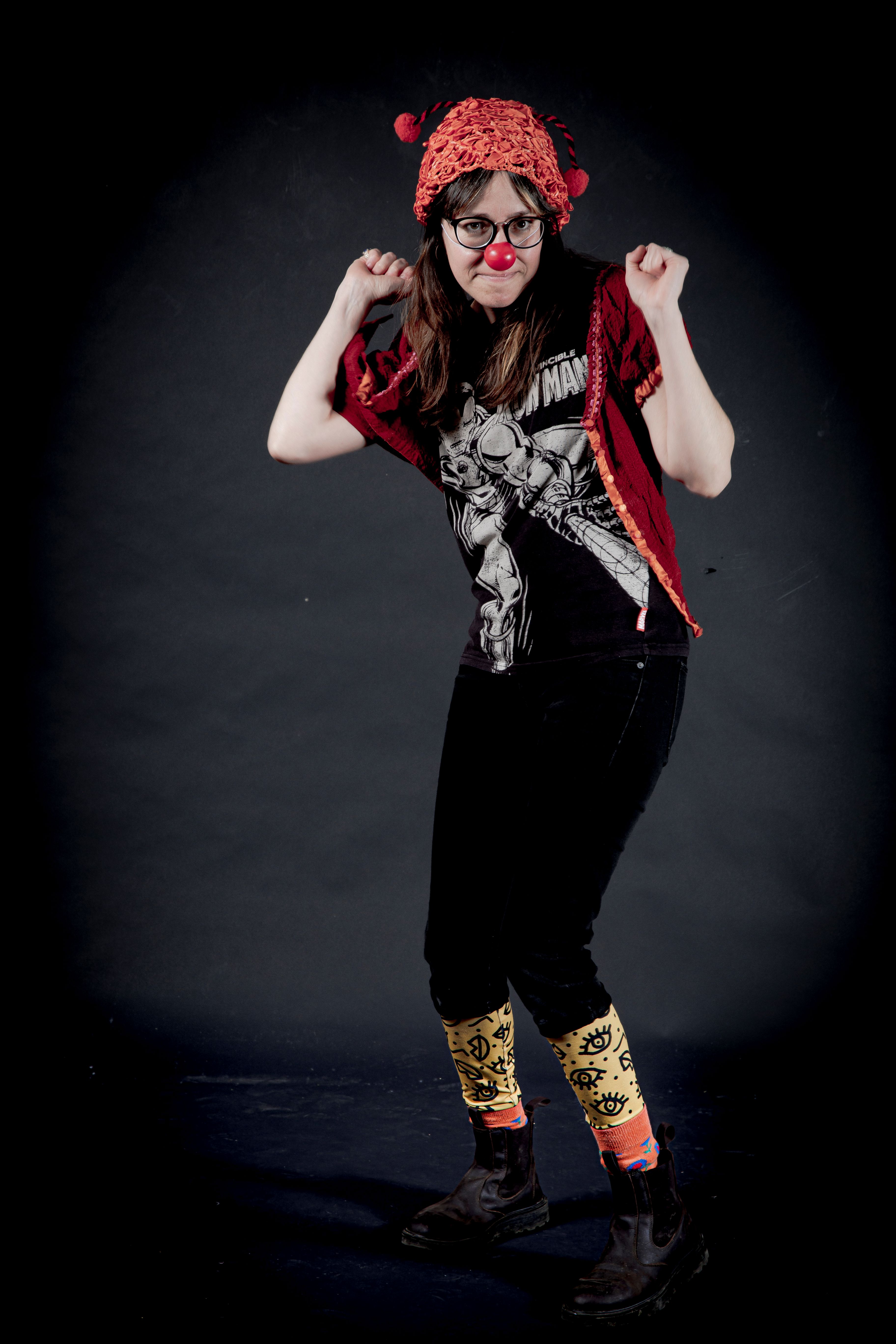
She first studied clowning in Brazil where she reckons not understanding the local language actually helped with the process. Jen’s since gone on to train, then teach, all over the world and sees her purpose now to assist students to tap into something latent or lost.
“I'm trying to help people achieve a sense of freedom and play. To get out of their brain that analyses everything and back to their instinctual body. What makes a good clown is someone who can tap into what is authentic for them, that isn't filtered through a desire to belong, to be liked, but can act and play authentically knowing that they are loved just as they are. And then following those instincts and playing with them. Then there's also a lot of subtle aspects like how to engage with the audience, how to be present with and make space for other relationships. There's a lot of generosity involved. I should also note that the clown is essentially naïve.”
Although Ana Clara didn’t instantly connect with clowning in that first class, she was hooked by the end. After the four-week workshop was over, eight of the participants wanted to continue the training with Jen, and she was one of them. For another two months they turned up every week to get in touch with their own vulnerabilities.
“We embarked on a journey, and I think we were all very committed to it. It's been one of the times of my life that I laughed the most. It was super fun and super difficult and exhausting.”
They spent those extra weeks, “stretching the muscle of exaggeration and stupidity, and non-ordinary things.” That’s something you never see on an event flyer. A workshop of non-ordinary things. Explains Ana Clara, “I have a bit of a small background of Buddhism, and I ended up associating clowning a lot with Buddhism principles because it's quite similar, I found. It's a matter of really emptying the channel between what is present for you right now and expressing not what you expect, or what you want, or what you should - or what people want, or expect. It's really connecting with the present moment, just going for it. You have to get yourself out of the way.”
She gave a workshop example. “The audience is fundamental to the clown. We would make a row, and then one by one, we would come and step on the stage. The goal of this exercise is for you to be able to be present and looking at everyone and then waiting for their response. Then you, giving them a response based on what they gave you first, but without you being like, ‘Okay, I have 20 people looking at me right now’. People just want to disappear. Come back. Stay. Look at them. What are they doing? Respond to them.” When she calls it cheap therapy, Ana Clara is only half-joking.
“As a kid I guess I was quite charming, but as kind of a result of family things, so as an adult I never considered myself funny. I was really at least curious to see that as soon as I walked in the room as a clown, people were just laughing.”
“I don't want to get too philosophical, because it was really profound for me. It was kind of addictive, but also it's like, why am I doing this to myself? It's really difficult because there's a lot of resistance within you, and yet you go every week and do it. At the same time, it's very simple. It's not easy, but it's simple. It's just, see what's inside you without expectations, and then just work with that. A principle of a lot of meditation and spiritual practices. For me it was a very special spiritual practice and made me feel so alive. You finished class and you went to the supermarket, and you wanted everyone to be on the same page as you and grab a carrot and play, you know? And then you see how people walk, and you just want to imitate them.”
Growing up and getting overly serious has clearly always been part of the human condition which is why fools, buffoons, court jesters and clowns have been hired to entertain others for eons. It’s comforting to think that humans have always needed a little light relief to offset the drudgery, the personal disasters, the fears that the world is going to hell in a handcart. Perhaps this period in human history is not actually the worst ever and that it only feels that way because we’re living in it.
Jen returned to her home in the United States not long after the Nelson workshops ended but Ana Clara had the bug and was inspired enough after Jen left to seek out other tutors. She went to classes in Auckland when international clown tutors came to the country, and she also organised a facilitator from Christchurch to run one up here. The style of the latter was acrobatics, not ‘soul connected’ clowns, which didn’t resonate as much. Of them all, she says Jen’s teachings have been her favourite. “She's really good at drawing things from you.”
International Clown Week is celebrated 1-7 August every year. It was made official courtesy of a 1971 proximation by then US President, Richard Nixon – which sounds like a joke, but isn’t. Also worth noting, International Silly Walk Day on 7 January. Not decreed official by anyone sadly, but no doubt fully supported by the surviving members of Monty Python’s Flying Circus. Of course, we also have carte blanche to make fools of ourselves whenever we feel like it.
Considering Ana Clara’s initial reluctance to be involved, the clowning experience has left an indelible mark. Some would say, life changing.
“I think it's certainly brought me back that sense of playfulness. Before, I think I didn't used to have that sort of sense of humour, really. Now when someone is doing something really stupid and very simple, I can just find it super funny. So yeah, that easy connection or access to idiocy… I think we all have a clown within us, and this is that part of us that we're not aware of, that is very intrinsic to us. And a lot of the times, it's not what we want to see.”
