
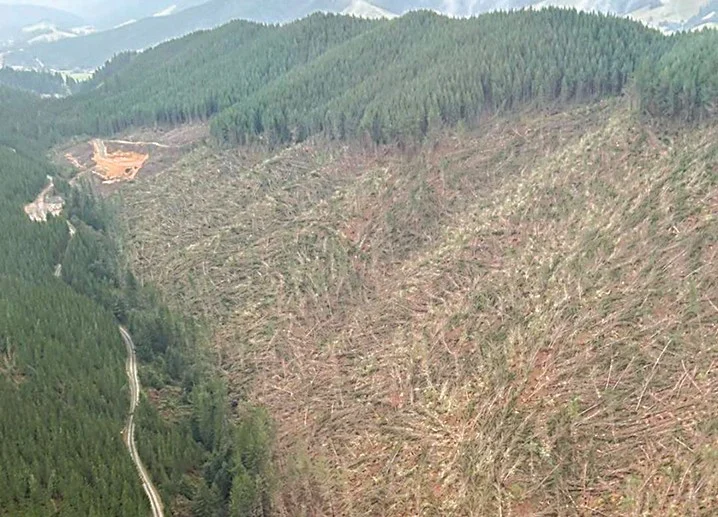
While the region grapples with the clean-up following two devastating floods, the forestry industry is also working on its “complex” recovery.
Between 2000 and 3000 hectares of forest blew over in the northerly wind, which swept through trees clinging to already sodden ground on 11 July.
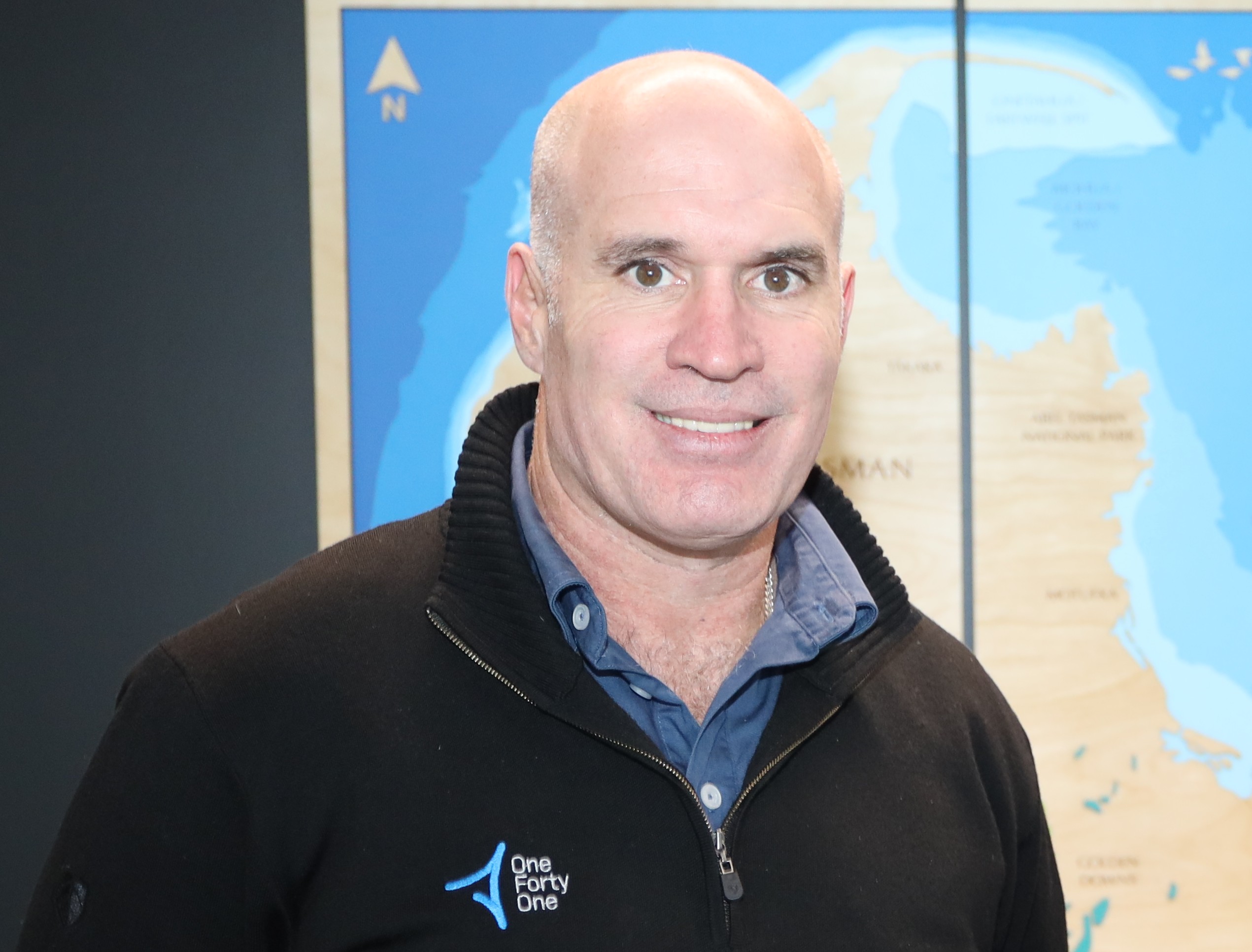
OneFortyOne NZ Forests general manager, Shaun Truelock, says the industry is working hard to build a picture of what the recovery will look like.
“Our prevailing wind is the south, southeast, so the trees grow up being resistant and throwing roots in the same side as the winds coming from to stabilize the tree.
“The wind speeds that came through actually weren’t that high, it shouldn’t have destroyed a forest in normal circumstances, but because it came on the top of very saturated soils and from an unusual direction, that’s what’s caused the forest to topple.”
OneFortyOne manages roughly half of the trees that blew over, and Shaun says the industry is unfairly copping the blame for much of the devastation seen across the region.
“I was, unfortunately, in Gisborne during Cyclone Gabrielle. It’s noticeably obvious how little forestry waste has actually mobilised,” he says of the weather event here.
“It’s incredible the work that’s gone in. I was always one of those people that were very cautious about over-regulation, but I have to sit here and say that whatever’s been done in Marlborough, Tasman, and Nelson, is working.
“If you take the sheer rain that we had, I can tell you now that this region, from a forestry standpoint, has done exceptionally well… the community, the foresters, contractors, everybody involved, should be exceptionally proud of what they’ve managed to withstand through this weather event.”
The bulk of what’s blown over appears to be 15-25 years old, meaning there may not be much of a market for some of it. Shaun says trees from around 20 years old are saleable.
They have five months to get it off the ground before the domestic market – Nelson Pine, South Pine and Carter Holt Harvey – can’t make use of it. From there it will turn to export, although a downgraded version.
“There will be a lot of pressure to get as much in over the next five months before the mills can’t take it.”
But Shaun says that creates another problem, part of the puzzle that needs to be planned.
“Eurocell in Nelson takes Douglas Fir, but that’s resistant to wind throw so noone’s going to be cutting it right now, but someone’s going to have to, to keep Eurocell going.
“Then when we get to January, we’re still going to be flat out on salvage. Who’s going to keep South Pine and Carter Holt Harvey going, because all our contractors are going to be in wind salvage, but by that time, it’s not going to be acceptable for the domestic market, so someone’s going to have to take the hit and say, ‘we’ll move into fresh timber to keep the domestic mills going’, [leaving windblown timber on the ground].”
Another logistical issue is the crews and machinery needed for each area.
“We’ve got a sporadic wind throw event with pockets all over the place. Unfortunately, a lot of it is on steep country.”
That means the recovery will require a hauler – a machine that brings the logs up the hill – of which there aren’t as many crews as ground based – which is a better fit for flatter land.
“We can’t realistically carry on cutting trees that are standing when we’ve got trees on the ground, so what does that mean for our ground-based crews? It’s exceptionally complex.”
He says it may involve “trading” crews in the interim to ensure everyone stays in work.
Stuart Drummond Transport executive director, Brodie Drummond, says while they normally employ 80 people, with 70 trucks, this event could push them up over 100 employees, as they work to cart wood to their destination.
“We’ve had lots of separate contractors reach out to offer help from all over the country.”
Brodie acknowledges that forestry is sometimes misunderstood by the public.
“It’s a long-term game — we work on a 30-year harvest cycle, so the positive impacts of any changes made today may not be visible for decades. But over the past 10 years, the industry has made huge strides in the environmental space. Once the trees are in the ground, the process is locked in, so we have to plan carefully and think far ahead.”
Brodie points out that the region “punches above its weight” in terms of employment in the industry.
“Forestry is 3.6 per cent of the region’s employment vs 1.3 per cent as a New Zealand average.”
He says his company has made big investment into helping manage slash.
“At the start of this year, we made a million-dollar investment into an excavator and two trucks. All they do is cart bin wood or waste wood to Nelson Pine, which turns it all into chip or fuel.”
Forestry Industry Contractors Association board member, and Top of the South Wood Council member, Nathan Taylor, says OneFortyOne and Tasman Pine “lead the way” in their slash and environmental compliance.
He says forestry is “getting the blame” for wood that isn’t slash or pine debris.
“A lot of it isn’t really slash, don’t get me wrong some of it will be. Some of it has come from native forest. There’s no doubt some of it has come from forestry but it’s a mix of all sorts of debris.
“We are so lucky in the Tasman region that the mayor is totally engaged and understands good principles around primary industry and what it brings to the region. Tim has been awesome. Forestry is a good industry, but Nelson is not the same as the rest of the country – we have had good environmental management for a long time.”
