
ROBYN PARKES
In 1909, promoters of a proprietary company looked at establishing a butter factory in Murchison but then withdrew from the proposal.
Farmers then met to consider other options as serious loss was possible for those who had secured cows in anticipation of its establishment. Interest was huge and it was agreed to form a co-operative dairy company and committee.
The committee consisting of Messrs F. O’Brien, M. Toohey, P. O’Connor, J. Brown, A. Thomson, J. Main and C. Trower was appointed to make arrangements for the immediate formation of the company.
Projections were made that between three to four hundred cows would be available for the next season with a further increase the following year.
Following discussions as to whether the factory should be for cheese or butter, it was decided that butter would be a better option.
F. O’Brien was appointed chairman at the next meeting where it was resolved to gather together the suppliers and place recommendations concerning the site of the factory, the number of shares to be allotted, and other related matters.
In June, Mr Gwillim, the Government dairy instructor, attended a meeting in the library to answer various questions and to offer information in regard to the formation and erection of the factory and to inspect several sites.
Points of consideration included the methods of disposal, transport and grading of the butter, cost of butter boxes, duties of manager of the factory, number of workers required, etc.
The following day Gwillim and the committee visited the sites and choose one to adjoin the Buller Post Office, the land being given by E Bunn.
Tenders were called for the building of the factory, and several men were employed to clear the land. John Downie was approached as to the price of the timber.
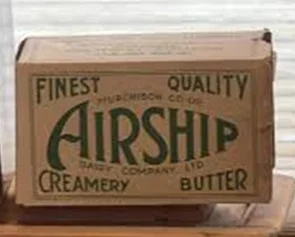
The factory was opened in October 1909, and carrying the ‘Airship’ brand, its first shipment of export butter was rated first grade in Wellington despite having to send the butter from Murchison to Kohatu, having gone by road, rail and sea before reaching the grading stores.
Inside the factory everything was arranged for a continuous process from when the cream entered at one end and came out as butter at the other.
Cream was taken from the carts on one side of the building, was weighed and tipped into the receiving vat, then on to the pasteuriser where it was heated to about 180 degrees.
It then passed to the cooler where the temperature was reduced before travelling in the cream lift to another vat where a culture was added for ripening purposes and then left for about three hours and cooled down.
The cream then was run through pipes into the churn. The butter milk was run off and the butter washed and salted. The butter was put in the churn and worked for 20 minutes. Once completed the butter was pounded and placed in boxes in a refrigeration chamber before going to market.
Within six months of opening, the factory was producing butter of such good quality that was realising 125s per cwt in London.
In the context of butter, CWT typically refers to hundredweight, a unit of weight equal to 112 pounds, and when the dairy company closed its first season in June 1910 it closed with a very pleasing report card, exceeding all expectations.
The season’s output was around 33-ton, 14cwt.
