
The region’s trout fishery is likely to have taken a major hit in recent floods and could take a few years to recover.
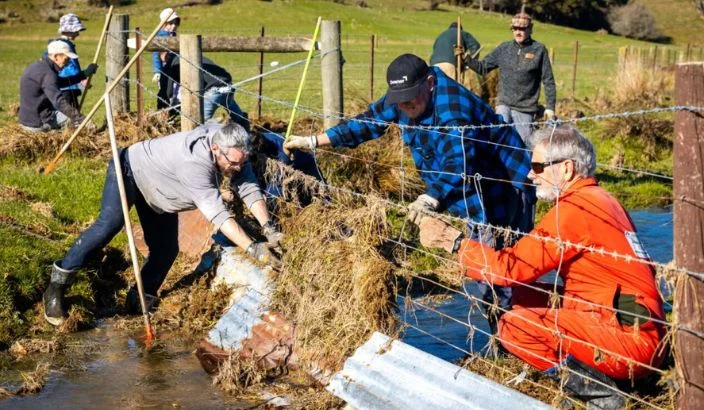
Nelson Marlborough Fish and Game officer, Jacob Lucas, says it’s too early to evaluate numbers in the muddied waters and the team alongside Nelson Trout Club local fishing guides have been assisting with farm clean-up events following the floods, which he says is the priority.
But he says the back-to-back floods is possibly the most significant event for the region’s fishery since trout were introduced and it will likely have taken its toll.
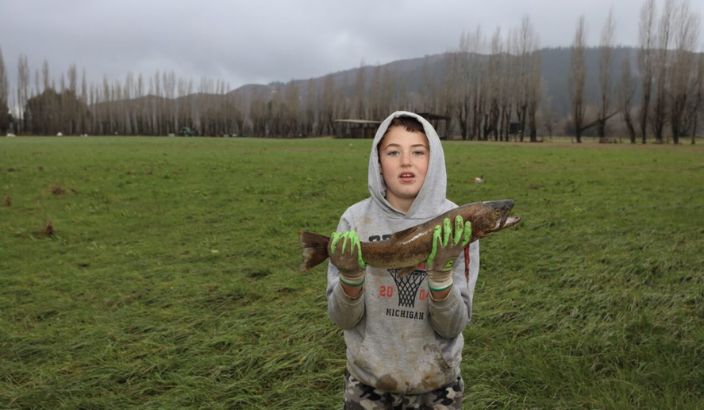
“We expect a significant hit to the trout population,” Jacob says. “They’re impacted by debris and gravel movement coming down or they are pushed to the side and end up out in the farmland, and when the water recedes, they get stranded.”
He says the small to medium-sized fish will have suffered in the main waterways, while most of the larger trout will have been in the tributaries for spawning.
But most tributaries were also affected badly by flooding and even larger trout would have been impacted. He says most of this year’s spawning efforts have likely been washed away.
In a radio-tag study in the early 2000’s, more than 50 per cent of mature fish tagged in the Motupiko perished after a major flood and one was discovered buried in gravel near Peninsula Bridge.
While flooding isn’t uncommon in the Motueka Catchment, he says the past 20 years have been relatively benign and it has been decades since the entire catchment experienced a flood on this scale.
“It’s unusual to have back-to-back flood events of this magnitude, but trout are amazingly resilient and they will bounce back,” Jacob says.
Cyclone Gabrielle in Hawke’s Bay wiped out a big chunk of the trout fishery and Jacob says the population is improving in that area and it will in Tasman as well, over time.
On a positive note, he says, with fewer fish in the river, there will be more bug food to go around, which should result in some large fish later in the season.
The season typically opens in most rivers on 1 October, with some areas remaining open all year.
Jacob says they will begin monitoring the trout population after the water clears and once priority clean-ups have been completed.
He says they will also rely on anglers for feedback on trout numbers throughout the nationally-significant trout fishery.
Already, he says, many anglers have commented that it will be like fishing a different river, with morphological changes from floods creating new pools, runs and riffles.
