
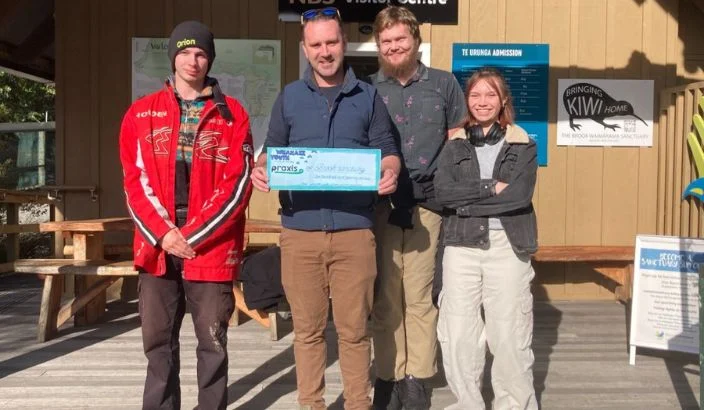
A youth-led project has raised awareness about the important role native trees have to the ecosystem in New Zealand.
Ali Wood, who initiated the project as part of her studies with Praxis, says the main focal point was the benefits of native forests over pine plantations, reducing pollen pollution and inspiring communities to protect and restore native landscapes.
Three youth from Whanake Youth, then took charge and ran with the project.
They visited The Brook Waimārama Sanctuary to learn firsthand how preserving native forests helps enhance wildlife, restore ecosystems, and reduce pollen pollution.
Named the Whanake Youth Citizen Project, Ali says the youth learned a lot about the importance of native trees and what they bring to the ecosystem and have been inspired to continue their learning journeys.
“These young people have run with it so hard,” she says.
Bastian Atkinson, who was one of the youth who took part in the project, says he learned that planting native trees over radiata pine encourages wildlife to return to the area, creating better environments for native birds and insects.
He said visiting the Brook Waimārama Sanctuary, it was easy to see how native ecosystems supported wildlife.
“It was so quiet, and you could just hear birdsong, and they’ve introduced tuatara and kiwi, and everything was just so clean, like the rivers and water.”
The group also took part in a community planting day at Tāhunanui Beach as part of dune restoration, and designed eye-catching posters, which have been distributed to local schools that will encourage more learnings around native plantings.
“We’ve put it out to the community. Now it’s up to the community to run with,” says Ali.
She adds that Placemakers Nelson supported the young people by providing gear to assist the youth with their planting.
At the end of the project, the group donated their leftover funds of $170 to the Brook Sanctuary.
