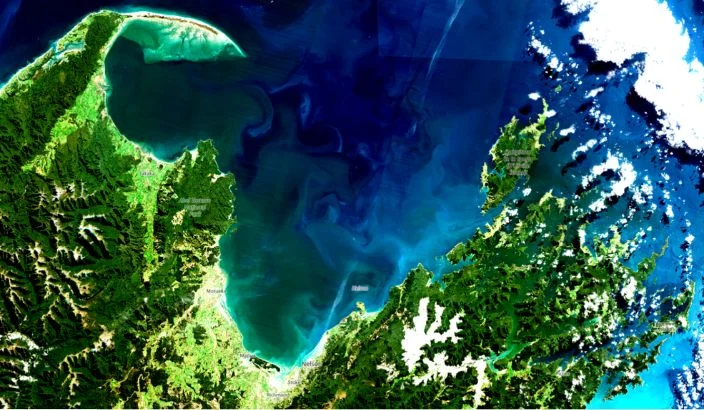
The plume from sediment spilling into the sea from recent floods spread out into the Cook Strait and a marine biologist says it may be months before they know how it has affected shellfish and the ecosystem.
Cawthron Institute marine ecologist, Dr Emily McGrath, says sediment can smother shellfish that can’t move far, such as cockles, and can remain in the water for quite a long time which affects other filter feeders, including scallops.
“A lot of these animals can tolerate one event but we’re seeing big rain events. These 100-year events are happening with more frequency.”
Mussel farms seem to have survived the floods well. In Tasman Bay, mussel farmers had logs and debris, including orchard netting, tangled around lines and buoys, but MacLab’s aquaculture manager Mark Burnaby says they got off lightly compared with land-based farmers.
The company grows green-lipped mussels for the nutraceutical market and Mark says many lines were right in the firing line from the floods leaving the land, but survived it well.
Harvesting was closed for a couple of weeks as part of the industry’s food-safety programme when there is a large amount of runoff into the water, but the mussel spat have remained healthy and continue to grow.
“They’ve done their job to filter the water – that’s what they do.” The marine farming structures also stayed intact, despite the swell and debris from the storms.“We had a 3.5 metre swell in Tasman Bay which is quite a significant storm for us and in terms of debris it was pretty significant.
“It was a relief to come out and see it was all okay. I feel sorry for the rural folk, that’s for sure.” He says extended road closures for extended periods due to slips and washouts is one of the biggest risks for the aquaculture industry during big weather events. Roads to Golden Bay as well as Port Underwood and Elaine Bay in the Marlborough Sounds were impacted and are vulnerable to further weather events, which presents a risk to harvesting as it also depends on land-based transport routes.
Back at Cawthron, Emily says Nelson and Golden Bay have an abundance of seagrass meadows but they can be smothered by silt following floods or suffer stress when they can’t photosynthesis in murky water. After the 2022 flood, she says, there was measurable damage to them.
“When you have these cumulative events, you can expect a lot of runoff and that’s a concern for our seabed and estuaries. Where we have areas that have big slips or have just been forested, we can have a lot of sediment reaching the bay. And sometimes it can take a while to see evidence of change.”
When sea creatures and the seagrass beds suffer, she says that it affects the whole food chain.
