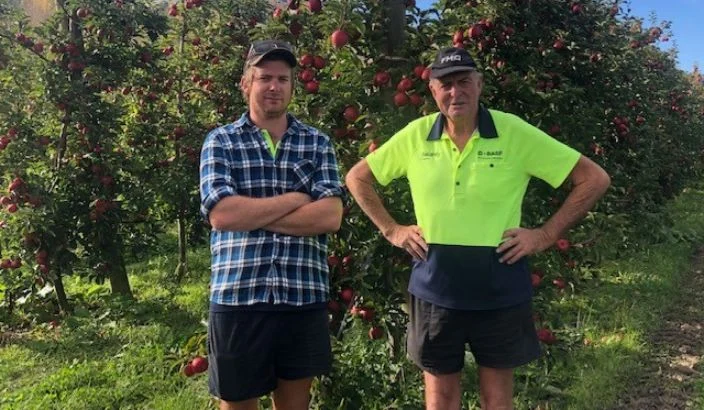
Tapawera’s Dave and Aaron McGaveston are pinning their hopes on favourable weather for the upcoming apple season. Around five years ago, they planted a block of FIZZ™ apples—a sweet, berry-flavoured, pink-fleshed variety that’s gaining traction in overseas markets.
Although the variety was only recently commercialised, with strong international demand in its first season, the past few years have been challenging. Drought hit the Tapawera region, followed by a damaging hailstorm last year that wiped out much of the McGaveston’s crop.
The McGaveston’s FIZZ™ apples are one of four small orchards growing the variety for export under the Snazzy Fruit Company banner. The other FIZZ™ blocks are located in Hawke’s Bay, South Canterbury and Central Otago.
Josh Parlane from Snazzy Fruit Company provides further insights into the FIZZ™ variety.
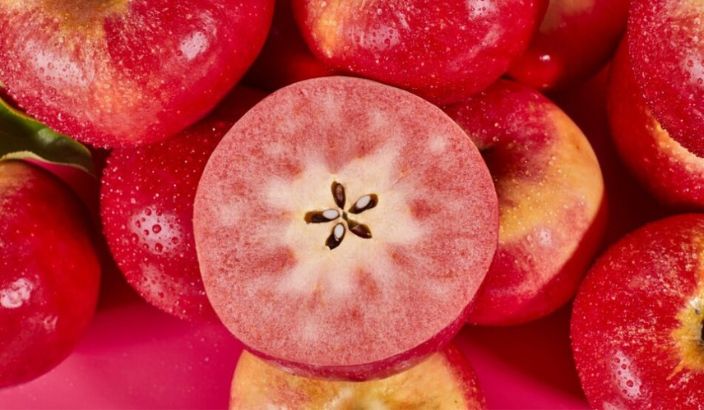
“We were actively looking for something that stood out — a niche variety with real point of difference,” explains Josh. “There are so many apple varieties out there that the opportunity to have the first pink-fleshed apple really stood out to us. Fizz offers three strong marketing advantages: its distinctive internal colour, its unique flavour, and its health appeal. It’s naturally high in anthocyanins, which are known for their antioxidant and anti-inflammatory properties.”
The coloured flesh appeals to overseas markets where apples are often served sliced, and buyers have noted the cut fruit stays fresh-looking for days without browning.
Interestingly, from the outside FIZZ™ looks like a typical, white-fleshed apple. But those who’ve tasted its vibrant pink interior describe a bold, effervescent, berry-like flavour and slightly softer texture, as “unlike anything they’ve had before”.
Dave says it’s been an exciting challenge learning to grow the FIZZ™ variety and adds the domestic market raves over them.
“They’ve needed higher calcium levels, and to achieve the pink flesh, you first need strong external colour, so we use reflective cloth under the trees to boost light,” Dave explains.
The softer flesh means the fruit benefits from careful handling to avoid bruising. Josh adds that the coming season, if the weather holds, should provide a clearer picture of the amount of input needed for the McGaveston’s crop.
The destructive hailstorm that hit Tapawera in December 2024 badly damaged the McGaveston’s developing FIZZ™ crop, wiping out most of the nine tonnes destined for export. As a result, seven tonnes were redirected to a premium cider maker in the North Island, with another two tonnes sold through local retailer Connings Food Market.
“It’s the first time we’ve been hit by hail in eight years, so we won’t be investing in hail structure,” Dave says. “But between last season’s drought and this season’s hail, it’s been a tough run.”
Josh says that while none of the FIZZ™ apples from the McGaveston’s Tapawera orchard made it to export markets this past season, a small commercial volume of around 10 tonnes from the other orchards - all still in early production with young trees - did.
Although the volume was small, buyer response was strong, with demand exceeding supply. With expectations to export around 60 tonnes this coming season — including the McGaveston’ s Tapawera crop — to markets such as China, Taiwan, Vietnam, Singapore, Malaysia, India, the Middle East, and Europe.
