
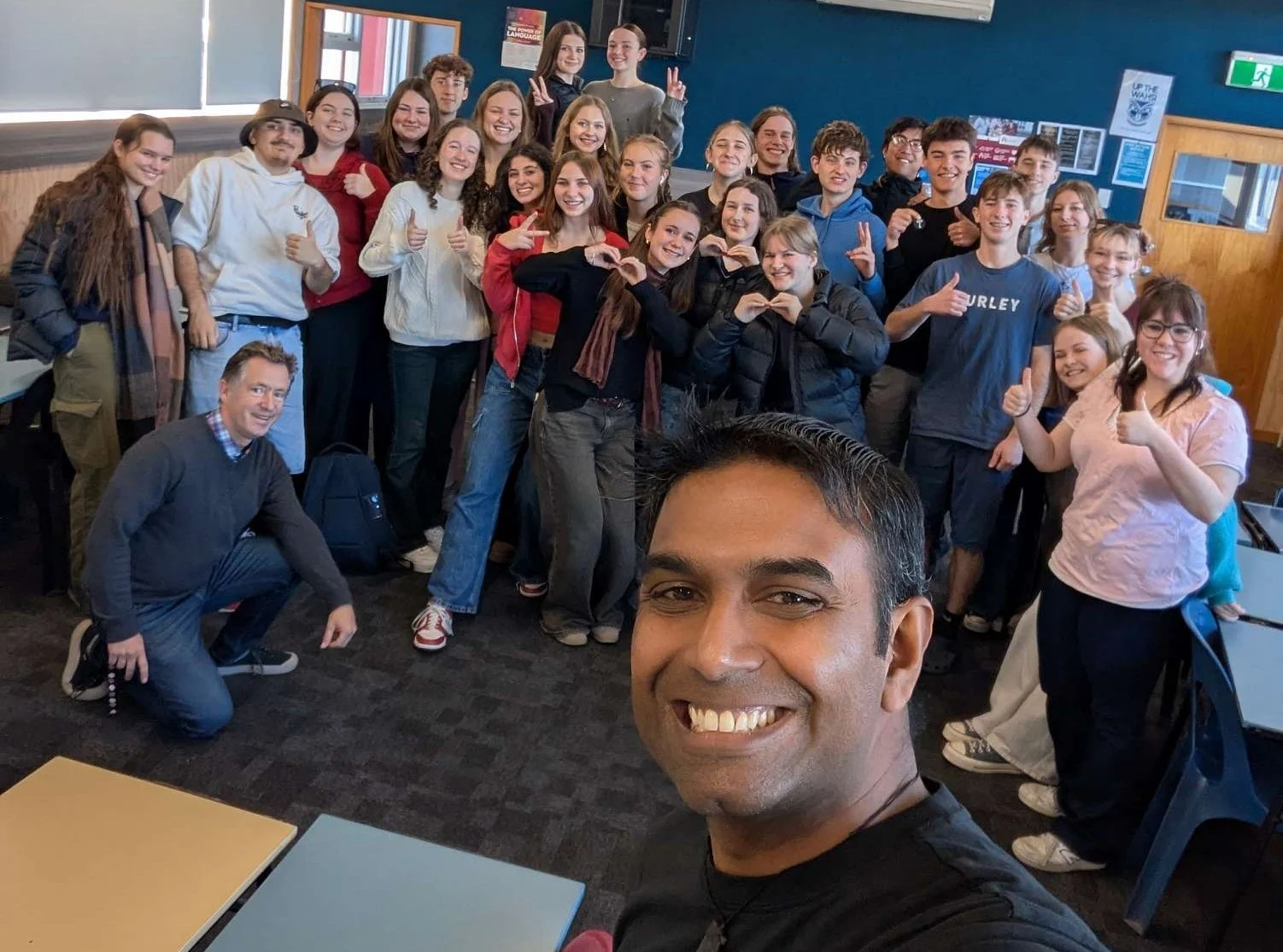
Last week, Nayland College welcomed a special guest whose story, message, and energy left a lasting impact on students and staff alike.
Mr Subash Chandar K, a full-time maths teacher at Ormiston Junior College in Auckland and founder of the popular YouTube channel InfinityPlusOne, visited the school to run workshops focused not just on maths, but on something far more personal - student wellbeing, purpose, and mindset.
His passion for helping young people navigate life’s challenges extends beyond the classroom. Through his channel, he provides free support for students studying NCEA Maths, aiming to make learning accessible, relatable, and motivating.
Subash’s journey is as inspiring as it is relatable. After struggling through his first five years of university with a C- average, and battling a gaming addiction along the way, he has since transformed his life.
This year, his work was nationally and globally recognised when he was named Kiwibank Local Hero of the Year and selected as a Top 10 finalist for the Global Teacher Prize, one of the most prestigious awards in education worldwide.
Through candid storytelling, he shared how he found his way back by setting intentional goals, redefining failure, and learning to chase “healthy dopamine”.
His workshop, titled “Balancing the Equation”, challenged students to reflect on how they spend their time, care for their wellbeing (Hauora), and align their actions with personal goals. Students were encouraged to chart out their weekly activities, from sleep and schoolwork to social media and hobbies, and consider where they might make small but powerful shifts.
A key concept was the balance between short-term and long-term goals and his advice to students was clear.
“When you move past the fear of making mistakes, anything is possible.”
While maths may seem all about numbers and formulas, he reminded students that its greatest lesson is resilience - the ability to try, fail, and try again.
“You may never need to solve a trigonometry problem in real life,” he says. “But what maths really teaches you is that it’s okay to be wrong - because every mistake is a step toward understanding. That ability to push through fear, to keep going despite mistakes failures, is what will help you in every part of life.”
Subash shared that after failing more than half his university papers and facing doubt from others, it was the small, consistent steps - showing up to lectures, setting daily goals, and tracking time - that helped him climb back and eventually reach global recognition.
Students also explored the science of happiness through the lens of the Te Whare Tapa Whā model, learning how our physical, emotional, social, and spiritual wellbeing contribute to our ability to succeed and feel fulfilled.
Subash linked everyday activities like exercise, time with family, gratitude, and mindfulness to the brain’s “happiness chemicals” - dopamine, oxytocin, serotonin, and endorphins - encouraging students to find joy in real-life connections rather than in endless scrolling.
His own experience with social media served as a cautionary tale.
“False dopamine,” he explained, is the fleeting pleasure we get from scrolling through reels, a cycle that leaves us feeling more distracted and less in control. Instead, he urged students to shift their brains toward more meaningful sources of satisfaction: completing tasks, learning something new, and connecting with others offline.
To enjoy social media, gaming, or watching TV as a way to relax in a healthy, controlled way, Subash recommended practical strategies such as making access harder - for example, by hiding apps or using phone features that limit or complicate searching for these apps. This intentional barrier helps reduce mindless scrolling and encourages users to engage with these activities more purposefully.
When asked about the future of education, Subash expresses a vision rooted in adaptability.
“If I could choose one direction for New Zealand education, it would be to help our rangatahi become more adaptable,” he shared.
“We don’t know what jobs will exist in the future - I never expected I’d become a YouTuber or speaker alongside teaching. But learning to adapt is one of the most valuable skills we can give young people.”
And as for his own path ahead? Subash is continuing to balance his roles as a teacher, YouTuber, and speaker - but with family at the heart of every decision.
“My ultimate goal is simple: to spend as much time as possible with my whānau, especially my son,” he said. “So the plan is to be a full-time speaker, a night-time YouTuber, and a day reliever when I’m not on the road. Like any good maths problem, there’s always a solution - and for me, this is mine.”
The visit concluded with a message that resonated deeply.
“You are just getting started. Your goals don’t have to be big - but they have to be intentional.”
- Article supplied by Nayland College
