
ROBYN PARKES
Thomas Thompson was born in Gibraltar on 26 March 1814, where his father Colonel George Forbes Thompson lived for 17 years. Thomas spent a considerable amount of time at Magdala where his uncle was British Consul. Around 1827 the family went to Ireland and then relocated to England so that Thomas could receive a better education.
After completing his studies, he travelled for a time before returning to England. His father’s intention was for Thomas to join the Royal Engineers, but the young man preferred the civil branch of the profession.
After some time working on the Bristol and Exeter railways, Thomas went to Cornwall where he met John Wallis Barnicoat who was to play a major part in the Nelson district. Both men immigrated to Nelson in 1842 via the Lord Auckland and both holding the position of Surveyor.
Soon after his arrival in Nelson he was asked by the chief surveyor Frederick Tuckett to survey to Waimea East district, which he did with Barnicoat.
Thomas tried settling at Waimea West for a short time but found the soil unsuitable for farming, so he moved to Richmond, taking up a 100-acre property on Water St, a name that later changed to Headingly Lane. Thomas was appointed superintendent of works for the New Zealand Company, who engaged about 350 to carry out work, but the Company collapsed in the early days of settlement leaving the men and their families high and dry.
Due to the failure of a promise given to the men of work, pay and a new life, they claimed compensation for breach of contract. The matter was referred to three commissioners appointed to inquire into the matter, with Thomas being one.
Afterwards, Thomas took the position of surveyor to the Waimea Road Board, a position he held for 22 years. Thomas was a keen advocator of education for children and supported the starting of a school for the children of Nelson settlers.
He was a trustee of the Nelson School Society which provided schools in the settlement from 1842 until education became a responsibility of the Provincial Government. He continued as a trustee until the Society’s property was handed over to become the nucleus and site of the Suter Gallery. He was then the last surviving member of the original trustees. Thomas was a member of the Provincial Council for eight years, only resigning due to a deterioration in hearing.
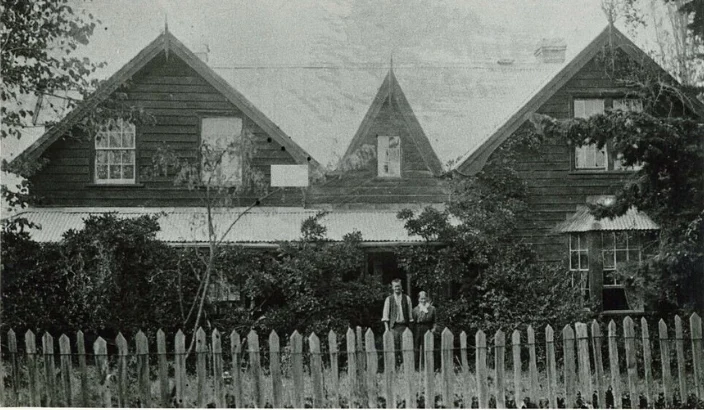
In 1846 Thomas married Sarah Hargreaves in the church formerly used as the New Zealand Company’s survey office, built on the site now occupied by the Cathedral. The couple settled into married life at their Headingly homestead, named after Sarah’s birthplace in Headingly, Leeds, Yorkshire, raising at least 13 children.
Sadly, between 4 and 25 March 1861, they lost three daughters, Julia Maria, aged 3, Mary Millicent, aged 8, and Louisa Annie, 10, to diphtheria.
Thomas and Sarah displayed remarkable fortitude as pioneers in a new and challenging environment but overcame all that life had to throw at them, celebrating their golden wedding anniversary in 1896.
Thomas suffered a stroke at age 83, and although he partially recovered from this, he was an invalid up to the time of his death, which occurred on Christmas morning, 1900. Sarah continued to live at Headingly, dying there on 6 November 1913.
