“Our working conditions are your children’s learning conditions.”
There was visible shock at the NZEI Te Riu Roa union meetings last week, as local teaching professionals learned the details of the offers that had been made to other sectors under the union umbrella.
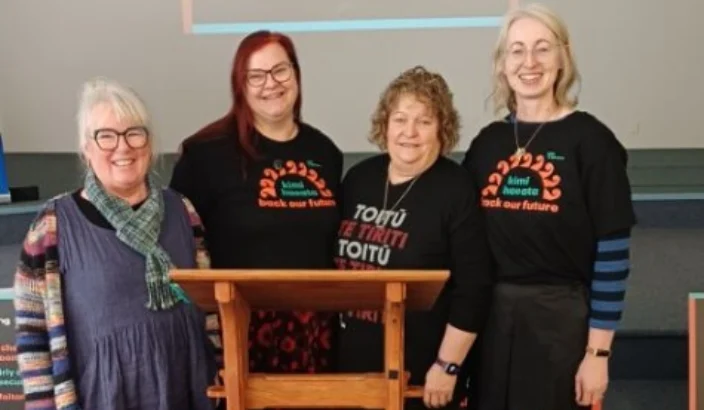
Top of the South union council chair Kat Rayson spoke on behalf of teacher aides at last Wednesday’s Motueka-based meetings, recounting that they have been in negotiations for eight months to have been twice offered a zero per cent raise by the government. The final offer was a $1 per hour pay rise, split over three years and before tax.
“It’s not good enough, is it?” she said to the crowd of teachers, support staff, specialist staff and principals. “Zero, zero and $1. Put your hand up if you’re shocked by that offer.”
NZEI (New Zealand Educational Institute) Te Riu Roa is the union of more than 50,000 principals and teachers from early childhood, primary and intermediate schools, as well as school support and specialist staff, learning support and school advisory services.
Secondary teachers and principals are covered by the Post Primary Teachers’ Association (PPTA), while university, polytechnic and wānanga staff sit under the Tertiary Education Union/Te Hautū Kahurangi o Aotearoa (TEU).
Across the country, NZEI Te Riu Roa members gathered together in their communities for paid union meetings to discuss pay negotiations and working conditions, their feelings of being undervalued, and the coordination of collective action, while also exploring the possibilities of future industrial action.
In Motueka, the gathered crowd members were asked if they ever felt disrespected and undervalued as a professional, if they had lost their morning tea or lunchtimes dealing with behavioral issues, and if they had lost “precious family time at night or on the weekends” because of their jobs’ demands. A resounding yes was offered to all of these questions.
Kat spoke of the changing policies as “frisbees” that the government threw out and expected teachers to pick up and run with. NZEI member leader Sarah Coup told the meeting that “te reo Maori is a taonga that should be available for tamariki, yet the government scrapped funding for Te Ahu O Te Reo”, meaning teachers, principals and support staff can no longer access the professional learning development needed to upskill.
Sandie Burn, council vice-chair and kindergarten head teacher, told the group that those in early childhood education were “in a fight for our lives”.
“One hundred per cent qualified teachers and improved teacher ratios means high-quality early childhood education for all tamariki. What has the government done? Scrapped pay parity for early childhood teachers [and] removed safeguards in place for the quality of education and wellbeing of youngest learners.”
Speech language therapist Catherine Campbell spoke for the learning support sector, which has in fact been operating under industrial action for the past month.
This means she is working to rule, within her contracted hours, but with no overtime and without taking on clients beyond the 50 already on her caseload, she explained. Due to “some new legislation that got rushed through under urgency just a couple of months ago”, she and other learning support staff have had a 10 per cent pay cut during the strike action, on the back of two zero percent pay offers.
“The bargaining team [was] told to go back and expect less than one per cent,” she shared.
“Teachers, principals and support staff hold the line in education in Aotearoa. We always have. And joining together means we win better pay and conditions and our tamariki can have the education they deserve.”
