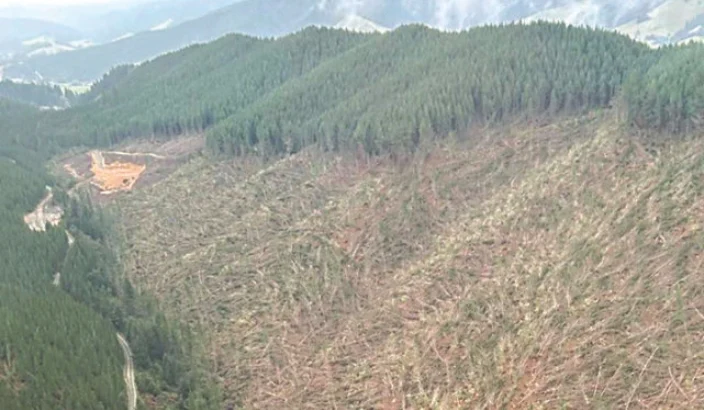
Forestry crews are racing against the clock to salvage timber from thousands of hectares of storm-damaged forest before it deteriorates.
The July 2024 storm proved devastating for the forestry industry, not just because of its intensity, but because of an unusual wind pattern. Instead of the usual southwestern winds that trees are adapted to withstand, the storm brought powerful northeasterly winds. With already saturated soils weakening root systems, thousands of trees – evolved to brace against winds from the opposite direction – simply toppled over.
OneFortyOne corporate affairs manager Kylie Reeves describes the situation as an “urgent salvage operation,” requiring the harvesting of more than two years’ worth of trees in 12 months.
“This storm hit during one of the weakest domestic and export markets in decades,” Kylie says. “When you have a weak market and there’s this sudden influx of fibre, or there may be resistance in the market to absorbing that volume.”
The tight timeline isn’t just about market conditions; it’s also about biology. Once trees are damaged or felled, they become vulnerable to fungal infections and insect infestations, which reduce the timber’s structural strength and visual appeal. In New Zealand’s climate, this deterioration can begin within weeks, making the salvage window critical for recovering value from what would otherwise become waste.
Before reshaping harvest plans and assessing forest damage, OneFortyOne says they have prioritised community engagement. Using high-resolution aerial imagery, the company was able to identify damage to neighbouring properties and reach out to landowners directly. The team also shared updates and answered questions through local Facebook pages to help address concerns and dispel misinformation.
Recently, OneFortyOne led community drop-in sessions in Tapawera, Wakefield, and Lower Moutere, alongside other forest owners, transport operators, and council representatives.
“We had about 50 people attend those sessions. Some had specific questions about their property, some were curious and wanted to chat, and there were some who were devastated by their own losses and it was a chance to talk with someone.”
Kylie says. “Hearing directly from people was invaluable. We might be focused on salvaging timber, but the storm didn’t just hit our forests – it damaged homes, caused flooding, and destroyed farms. Understanding what everyone is going through reminded us we’re all in this together.”
Wakefield based Steve Chandler Executive Director of Tasman Pine Forests, and Chair of the Top South Wood Council, says for him the community drop-in sessions were an important opportunity to connect with storm-affected neighbours and people in the community who may not already have been able to make contact.
“The year ahead will have its challenges as harvesting plans are changed, and logging crews move to recover the wind damaged trees in what is quite a localised area.” Steve adds.
In the coming weeks, locals will see more logging trucks on the roads. That’s because crews are working urgently to remove fallen trees before they rot. This recovery effort isn’t just about clearing land—it’s about salvaging usable timber, keeping people employed and removing fallen trees to keep the communities safe.
