
ROBYN PARKES
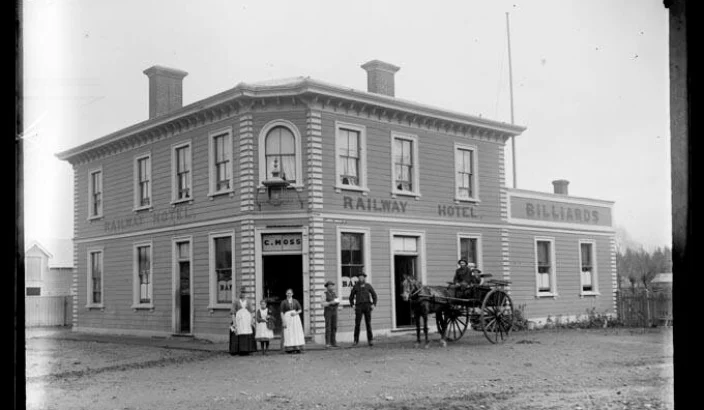
Built in 1883 by brewers Harley & Sons, the Railway Hotel stood proudly on the corner of Queen Street and Gladstone Road in Richmond for 126 years and was conveniently placed, (with the name giving it away) close to the railway station.
It provided for accommodation with bedrooms on the first floor, a billiard room, bar and dining facilities on the ground floor and stabling outside for horses.
The first licensee was Herbert Haycock who, in September 1883, requested that his license for the Red Horse Hotel be transferred to the Railway Hotel.
Within two months of operation the owner, Harley, was in trouble with the Road Board for having filled up a ditch on one side of the hotel and putting in a culvert in front of the hotel without the approval of the board. Threatened with legal action, he promptly apologised and requested that the licencing board allow for the culvert to remain. This was agreed to, but he was warned that if at any time the culvert became blocked causing it to overflow and it damaged the road, Harley would be held responsible for any damage.
An extension of opening hours was granted in June 1884 to stay open until 11pm.
Haycock’s tenure at the hotel was short with the licence transferred to Mr Mills in September 1884. Seven months later, in April, the hotel outbuildings had a narrow escape from destruction when children who were playing with some matches lit a fire that destroyed six tons of hay sitting close to the stables and adjoining buildings.
Mills, in April 1887, was subject to a civil case taken against him by Richard Reeves, Commission Agent. Mills had engaged Reeves to find a buyer for the goodwill, stock and furniture of the hotel at a price of £378. This proved to be difficult, and Reeves told Mills that the price was too high and no one was interested. However, eventually he found an interested party in the form of William Tregea and began negotiations. What followed was a bit of skulduggery.
Publican Mills cut Reeves out and went straight to Tregea, agreeing at a purchase price of £358. Tregea, in turn, was acting as an agent for Mr Granville who was interested in the hotel. Reeves, when finding this out, sent Mills a bill for his commission of 5 per cent which Mills refused to pay. Reeves’ claim was based on the premise that if a person places a property in an agent’s hands and the owner sells it himself, he must still pay the commission agreed on.
In the end it got too messy, and Granville pulled out of the sale and Joseph Harley (brewer) negotiated the sale with Tregea. Reeves was successful in his case as he had made the introduction of the buyer to the seller.
