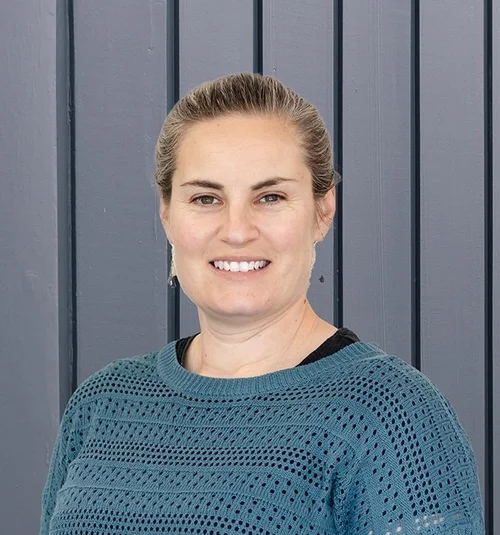

Laura Lusk never knows what she is going to find on the other side of the door – and in her work, she walks through up to 20 front doors a day.
She checks on her clients’ medication and food, helps them maintain good hygiene, and provides mental health support for both them and their families.
She and her colleagues hope each client is having a good day – meds are taken, shower is done, compression stockings are on – but on a bad day, they are dealing with medical events, calling outside agencies and working with mental health issues.
They take pressure off the aged care system by allowing people to stay in their own homes, and also reduce the strain on the healthcare system, as they are “primary before the GP”, she says.
It is a job she loves, and at the end of a day she feels like she has achieved something good.
“That means heaps, but I’ve also got to be able to put petrol in my car, and give my kids what they need,” she explains.
Her official title is ‘care and support worker’, a label with which she takes issue, because “it doesn’t actually mean anything”.
“You shouldn’t be paid for caring, and you shouldn’t be paid for supporting.”
This is part of the problem as she sees it – these roles have historically fallen to women to do, and they used to be done for free. That was in a different time, however – a bygone era when one income was enough and communities were more connected, and also before women had much autonomy over their own lives.
These societal changes are also exactly why Laura sees the role as significant, as other people do not have the same time and capacity to look after their ageing parents, so workers like her help others to continue to live their lives without complete upheaval.
She says that if every person who had a family member requiring extra care had to stop work to provide that support, “things would just come to a standstill”.
“We’re not just supporting ourselves, not just supporting our clients, but actually supporting all of society.”
Laura prefers the title ‘home healthcare assistant’ to describe her role. She works for a large company, citing them as one of the better ones to be employed by.
She has a Level 3 qualification which means she is entitled to $27.80 per hour, and a little less for travel time.
Her work is comprised of split shifts – morning and evening – and she has to work every second weekend. There is no overtime, aside from the usual stat day requirements, and time off is hard to come by because “people need medication on Christmas Day”.
“If we say no, people will die. If we strike, people will die,” she says.
Her clients range in age from late 40s to late 90s, and a rotating team of staff check in on them anywhere from once a fortnight to several times a day, depending on their needs. Appointments can be five minutes long or several hours, and most clients are in an increasing level of care until the end of their lives.
“You meet new people all the time with the knowledge that we will see you all the way to the end,” she says.
At the end of it all is a “leave no trace mentality,” Laura says, as sometimes people are embarrassed to have an increasing need. Ultimately, the workers want the vulnerable clients, and their families, to be the focus. This means that as care and support workers, their significance vanishes too.
Laura knows her worth, however.
“If the job that we do wasn’t done, then everyone else would have do the job themselves. It’s not one that just gets to be removed from society.”
She would love to see a huge turn-out to this Saturday’s Pay Equity march in Nelson. She would be there herself – but she is working.
