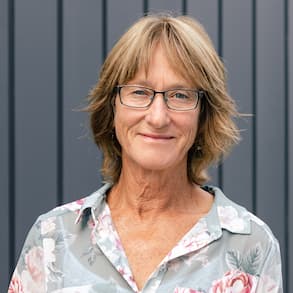

The Australian founder of a programme designed to help children regulate their emotions and build resilience has shared her knowledge with Wakefield parents and held her first New Zealand workshop in Nelson.
Sarah Ralston’s own experience with cumulative PTSD (post traumatic stress disorder) and background in teaching and psychology drove her to find a better way to help children deal with their emotions, which in turn leads to better behaviour.
Her programme, Reboot, is now used in 900 Australian schools where she says there has been a fifty to eighty per cent improvement in behaviour in the classrooms.
“It’s not about controlling kids - we give the kids a language,” she says.
That language gives children the ability to put a name on what they are feeling and the skills to know what to do about it, or as Sarah says: “name it and tame it and move on”.
The goal is to enable children to have a “can-do mindset”.
“There’s nothing wrong with those feelings – it’s what we do with it.”
When emotions aren’t understood or handled well, Sarah says it can lead to behavioural issues and the way we react to emotions continues through life.
Teaching children self-regulation, problem-solving and that can-do mindset takes practise though and she says it needs to become a shared language at home as well.
Too often, she says, parents are over-parenting or under-parenting and that is passed on to the next generation.
Wakefield School has implemented the programme as well Auckland Point School, and Sarah’s goal is to get more primary schools involved to create a culture that gives children those skills for building resilience.
“Individuals don’t change behaviour very well,” Sarah remarks.
“You build a culture around everybody, and everybody goes together.”
She says it’s also good to “get processes really humming before they get to teenagers” and are not as connected with their parents.
Wakefield’s deputy principal, Emma Hunter, is enthusiastic about the programme which was introduced into the school earlier this year and she says staff are already seeing a positive change in behaviour in the classrooms.
“Teachers were reluctant at first because they thought this was just another programme. But this helps them target challenging behaviours really quickly,” Emma says.
“They have a shared language – they know what to say now if something is wrong. It’s so simple. It’s breaking down really complex neuroscience with simple visuals and simple language.”
